



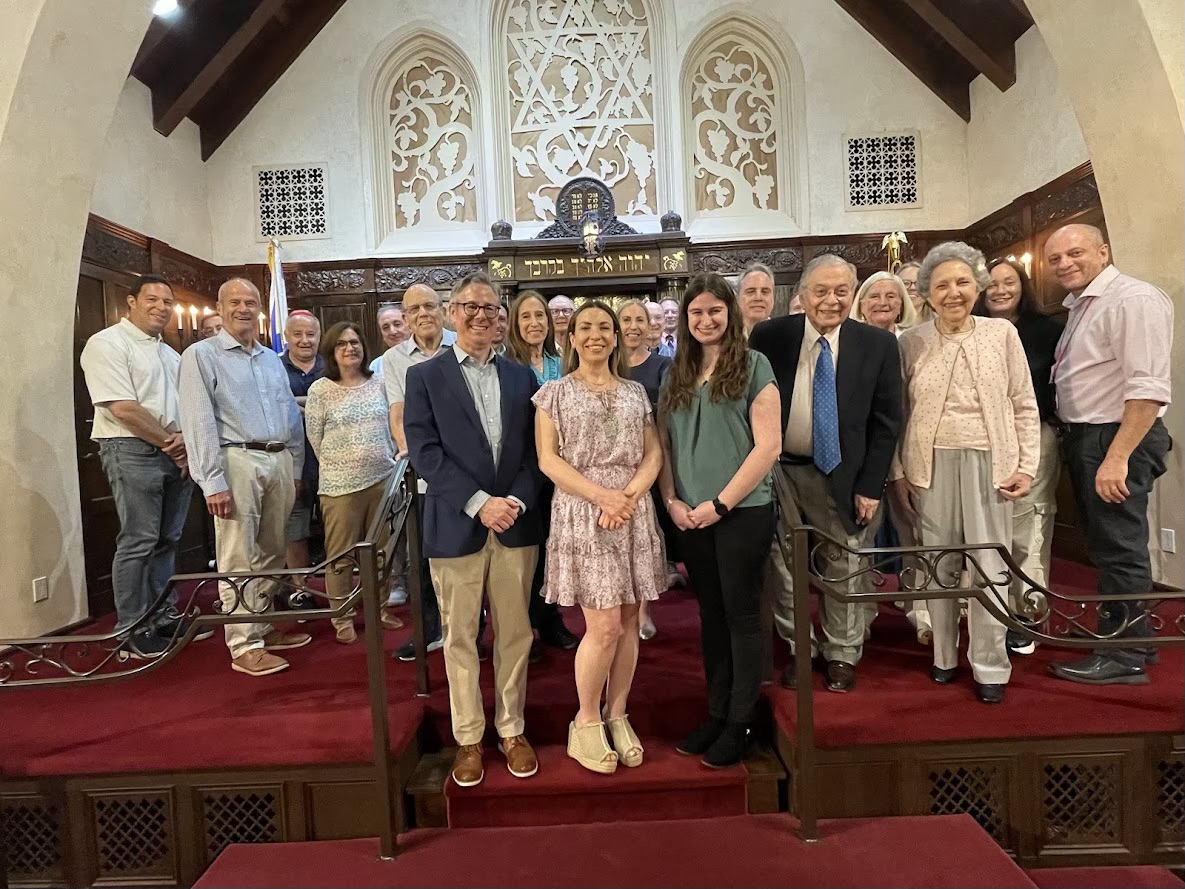
Temple Beth-El in Great Neck is expanding its programming amid plans to sell its building to Yeshivat Kol Yaakov by the end of the year and lease a smaller section of the historic synagogue.
Temple leaders said the pivot to programming is part of an increased focus on its existing congregation rather than on expansion.
“This is about meeting the needs of the people today,” Executive Director Stuart Botwinick said about the “strategic visioning” plan the temple announced in 2024.
In 2024, Temple Beth-El introduced two new centers, which Rabbi Brian Stoller said are where the temple currently has seen the most involvement — the Miriam & Moses Center for Pluralistic Adult Learning and the Susan Stumer Cultural Arts Center.
Miriam & Moses Center for Pluralistic Adult Learning:
The temple holds weekly adult education courses in the fall and spring for the Miriam & Moses Center, with over 70 adults in attendance.
“People are hungry for this,” Botwinick said.
Stoller just finished teaching his fall course on the history of antisemitism and is now teaching a class on the works of Maimonides. He also recently launched a Coffee & Conversation program, in which he visits congregants at North Shore Towers to discuss current events.
“I’ve never been able to do adult education at the level I do it here,” Stoller said.
Temple Beth-El has also continued one of its longest-running programs under the Miriam & Moses Center — Shabbat Morning Torah Study.
And throughout the year, the center hosts several scholars with expertise in “all different topics of Jewish interest.”
Susan Stumer Cultural Arts Center:
The Susan Stumer Cultural Arts Center is named after a professional singer and member of the Temple choir who died in October 2023. The center is in partnership with the Gold Coast Arts Center and holds monthly events for Temple Beth-El congregants and the wider Great Neck community.
“Because of the Susan Stumer Center and our partnership with Gold Coast Arts Center, we are able to be this hub for Jewish cultural arts on the peninsula,” Stoller said.
The center recently presented a production of “The Golem of Havana,” a play that blends Jewish folklore with the Cuban Revolution. It also started Food for Thought events, where they screen short films about Jewish culinary traditions while snacking.
In February, the center held a winter concert featuring Brooklyn-based folk singer Michelle Citrin. The center also holds Yiddish theater programs and book talks featuring acclaimed authors.
Botwinick said the center’s events often attract up to 200 people.
Service Programs:
Within the past six weeks, the temple has also added an immigrant family support program in response to the Trump administration’s deportation campaign. Stoller said the impetus for the program came when Tomas Orellana, a longtime Great Neck resident and father of nine kids, all United States citizens, was detained by Immigration and Customs Enforcement.
“I think that really shook the community, and we mobilized in response to it,” Stoller said. “It is an obligation of Jewish tradition to be kind to the stranger. More than anything else in the entire Torah is the commandment, ‘be kind to the stranger.’”
Temple Beth-El has also been at the forefront of many progressive social movements, including Black, women’s and LGBTQ rights movements.
In 1967, during the throes of the Civil Rights movement, Martin Luther King Jr. spoke at Temple Beth-El’s bema. In 1976, the synagogue ordained the first female cantor in Jewish history, Barbara Ostfeld.
Stoller said he intends to keep the temple’s proud tradition of social justice alive today as it continues to push for immigrant rights.
He said they are at the early stages, where their role is to learn from and support groups that have had more experience dealing with issues of immigrant rights.
The temple is currently providing food to immigrant families in the community, and Stoller said they plan to organize a vigil in support of immigrants and hold a training for congregants to learn how to accompany immigrants to legal hearings.
“This is the urgent call of our time,” he said.
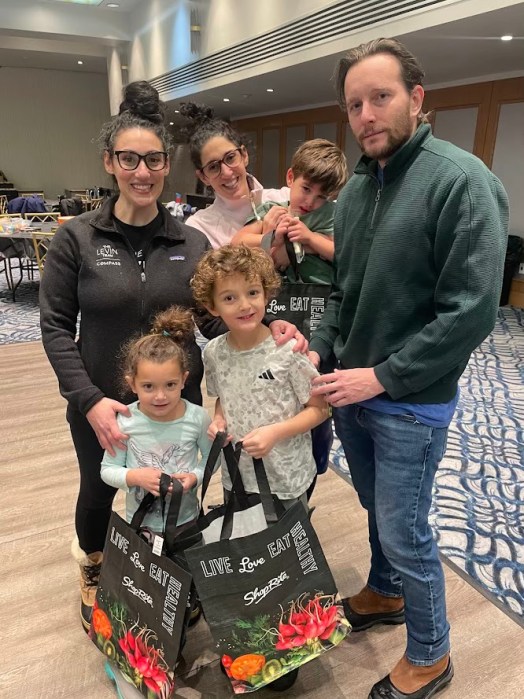
Temple Beth-El also offers many programs for volunteering and social action.
One of its banner programs is the Great Neck Interfaith Food Pantry at St. Aloysius Church that serves families in need on the peninsula. In the last four years, the temple has raised more than $120,000 for its food-insecurity-related programs.
The temple also provides food for students at Great Neck Public Schools during summer sessions when they do not have breakfast programs for over 50 families.

While its programs largely serve adult congregants, it also launched the Kehillah Project, a Jewish education program for children, after closing its Early Childhood Education Center.
Temple leaders said they were excited to expand their programming even as they plan to sell their building.
“A big building doesn’t mean big happenings in the synagogue,” Temple Beth-El President Jordana Levine said.
Botwinick said that Judaism has always been more concerned with time than space and that, although the congregation is sad to see its footprint shrink, the building is not as important as the programming.
“The central story of the Jewish people is the exodus from Egypt and the journey to the promised land,” said Stoller, and the Jewish tradition has always been about dealing with change, adapting, and coping with one’s environment.
“Our story is being on the journey.”