


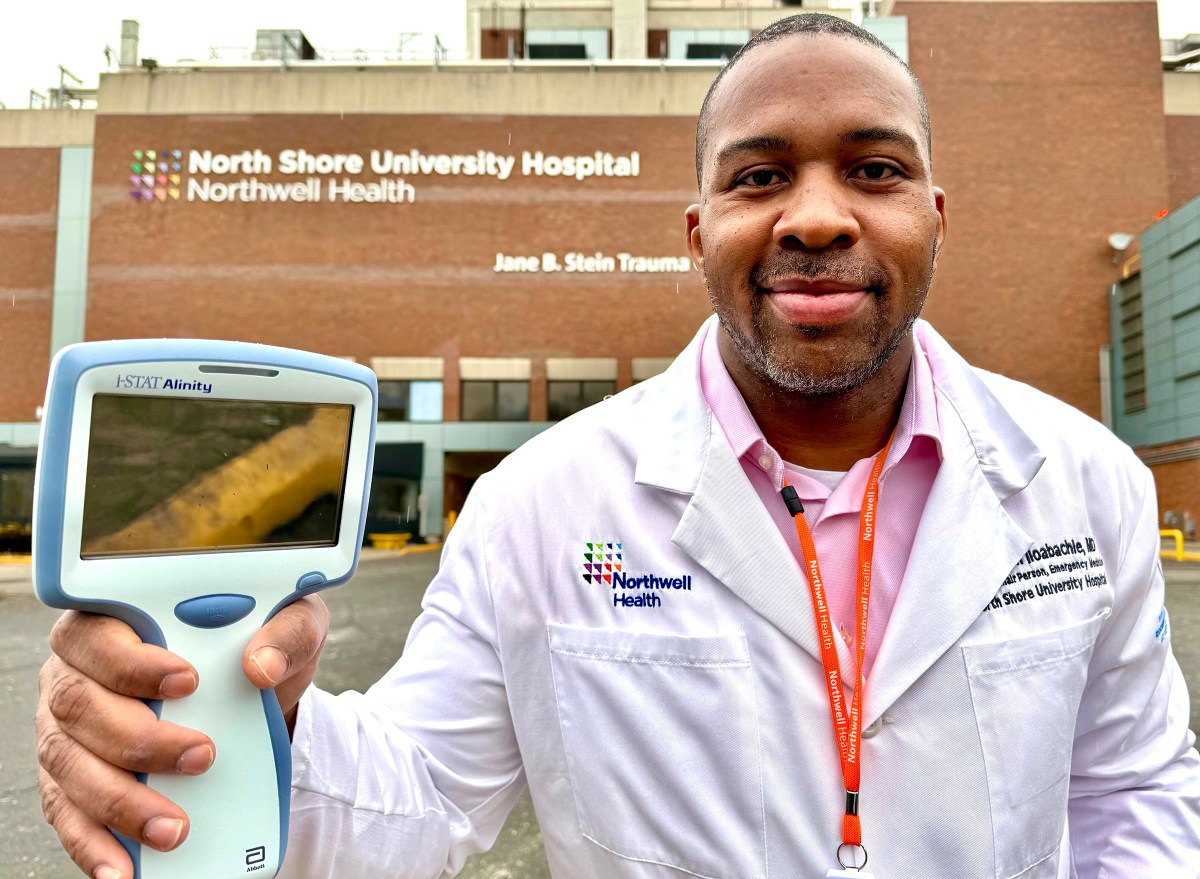
North Shore University Hospital has started using a new rapid blood test that can help emergency department physicians determine within about 30 minutes whether patients with a suspected concussion need further brain imaging.
Part of the Northwell Health system, NSUH is the first in New York to use Abbott’s i-STAT Alinity traumatic brain injury (TBI) test, a diagnostic tool that detects proteins released into the bloodstream after a head injury.
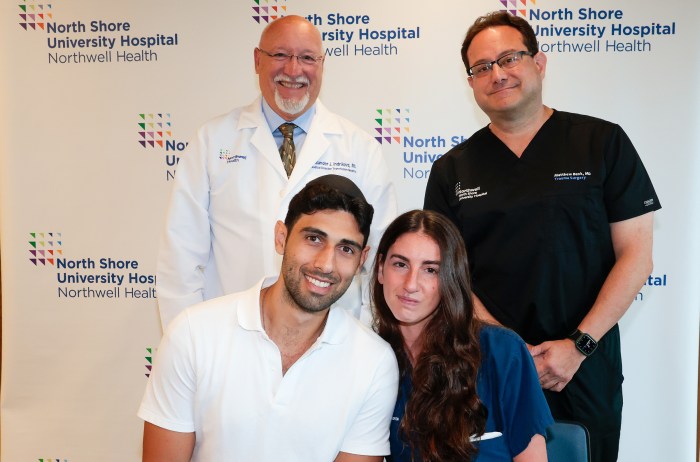
Dr. Chidubem Iloabachie, associate chair of emergency medicine at NSUH, said the tool can significantly speed up evaluation in appropriate patients compared with traditional CT scans.
“This test helps us determine which patients who are suffering from a mild traumatic brain injury need further diagnostic or therapeutic interventions, or when we can stop right there and potentially send them home,” Iloabachie said.
Traumatic brain injuries, including concussions, are among the most common reasons patients visit emergency departments. Nearly five million people in the United States seek emergency care for mild TBI each year, according to a 2016 study cited by Northwell Health.
Physicians mostly rely on CT scans to rule out serious injuries; however, those scans can take time and expose patients to radiation when many ultimately show no clinically significant damage.
The new 15-minute whole blood test offers an alternative approach. It analyzes two proteins – GFAP and UCH-L1 – that enter the bloodstream when brain cells are damaged. By measuring the presence of these biomarkers, doctors can determine whether a patient likely needs additional imaging.
“If both are negative, we can stop right there,” Iloabachie said. “No further CT imaging is needed. Potentially, if the patient has no other problems, we can send them home.”
As Long Island’s population ages, emergency departments are seeing more patients evaluated after falls and other head injuries. Dr. Tylis Chang, chief medical information officer and vice chair of pathology and laboratory medicine at Northwell Health, said the technology may become increasingly important.
“Abbott realized that this was not an issue of making a definitive diagnosis, but how we can help,” Chang said. “As we look at the real-world workflows that doctors and healthcare systems face, was there a way to assist in this? Rather than try to replace a CT scan, can we supplement this?”
In the busy environment of an emergency department, reducing unnecessary imaging can also free up staff and equipment for patients who need them most.

“If we can answer that question in 30 minutes with a blood test vs. 3 1/2 hours with a CT scan, it’s a no-brainer which option is superior in the right patient population,” Iloabachie said.
The test requires only two drops of blood placed into a small cartridge that is processed using a portable Abbott device in the hospital laboratory. While it is currently performed in the lab at North Shore University Hospital, the technology could eventually be used directly at the point of care, such as in emergency rooms, sporting events or nursing facilities.
“It’s a remarkable test to improve patient experience, to enhance efficiency and throughput, to minimize cost and time and unnecessary radiation, and also to get patients an answer to their question much faster than with just a CT scan,” Iloabachie said.
The hospital began implementing the test after a validation trial involving 107 low-risk adult patients. Since the program launched in November, the emergency department has already used the test on nearly 200 patients, Iloabachie said.
The test is FDA-approved for patients over 18 who have experienced blunt head trauma within the previous 24 hours and who are not taking blood-thinning medications.
“As healthcare has become more and more expensive in the United States, we all need to be more cognizant of these resources,” Chang said. “This is a win for both the patient and the health system.”
North Shore University Hospital, a Level I trauma center that treats more than 90,000 patients each year, is one of the busiest emergency departments in the New York metropolitan area. The introduction of Abbott’s i-STAT Alinity TBI test marks another step toward improving patient care while reducing unnecessary procedures.
“It’s only a matter of time before it becomes more commonly seen across emergency departments all over the country,” Iloabachie said.