



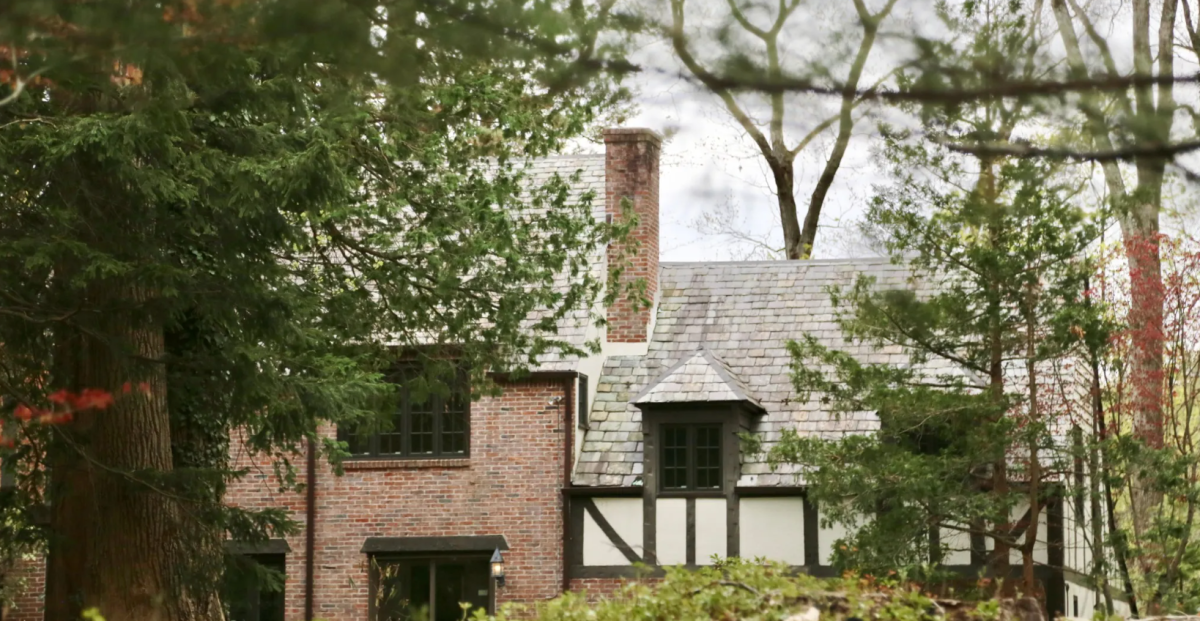
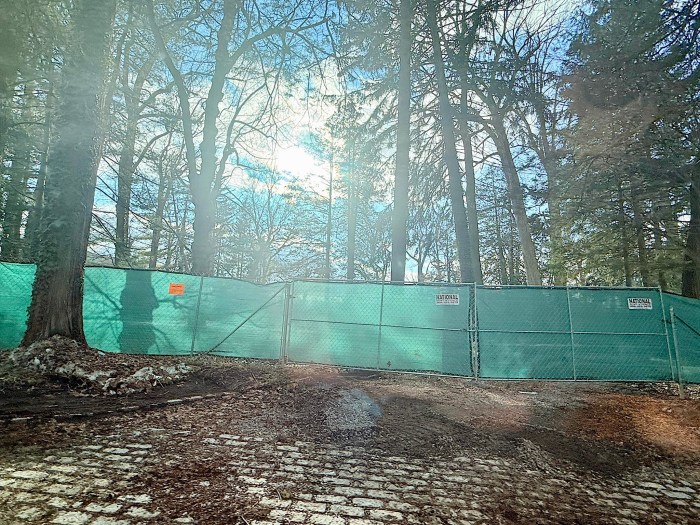
Despite resident pushback, a Tudor Revival home built in 1930 at 535 Manhasset Woods Road in the Village of Flower Hill was demolished in February.
The planned demolition of the house drew opposition from some Flower Hill residents and Andrew Cronson, the founder of the Manhasset Historical Society.
The new owner, who bought the house for $4 million in July 2025, plans to build a larger house with updated utilities on the 1.34-acre plot, Mayor Randall Rosenbaum said.
“There’s a mentality of some people who see these places as worth curating and protecting, and others [who] see it as purely the plot of land that sits beneath the house,” Cronson said.
Cronson founded the Manhasset Historical Society as an activist organization to push back against what he called the “increasing encroachment of speculation” and to advocate for the landmarking of historic buildings and monuments in Manhasset.
Cronson said he had been interested in the property for a couple of years because of its landmark potential, but the near $3,000 in fees the village charges to designate a site as a landmark was too steep a price. Cronson said he pushed for the board to make it a landmark on its own, but the board did not move forward with the idea.
The Tudor Revival style was popular in the early 20th century, especially on the North Shore. North Shore historian, author, and real estate agent Paul Mateyunas said the design, which harkened back to medieval England, was a status marker.
“People were now looking to European architecture in the first half of the 20th century [for inspiration],” said Mateyunas.
“The Tudor Revival style was sweeping through America as this quintessential stockbroker Tudor,” Cronson said.
The “stockbroker Tudor” was popular among businesspeople in places within commuting distance of New York City at the time, such as Manhasset. Cronson said building a Tudor was “a way to show people that they made it as figures in the business world.”
Cronson said George Scudder was the builder of the neighborhood, putting up many Tudor Revival homes in the area.
“Manhasset Woods Road was almost exclusively Tudor Revival,” Cronson said, and this latest house is one of several Tudor homes that have been demolished on the same street.
Cronson spoke with pain in his voice as he talked of the different elements of the home that were lost in the demolition such as the hand-hewn wood and stained glass windows.
“We have the means to preserve while still attaining a very nice profit, but not the will to do so,” Cronson said.
“I’ve seen an uptick of the demolition of historic homes because of the scarcity of open space,” Mateyunas said. “Land has become more valuable than the structures themselves, and we are losing a lot of these homes that would be considered a unique fabric of our neighborhoods.”