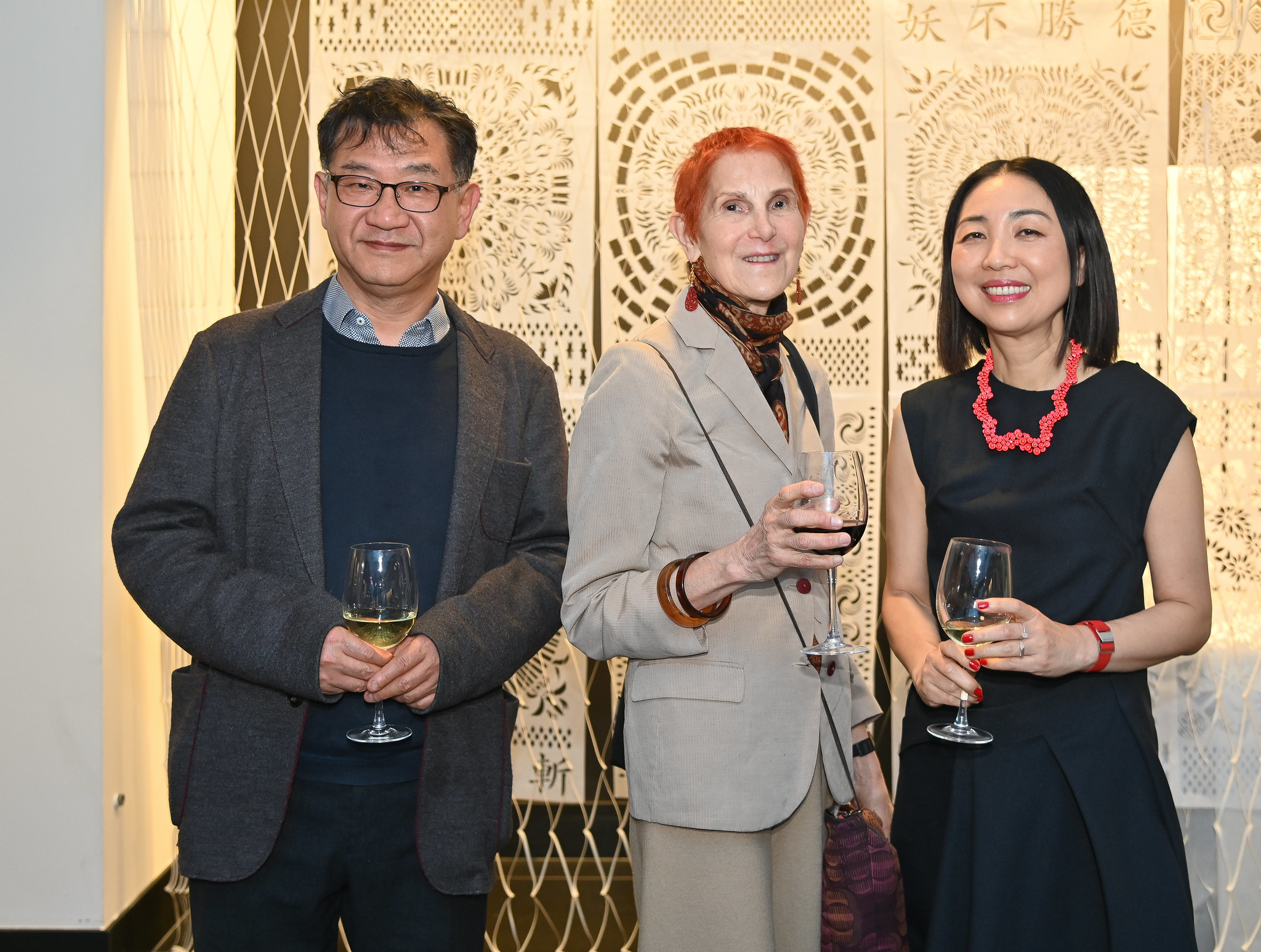



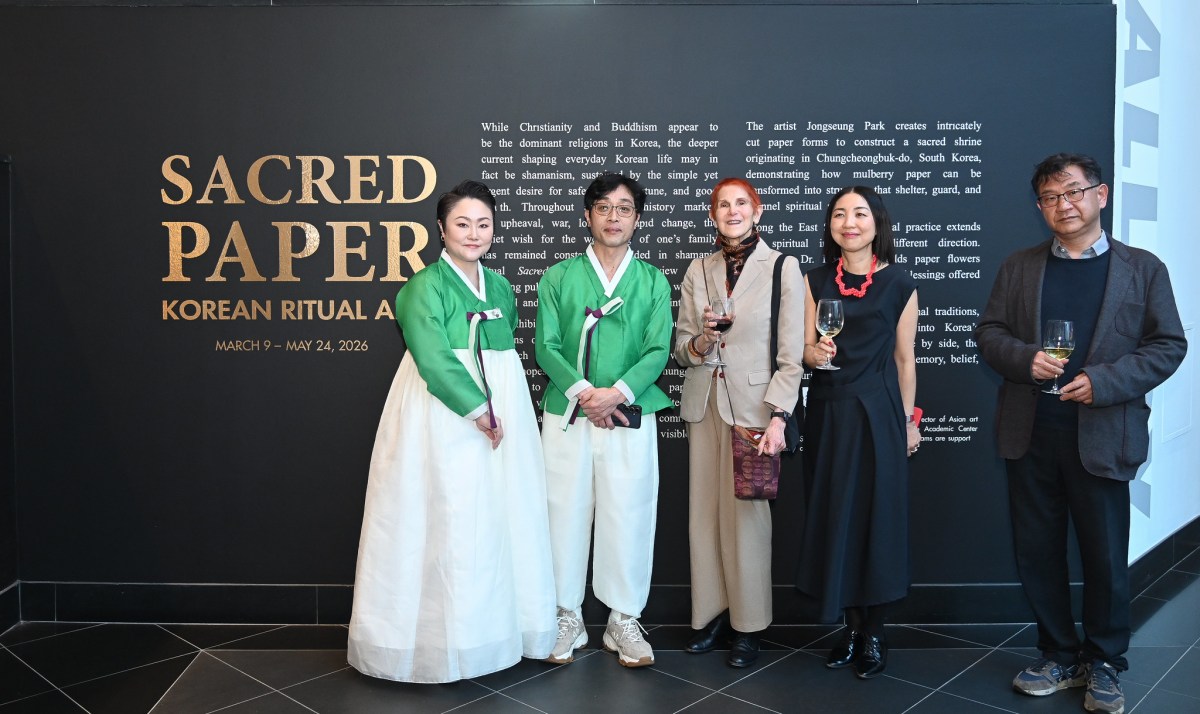
The Charles B. Wang Center came alive with music, movement, and delicate works of paper on March 9 as it celebrated the opening of its spring exhibition, “Sacred Paper: Korean Ritual Arts,” on view through May 24.
Visitors were drawn into the remarkable world of Hanji, Korea’s traditional mulberry paper, a material long used not only for everyday life but also for rituals that connect communities with the spiritual world. Throughout the evening, audiences witnessed how the most fragile sheets of paper can be transformed into intricate forms carrying prayers for protection, healing, and hope.
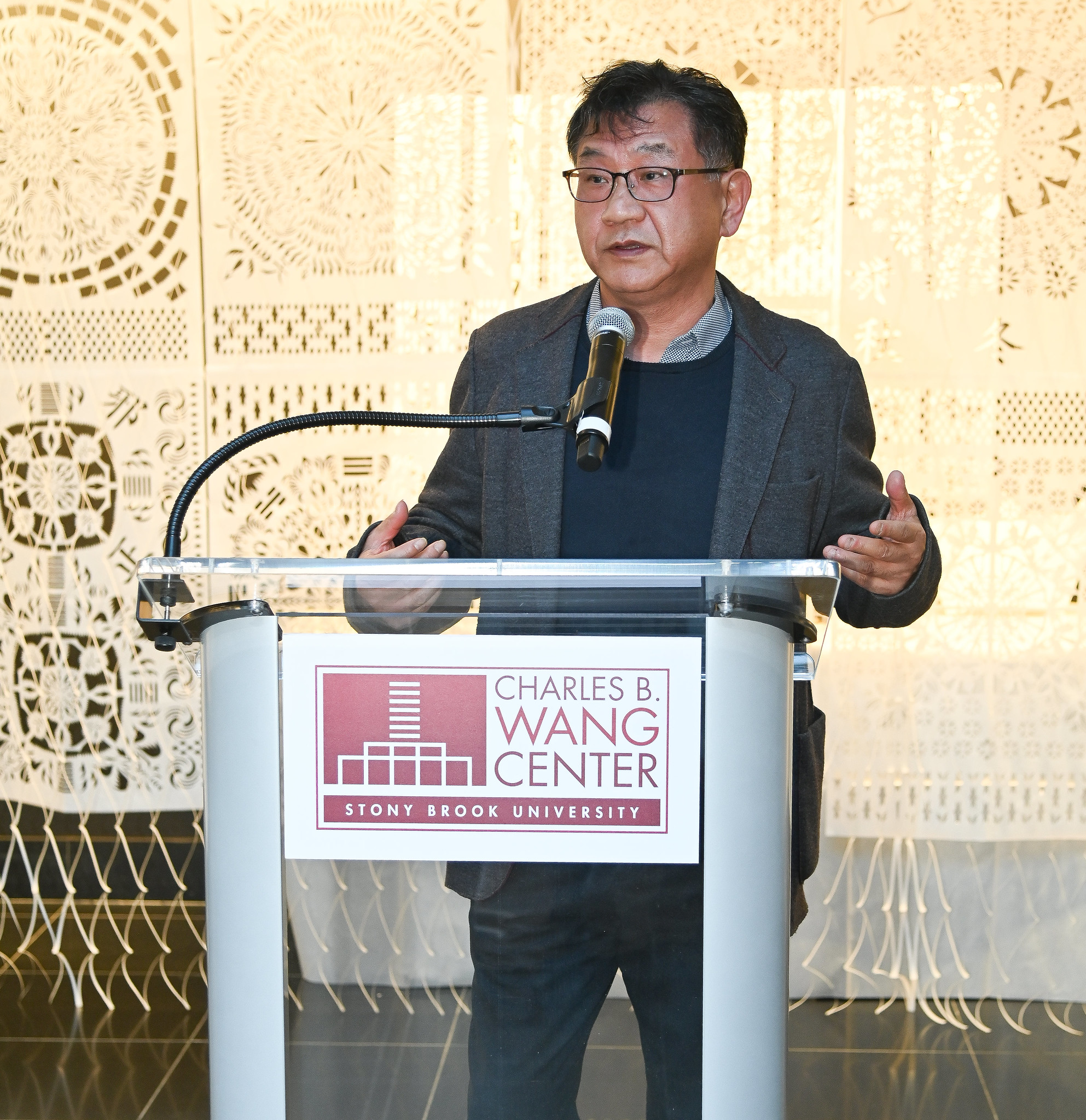
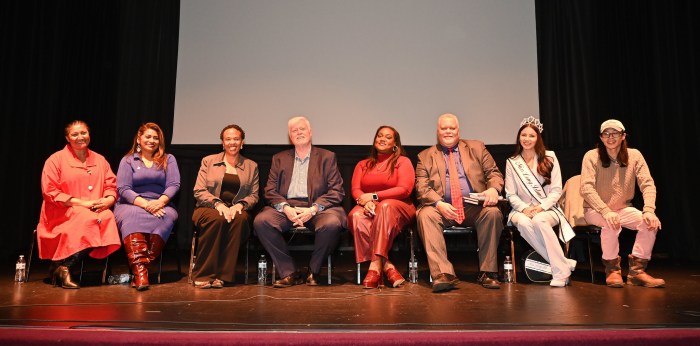
The program began in the Wang Center Theatre with a lecture by Dr. Laurel Kendall, curator at the American Museum of Natural History, who shared stories from decades of research on Korean shamanic traditions. “Paper in Korea is not just a material,” Kendall explained. “It becomes part of ritual life — something that carries prayers, offerings, and connections between the human and spirit worlds.”
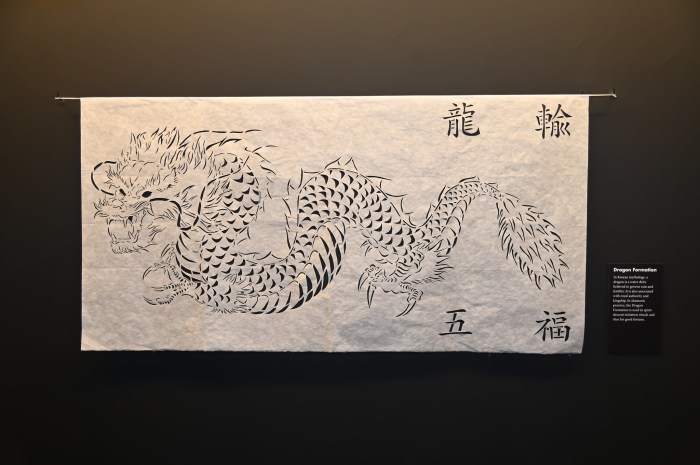
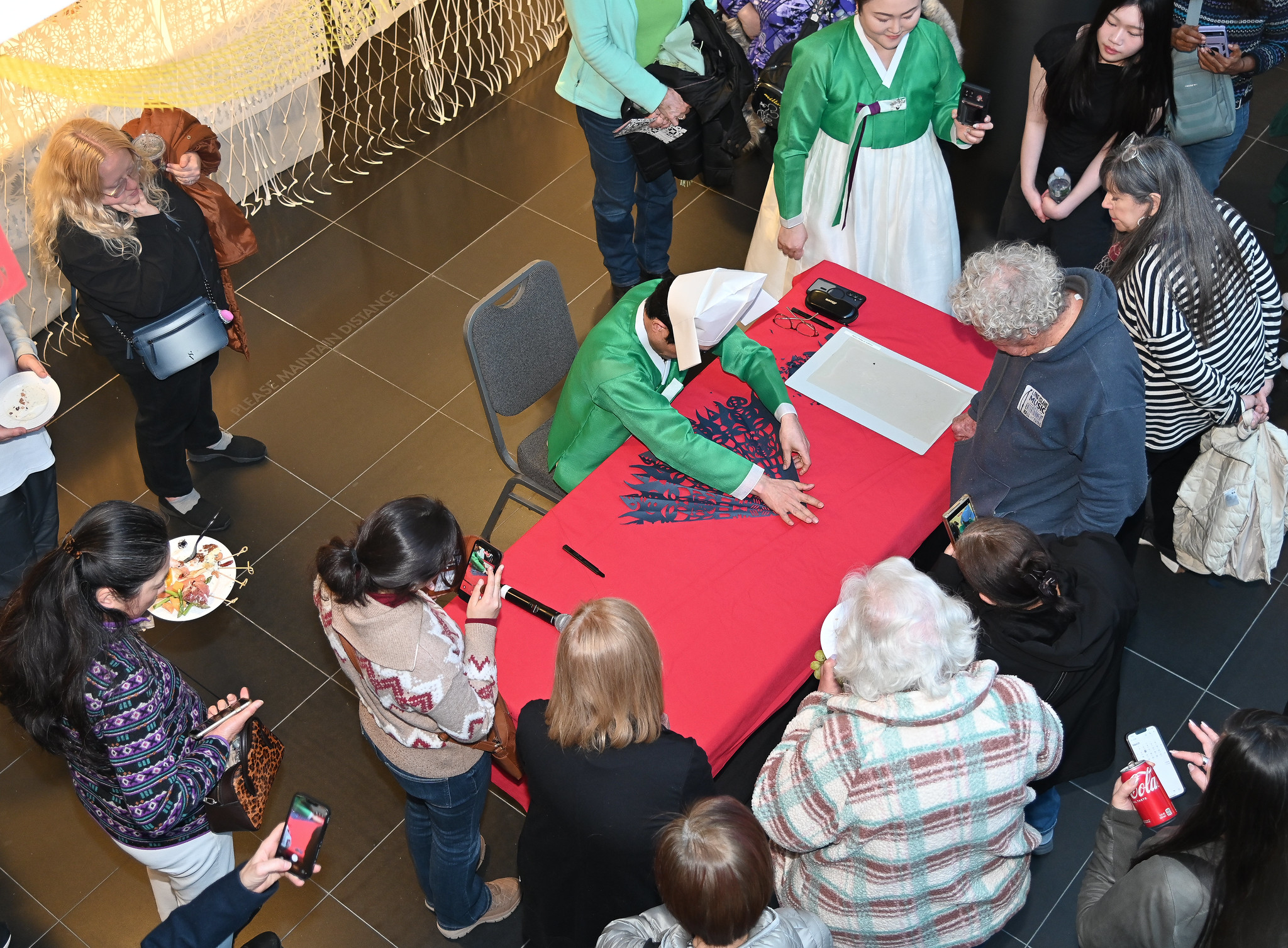
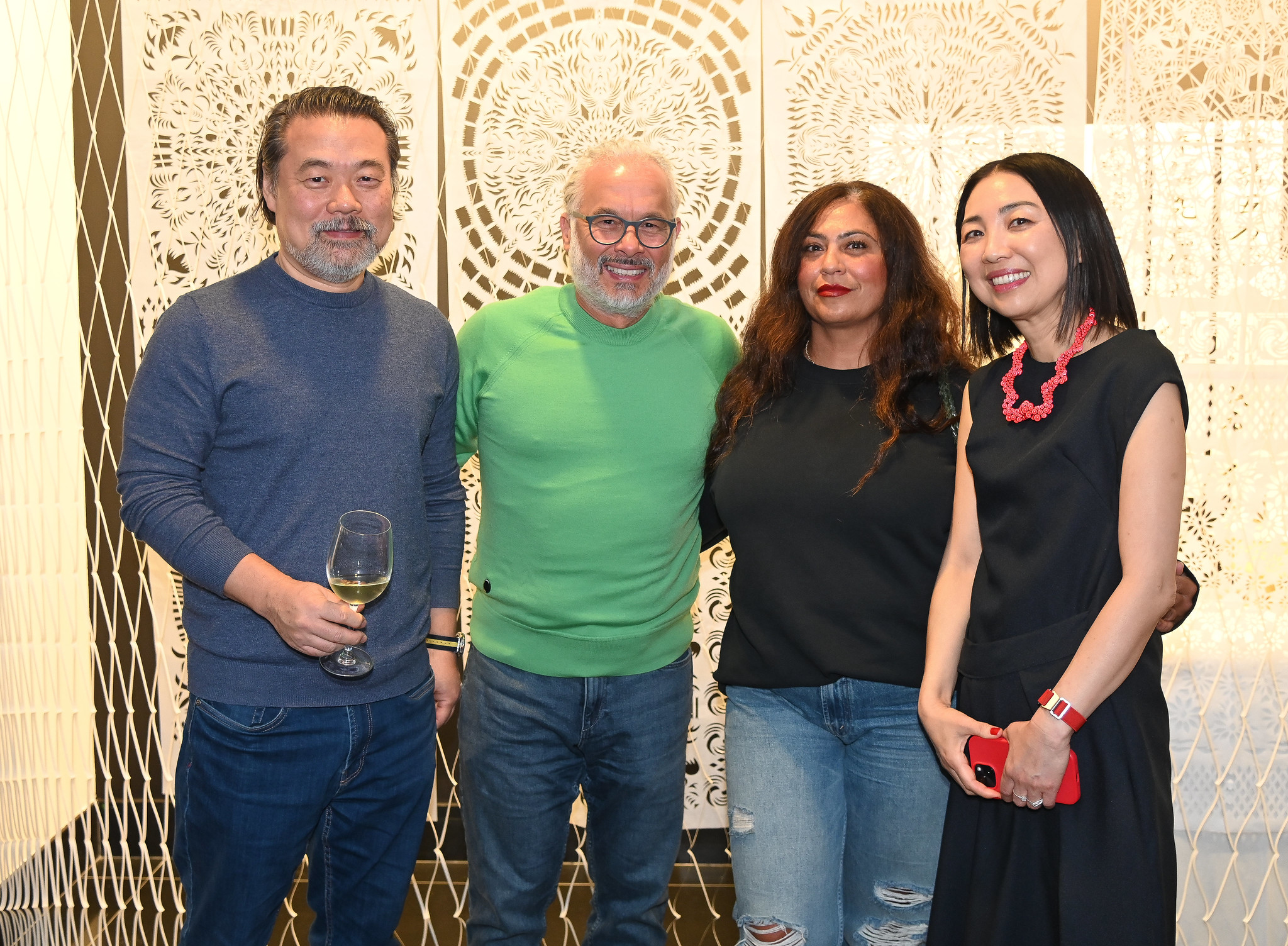
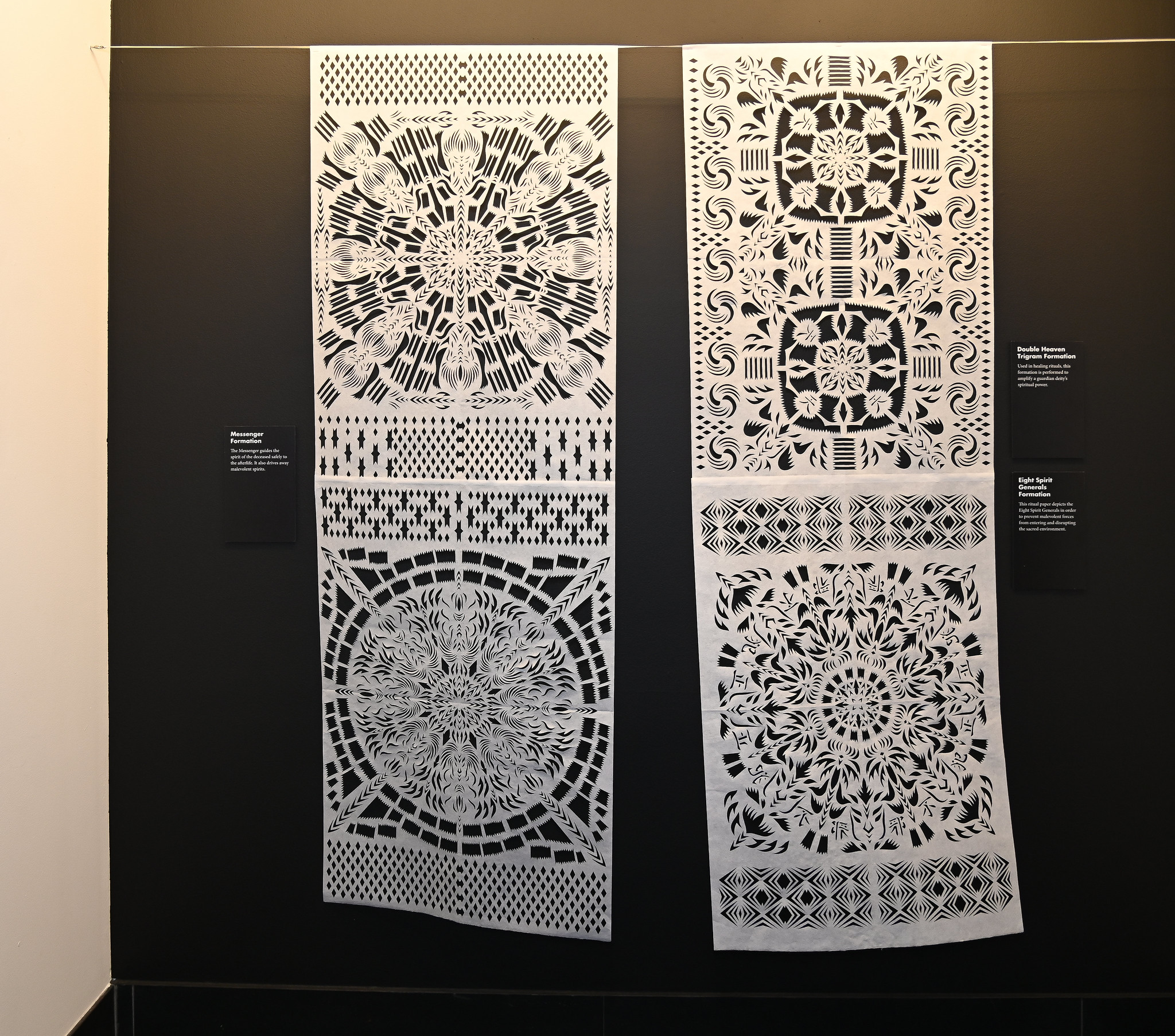
After the talk, guests gathered in the Skylight Gallery, where the quiet wonder of paper artistry captivated the audience. Many watched closely as artists cut, folded, and assembled paper into delicate ritual forms. The intricate patterns—often made from impossibly thin sheets—left visitors visibly amazed at how such ephemeral materials could carry deep symbolic meaning.
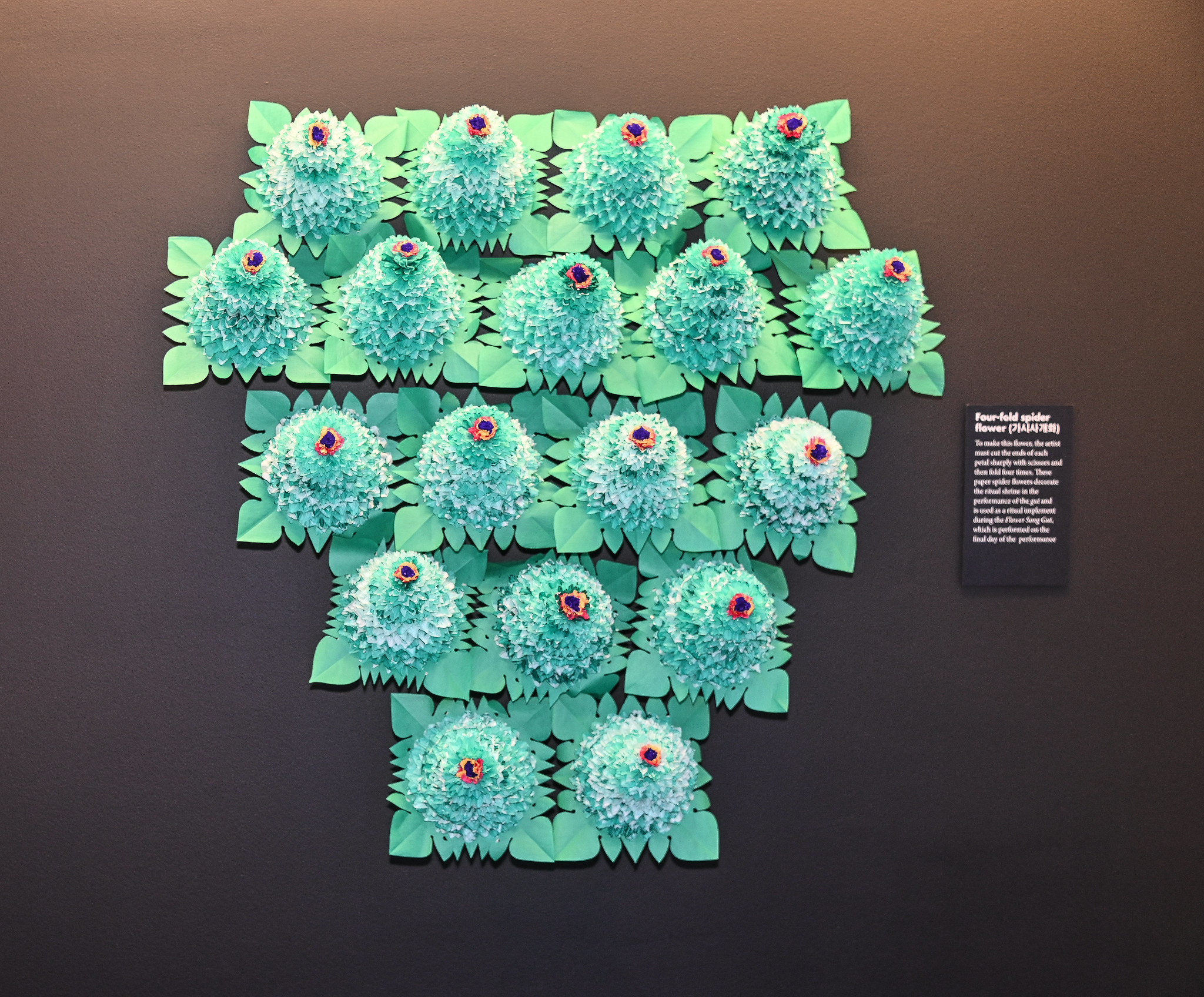
Jinyoung Anna Jin, Director of the Charles B. Wang Center and curator of the exhibition, explained: “The ritual space is traditionally decorated with paper cutouts depicting deities and colorful paper flowers representing the souls of human beings. These offerings express prayers for protection, prosperity, and communal peace.
Jin added, “These artists show how something as simple as paper can become a powerful cultural expression. Through cutting, layering, and folding, paper transforms into forms that embody spiritual protection and communal hope.”
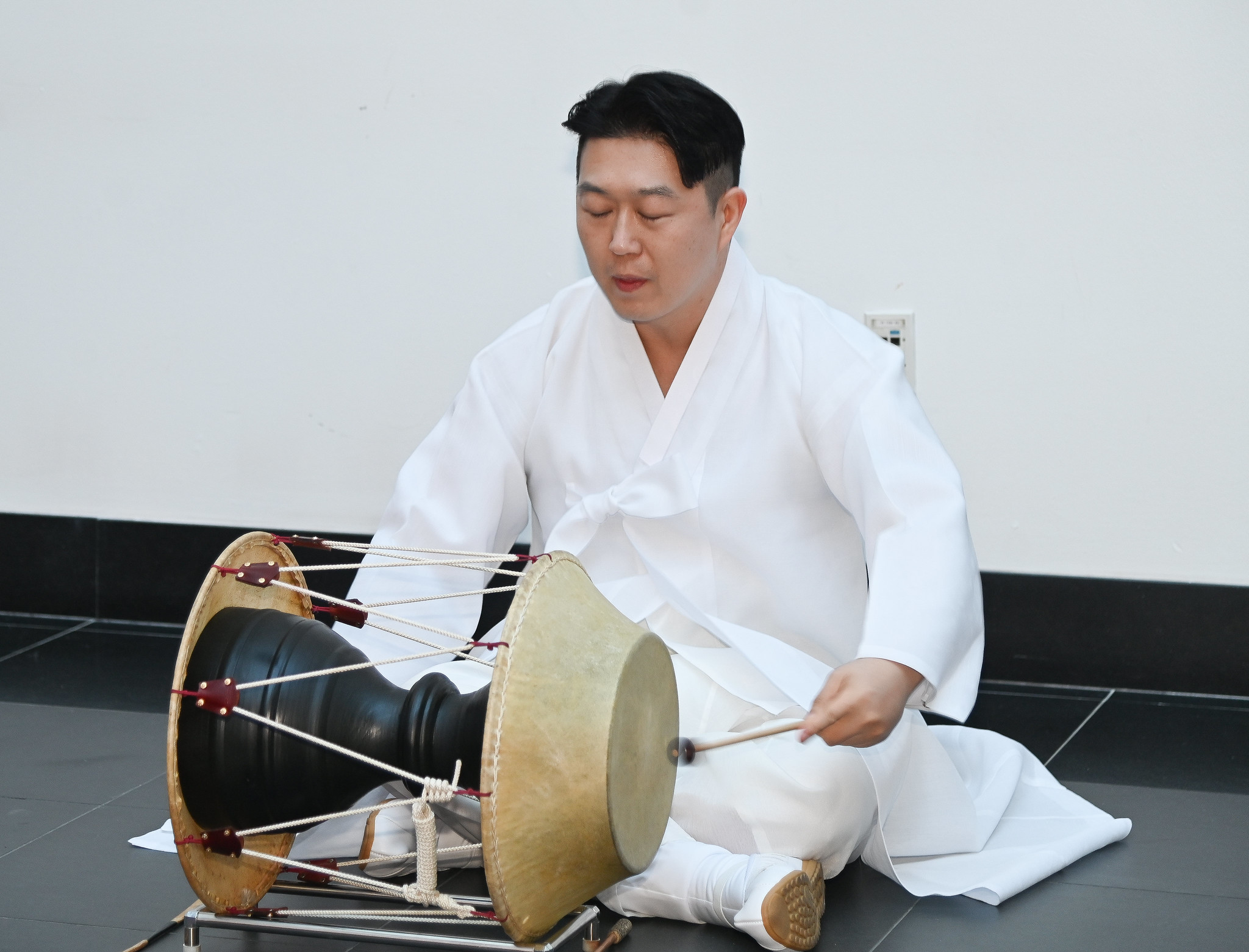
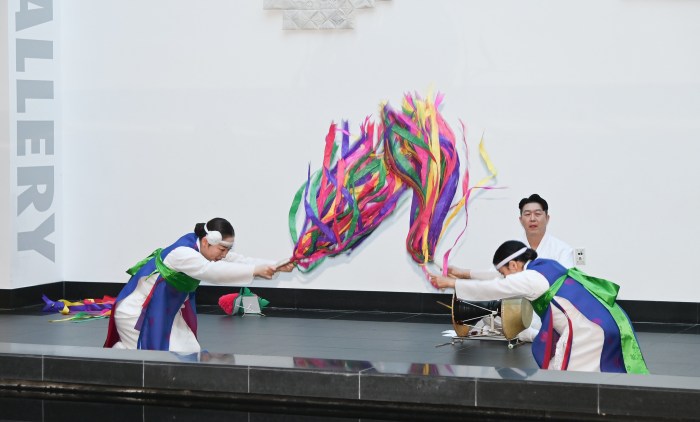
Visitors also watched artists demonstrate two distinct Korean ritual paper traditions: intricate paper cutting from Chungcheong Province by artists Jongseung Park and Yunjung Kim, and the vibrant paper-flower tradition of Korea’s East Coast presented by Dr. Heera Shin. Dr. Shin was joined by dancer Hyemi Park and janggu (Korean hourglass drum) player Jiyong Jung in a performance drawn from an East Coast village ritual traditionally held to bless communities and ensure harmony. The rhythmic drumming and graceful movement animated the gallery, bringing a small coastal Korean village tradition into dialogue with audiences in New York.
For many attendees, the performance offered a powerful reminder that while rituals may emerge from specific places, the wishes they express are shared across cultures.
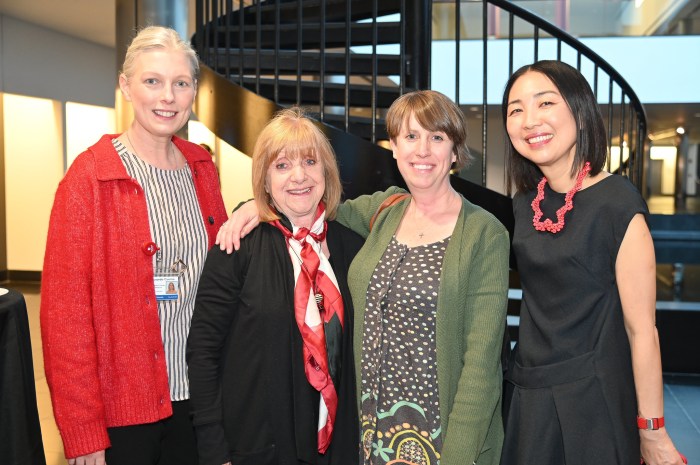
Many guests said the opening offered a rare opportunity to experience Korean ritual traditions firsthand. Deborah Boudreau, a Stony Brook University employee who attended the reception, shared: “The musical performance and dance were beautiful, and the intricate paper shrines and patterns were both visually stunning and conceptually fascinating. I’m excited to spend the spring working in the building surrounded by all this beauty.”
The exhibition was curated by Jin in collaboration with the Academic Center for Korean Religions at Sogang University in Korea and is supported by a generous grant from the Academy of Korean Studies. By presenting living ritual traditions within a contemporary gallery setting, the exhibition highlights how the hopes expressed through these paper forms—well-being, protection, and communal harmony—resonate far beyond Korea.
“Sacred Paper: Korean Ritual Arts” runs through May 24 at the Charles B. Wang Center at Stony Brook University.