



PFAS, called the forever chemicals, are widespread in the tap water on Long Island — and, indeed, through the United States.
“At least 45% of the nation’s tap water is estimated to have one or more types of the chemicals known as per- and polyfluorinated alkyl substances, or PFAS,” the U.S. Geological Study says of the findings of a study it conducted.
There have been citizen and governmental actions on Long Island, and through the U.S., to try to deal with the health threat PFAS constitute. In Hempstead, Mary Purdie has received attention for going door to door collecting 500 signatures calling on officials to address the presence of toxic chemicals in the village’s drinking water — with a special focus on PFAS.
“My thing is: How come so many people in Hempstead are dying from cancer?” she told NBC 4 New York’s Long Island Reporter Greg Cergol. “Like, wait a minute, something is wrong in this picture.”
This January, officials praised the advocacy of Purdie, the 72-year-old grandmother, as a $60 million upgrade of the village’s water plant was announced. “Part of the reason we are here today is the grassroots activism of people like Miss Purdie,” said Congresswoman Laura Gillen.
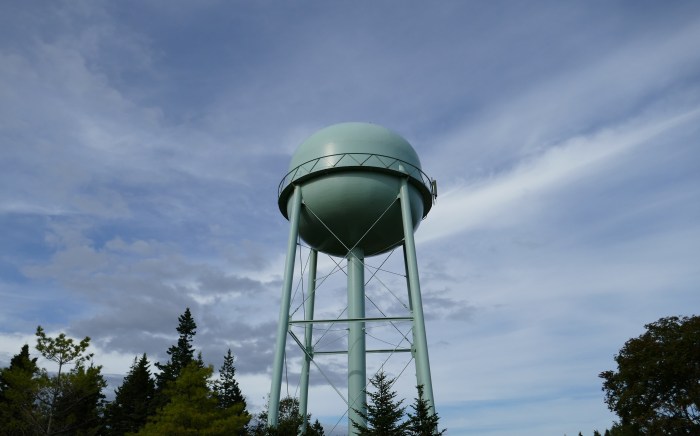
It involves the installation of a new filtration system. Last month in Glen Cove, a $776,000 undertaking was approved by the Glen Cove City Council to improve the filtration system at its water facility on Seaman Road. More projects at other water facilities in the city are underway or planned — at a cost of millions.
The updated granulated activated carbon filter systems being installed are designed to capture and treat PFAS.
In Suffolk County last year, officials of the Suffolk County Water Authority announced that all water going to its 1.2 million customers would be in “full compliance” with U.S. drinking water standards for PFAS, six years ahead of a 2031 deadline set by the EPA of four parts per trillion.
“Given the extent of PFAS detections across Long Island and the size of our system, this is a historic achievement,” said SCWA Chairman Charles Lefkowitz. He said the authority is seeking to “stay ahead of emerging threats to public health.”
PFAS are now ubiquitous. According to the USGS, “There are more than 12,000 types of PFAS, not all of which can be detected with current tests.”
Explains the website of the Matregenix company: “A few decades ago, manufacturers needed a way to make products more resistant to heat, water, and stains. Enter PFAS miracle chemicals that could do it all. Companies eagerly adopted them, and soon, PFAS were everywhere.” This includes, it says, “Nonstick cookware (hello, Teflon), Waterproof clothing (raincoats, hiking gear, even yoga pants), Food packaging (pizza boxes, microwave popcorn bags), Cosmetics (long-lasting lipstick and waterproof mascara), Firefighting foams…”
“Unfortunately,” says the company, which has a focus on “advanced filtration,” PFAS created “massive contamination. Now, PFAS are in our water, soil, and even the bloodstreams of most people on Earth. Not ideal.”
Karl Grossman is a professor of journalism and investigative journalist.