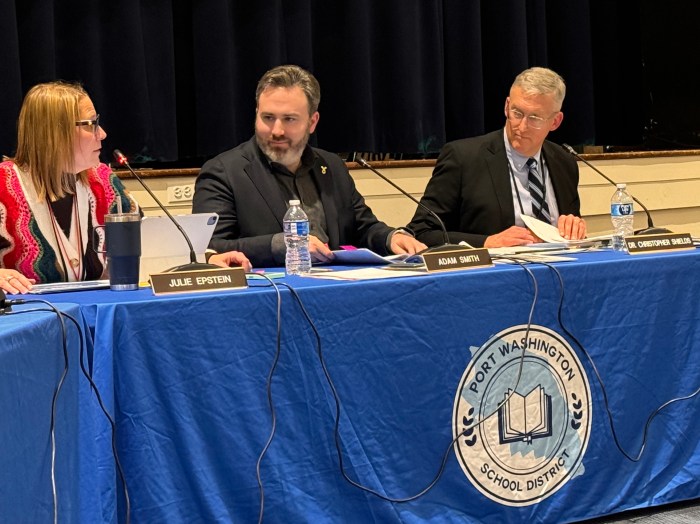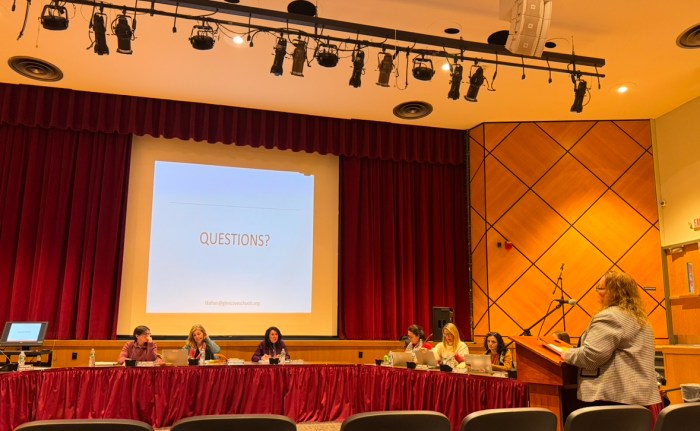




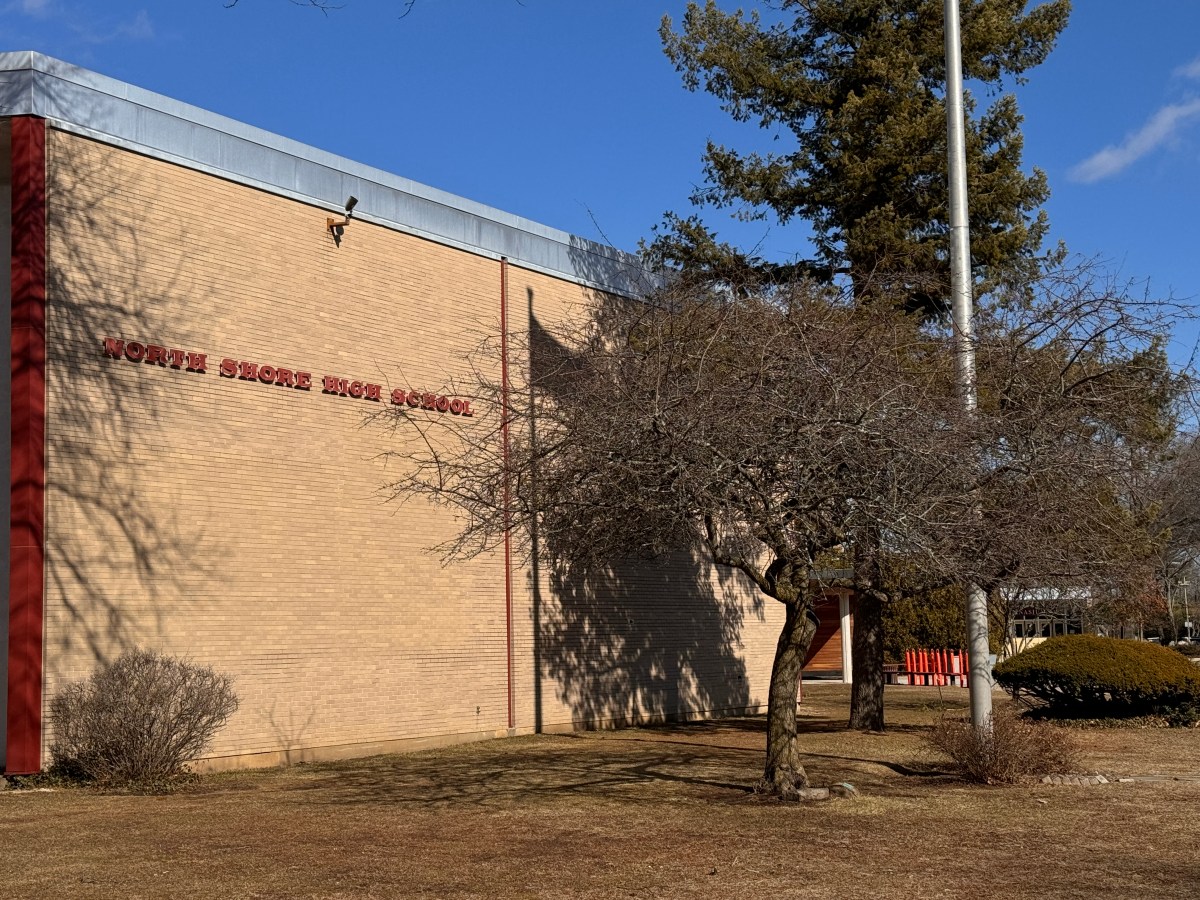
The North Shore Board of Education held its initial 2025-2026 budget presentation for a crowd of parents and other community members demanding the board oppose any potential Battery Energy Storage facilities at Glenwood Landing.
The proposed budget for the upcoming school year is $125,635,847.75, a 2.435% increase from the current school year. A tax levy increase of 2.992% was also introduced, which is below the district’s maximum allowable tax levy increase of 3.195%.
North Shore Superintendent Christopher Zublionis said while district revenues are stable for now, come the 2027-2028 school year, the district could face a more than $8 million revenue loss due to tax changes from the 2022 settlement between the county and the LIPA Glenwood Landing.
Homeowners make up over 80% of the district’s tax class share, up from around 70% before the LIPA settlement. While the tax levy is below its over 3% cap, Zublionis said individual school tax bills can fluctuate based on how much a home’s value increases in a given year.
Zublionis also said the budget is not set in stone until the school board adopts the budget on April 22, which the public will vote on May 20.
As the administrators concluded the budget presentation, the crowd of over a dozen community members spoke during public comments demanding that the board oppose any BES development at the Glenwood Landing power facility.
Jupiter Power Company proposed a 275-megawatt lithium battery storage facility at the Glenwood Landing site last fall, which would contain up to hundreds of shipping container-like structures powering thousands of lithium-ion battery cells.
The site is located adjacent to the North Shore transportation facility and less than a mile from Glenwood Landing Elementary School. Some residents said that such a facility could result in long-lasting fires like the Moss Landing battery plant fire in California, which could spew heavy metals nickel and hydrogen fluoride into the air.
“We should learn from lessons from the past, and there is no reason to rush into an infancy technology and all of its proven risks. It will destroy us,” one resident said.
The town of Oyster Bay extended its moratorium on BES facilities by six months in October, and residents said the school board should support an additional moratorium extension.
Responding to the concerned parents and other community members, Board Trustee Dave Ludmar said the board understands the frustrations speakers expressed, but the board can’t make an immediate decision without having discussions and deliberating further.
“One of the privileges of being on this board is its deliberative nature, but one of the frustrations of being on this board is [also] its deliberative nature,” Ludmar said. “Neither the district, nor us as its governing body representing the community, can operate with the same degree of speed and directness that individuals can.”
North Shore School District will host “What Makes Us, Us” sessions with parents and administrators throughout March, concluding on April 2 with a community meeting at the North Shore Middle School Library at 7 pm. The Board of Education will also host a budget review session on March 13.