



Back in 1991, a three-day incident known as the Crown Heights riot inflamed Central Brooklyn. During this time, fighting broke out between the neighborhood’s West Indian/African American and Jewish communities. Lives were lost and property was destroyed. Eventually, Black and Jewish leaders achieved rapprochement between the aforementioned communities.
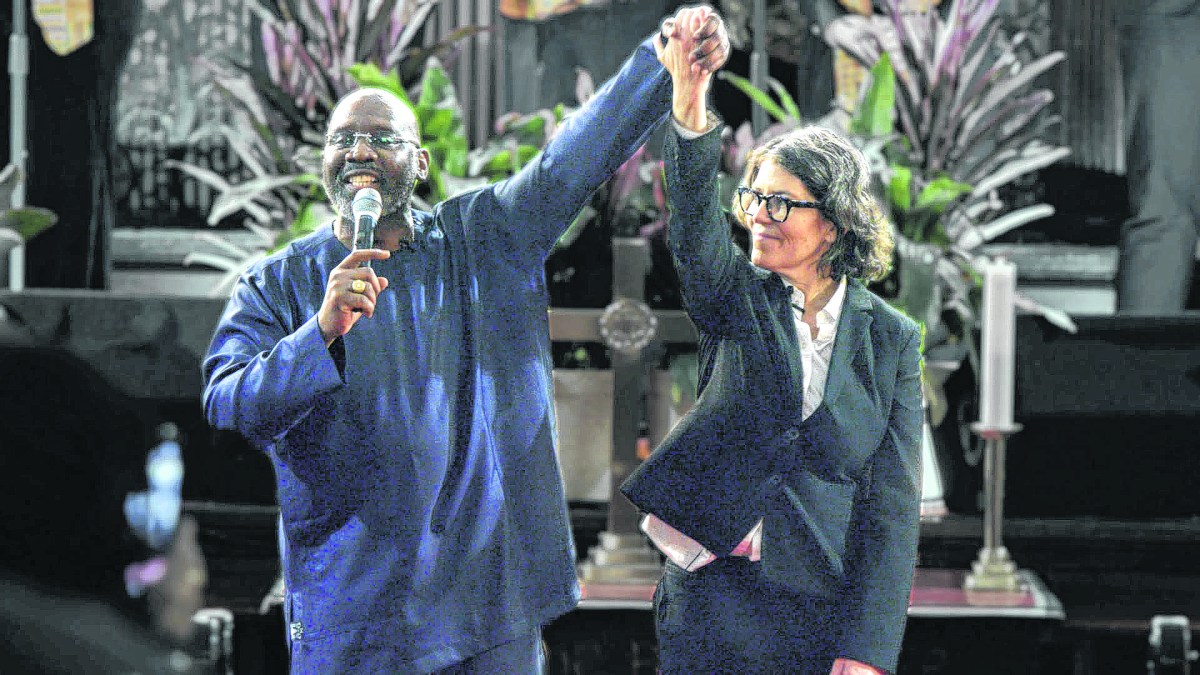
While not directly connected, the 2024 documentary All God’s Children is a continuation of that goal of continuing to strengthen these bonds by way of a partnership formed between Congregation Beth Elohim’s Rabbi Rachel Timoner and the Rev. Dr. Robert Waterman of Antioch Baptist Church. The film was produced and directed by Timoner’s sibling Ondi Timoner (Dig! and Brand: A Second Coming) and evolved from an earlier project.
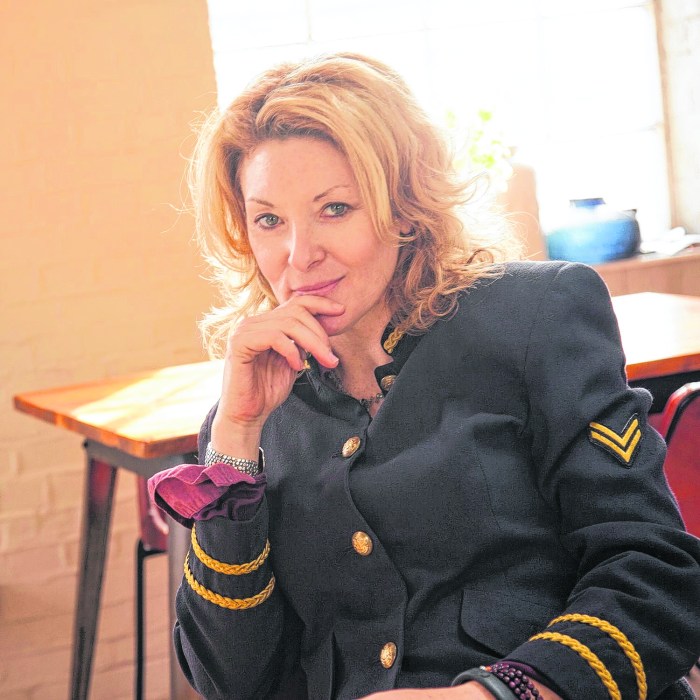
“I began what became All God’s Children as a short film called Rebel Rabbi in 2019,” Ondi explained. “I was inspired by my sister Rabbi Rachel Timoner’s determination to do whatever she could to set things right in the world. As a rabbi, she had been arrested eight times in the last couple of years for leading nonviolent protests, but I knew Rachel’s primary mission was always to fight racism, dating back to our childhood in the segregated South.”
Ondi added, “Shortly after we started filming, she had a meeting with Reverend Dr. Robert Waterman, and they set about an unprecedented partnership to try to stop racism and antisemitism in their Brooklyn communities by becoming family — so following Rachel and Robert’s mission became our focus, and boy, was it a tumultuous ride.”
Shot over five years, All God’s Children was inspired by Rabbi Timoner’s outreach to the Rev. Dr. Robert Waterman a couple of years prior in response to a spate of antisemitic violence.
“I first ran over to Antioch Baptist Church in either 2018 or 2019,” Rabbi Timoner recalled. “I’d only been in Brooklyn since 2015, so it was pretty early in my time here. There had been a series of attacks on Orthodox Jews in the streets and Pastor Waterman asked if I would come to his AACEO (African American Clergy & Elected Officials) breakfast at CUNY Medgar Evers College to speak about antisemitism. I went to that breakfast and that was my introduction to him and to Antioch Baptist Church. I reached out to him shortly afterwards to find out what we could do together.
“I definitely wanted to do something together. From there, we started imagining what we might do. I don’t think we really conceived of a project of the scale we ended up taking on, but we just knew we wanted to partner.”
That goal of unity was something the Rev. Robert Waterman was eager to embrace.
“Throughout my time of being a spiritual leader, everything I do is about building bridges,” the South Carolina native said. “I find a connection and find where the gaps are. I find where there needs to be a bridge built from one area to the next—where people need to begin conversations. Where that unity brings about strength. That’s my focus.”
A primary component of All God’s Children showcases how delicate the process can be in trying to overcome a partnership that was oftentimes threatened to be derailed by differences in religion and culture. At one point, Waterman points out, “…the elephant in the room is, can you worship together?”
When asked about that, Timoner admitted how rocky the relationship has been inside and outside of the film. But at the same time, she pointed out the good that’s come out of navigating these differences.
“Our partnership has been complicated and hard sometimes,” she said. “But that’s what you have to do if you’re going to be in a partnership. It doesn’t mean you only talk about the things you agree about. You also have to talk about the things you don’t agree about and the things that are uncomfortable, because there are differences. You might even have strongly held beliefs that conflict with each other. It’s just important to be able to go there and not avoid that.”
She added, “I want to live in a city where we can call upon each other. Where if we are in need, we can call each other to say that our community is in need or in trouble and be able to ask if you can show up for us. And I want to be in a city where we’re doing that for each other all the time. Where we’re showing up for each other and see each other as sisters and brothers across our differences.”
It’s a view the Rev. Waterman shares.
“My prayer is that this becomes a model to other communities,” he said. “How to practice tolerance. This is not the ending, it’s just the beginning.”
Understandably, Ondi Timoner emerged from All God’s Children with a sense of achievement and hope given the familial bonds forged by the largest reform synagogue and the oldest Black Baptist church in Brooklyn.
“I believe this feature film is an inspiring example of how to foster enduring dialogue and the power of partnership, across all differences—religious, racial, or economic,” she said.
All God’s Children will be screening on Nov. 20 as part of the Port Jefferson Documentary Series and at the First United Methodist Church, 603 Main St., Port Jefferson. Visit portjeffdocumentaryseries.com for more information.