



For centuries, sugar plums have held a place in the imagery and traditions of Christmas, despite the fact that most modern holiday bakers have never tasted one. The term appears in poems, carols and stories, usually invoking a sense of old-world sweetness and seasonal charm. But the history of sugar plums is far more complex than their name suggests and their connection to Christmas owes as much to literature as it does to confectionery.
Sugar plums first emerged in Europe during the 16th and 17th centuries, long before the modern candy industry existed. At that time, a “plum” in confectionery terms referred not to the fruit but to any small, round sweet. The word carried a similar meaning to “tidbit,” often describing a treat considered luxurious or special. These early sugar plums were created through a painstaking process known as panning, in which cooks gradually coated seeds, nuts, spices or bits of dried fruit with thin layers of sugar syrup.
The work required specialized equipment and significant skill. Confectioners used a large, rotating pan over heat, dripping syrup over a center ingredient and waiting for each layer to harden before adding the next. The process could take hours or even days for a single batch. The result was a polished, glossy candy with a hard shell and a flavorful core. Because sugar was expensive and the technique was labor-intensive, sugar plums became associated with wealth, celebration and special occasions.
The association with Christmas grew later, as holiday traditions began emphasizing indulgence and festivity. Sugar plums became one of the many confections exchanged or served during winter feasts across Europe. Their appearance in Christmas lore was cemented in the 19th century, especially through literature. As Christmas observances expanded in Victorian England and the United States, sugar plums became a symbolic sweet placed alongside other seasonal staples such as cakes, fruits and roasted nuts.
The phrase “visions of sugar plums” helped the candy secure its place in popular imagination. Though the original confections bore little resemblance to today’s soft or fruit-based holiday treats, the term endured and came to represent a general fantasy of holiday delight. As modern candy-making evolved and mass-produced sweets became commonplace original panned sugar plums faded from everyday use. What survived was the name, not the recipe.
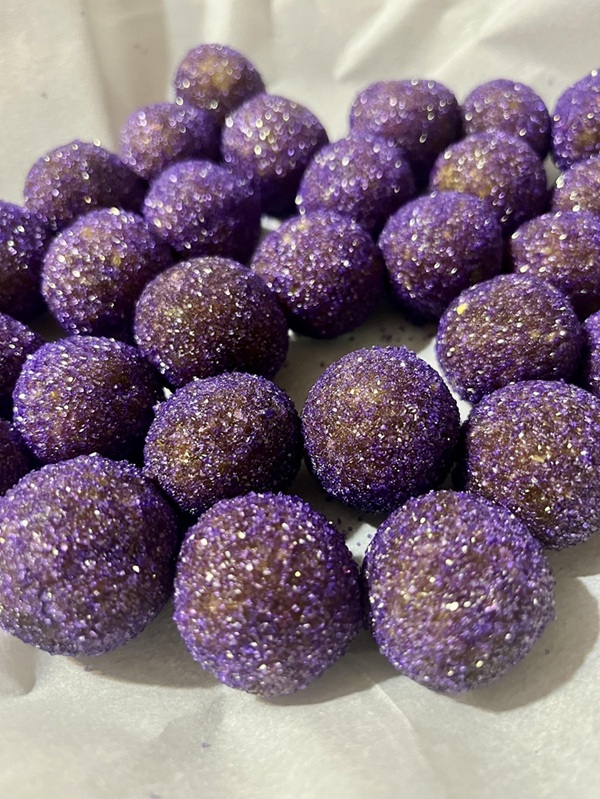
In recent years, simple sugar-plum recipes have gained popularity, particularly among home bakers looking for holiday treats that nod to tradition without requiring historical techniques. These modern versions typically take the form of bite-sized fruit-and-nut confections rolled in sugar. They require no special equipment and most can be made in less than half an hour. While they differ greatly from the original candies, they evoke similar seasonal flavors and maintain the festive association.
A straightforward recipe might include chopped dried fruits such as apricots, dates or cranberries mixed with nuts, spices and a small amount of honey or juice to bind the ingredients. The mixture is shaped into small balls and rolled in coarse sugar. The result is a soft, chewy sweet with natural fruit flavors and a decorative sparkle that fits well into holiday dessert spreads.
The difference between this simple recipe and the traditional method is substantial. Classic sugar plums were built through a slow, layered process that created hard-shelled confections. The center ingredient was coated repeatedly with crystallized sugar, forming a firm outer layer similar to modern dragées. The result was closer to a candy than a fruit confection. Flavor depended largely on the chosen core—commonly spices, nuts or seeds—while the sugar coating provided sweetness and texture.
By contrast, contemporary sugar-plum recipes rely on the natural sweetness and moisture of dried fruit. They do not undergo panning or crystallization. Instead, ingredients are blended together, shaped and coated, making the process more akin to preparing an energy bite or fruit truffle than creating historic candy. While traditional sugar plums required heat, timing and repeated applications of syrup, modern versions only require a bowl, a cutting board and a few minutes of preparation.
The revival of sugar-plum recipes reflects a broader interest in reconnecting with holiday traditions. Although the modern treats differ from their historical counterparts, they carry the same festive intent: to offer small, flavorful sweets that signal celebration. Their ease of preparation has helped them reenter the holiday kitchen, where they serve as a tribute to older customs without demanding the time and craftsmanship once required.
Simple Sugar Plum Recipe
Ingredients:
1 cup mixed dried fruits (such as apricots, cranberries, dates or raisins)
1/2 cup nuts (almonds, pistachios or walnuts)
1 Tbsp honey or orange juice
1/2 tsp cinnamon
Sugar for rolling
Instructions:
Finely chop the dried fruits and nuts or pulse them in a food processor. Mix with honey or juice and cinnamon until the mixture sticks together. Shape into small balls and roll in sugar. Refrigerate until firm.