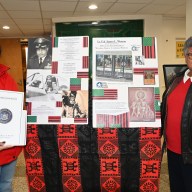




Temple Beth El in Great Neck held its annual Martin Luther King Jr. Shabbat at sundown on Friday, Jan. 17.
Bill Tinglin, the president and CEO of School News Nationwide, was the guest speaker for the service, which has been held in Great Neck for over 50 years.
“Dr. King himself spoke in this chapel in 1967,” said Temple Beth El Senior Rabbi Brian Stoller. “His voice and his teachings reverberate in these walls.”
Roger Tilles introduced Tinglin and said, “None are more moving and spiritual for me than these Martin Luther King evenings.”
Tilles spoke of other speakers that had taken the podium at Temple Beth El—John Lewis and Hakeem Jeffries
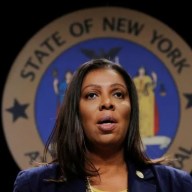
Letitia James had also been a guest speaker and attended a dinner at Temple Beth El beforehand but was unable to attend the service.
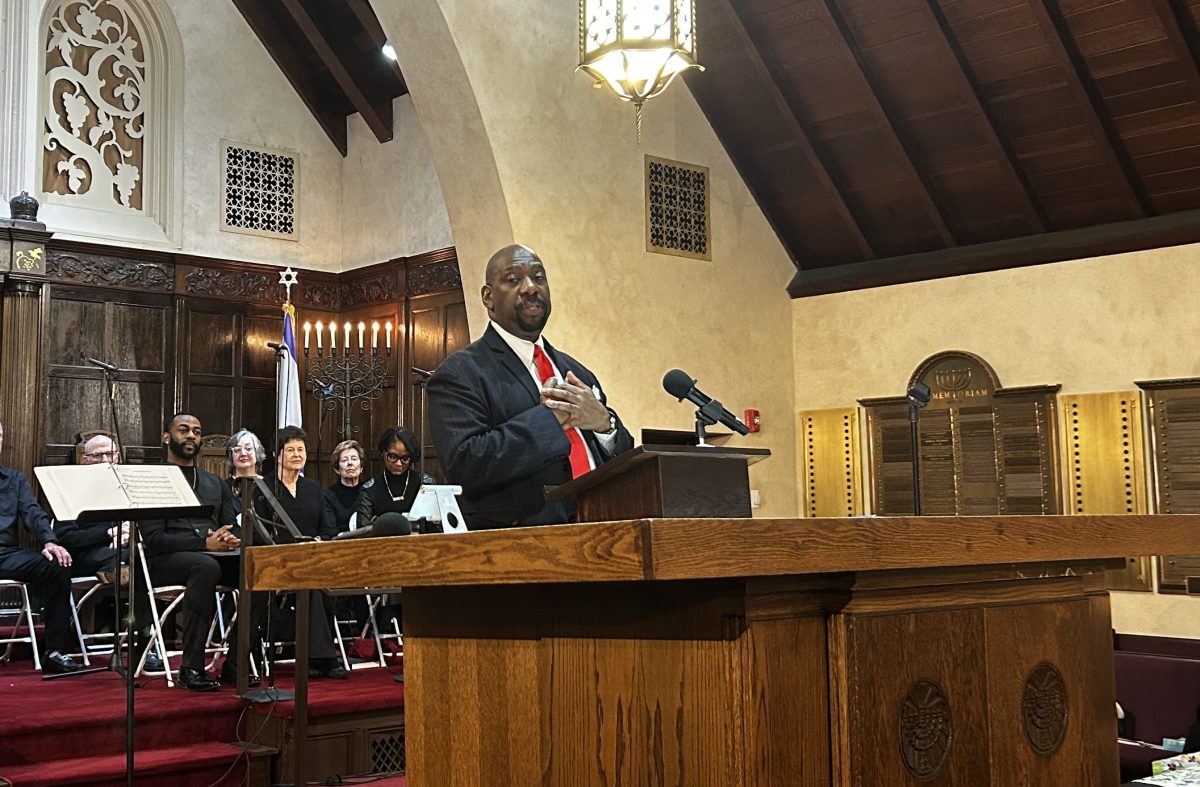
Tinglin took the podium and spoke with a strong and careful voice. “This is not merely a commemorative gathering,” Tinglin said. “This is a moral gathering.”
He compared the Jewish and Black experiences: “Two histories, two narratives changed by suffering, endurance, and faith. Two peoples who have known … hatred and hope loss and resilience, and yet we are bound together by one endurable truth.”
Many community leaders assembled in the synagogue as Tinglin spoke at the podium. North Hempstead Supervisor Jennifer DeSena, State Comptroller Tom DiNapoli, President of ERASE Racism Elaine Willis, and Assembly Member Chuck Lavine were all present.
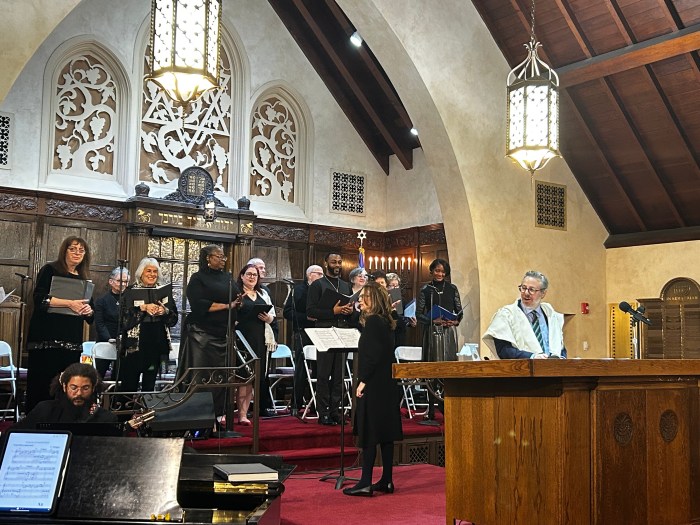
“Dr. King’s moral vision was deeply rooted in Jewish prophetic tradition.” Tinglin spoke of King’s commitment to combating antisemitism and the world’s need to fight it today.
“Across the world antisemitism has risen,” Tinglin said. “Not quietly, not surely, not subtly, but boldly.”
Tinglin told a story about his mentor, Holocaust survivor Sally Frishburg.
Frishburg had hidden in a barn in Poland for more than two years. On her way to the United States, an old Polish woman called her a “dirty Jew” and kicked Frishburg out of her bed.
She then ran into the arms of a Black woman who did not know her language but still comforted her.
Tinglin has focused on educating children about the Holocaust in a time when so many survivors are dying away and can no longer tell their stories as Frishburg did.
He said his emphasis is not on statistics but on empathy and making readers feel the gravity of the genocide.
Tinglin lifted up a book he co-authored while he stood at the stand—“One of Humanity’s Darkest Hours: the Untold Story of the Holocaust.”
The book is interactive with QR codes on the pages that link to voices of Holocaust survivors, pictures, maps, and timelines.
“This book meets students exactly where they are,” Tinglin said.
Stoller spoke of what the world can learn from King today when he took the stand. “Tonight, at this grim moment in our country, the words of Dr. King cry out to us like those of an ancient prophet, demanding a moral reckoning.”
He contrasted Christian nationalism with the teachings of non-violence by King. “This is a dark time for America,” Stoller said. “Our leaders proclaim that America is a Christian nation, but this is not the Christianity preached by Dr. King.”
“Dr. King’s legacy needs to be more than honored. It needs to be lived out in our own time.”