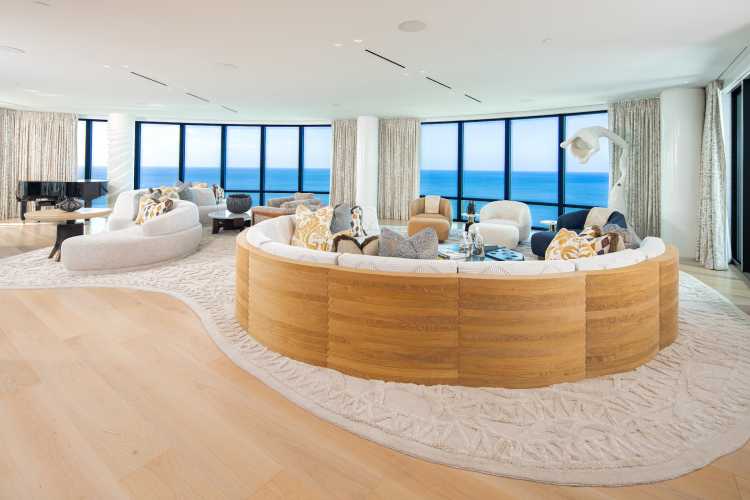



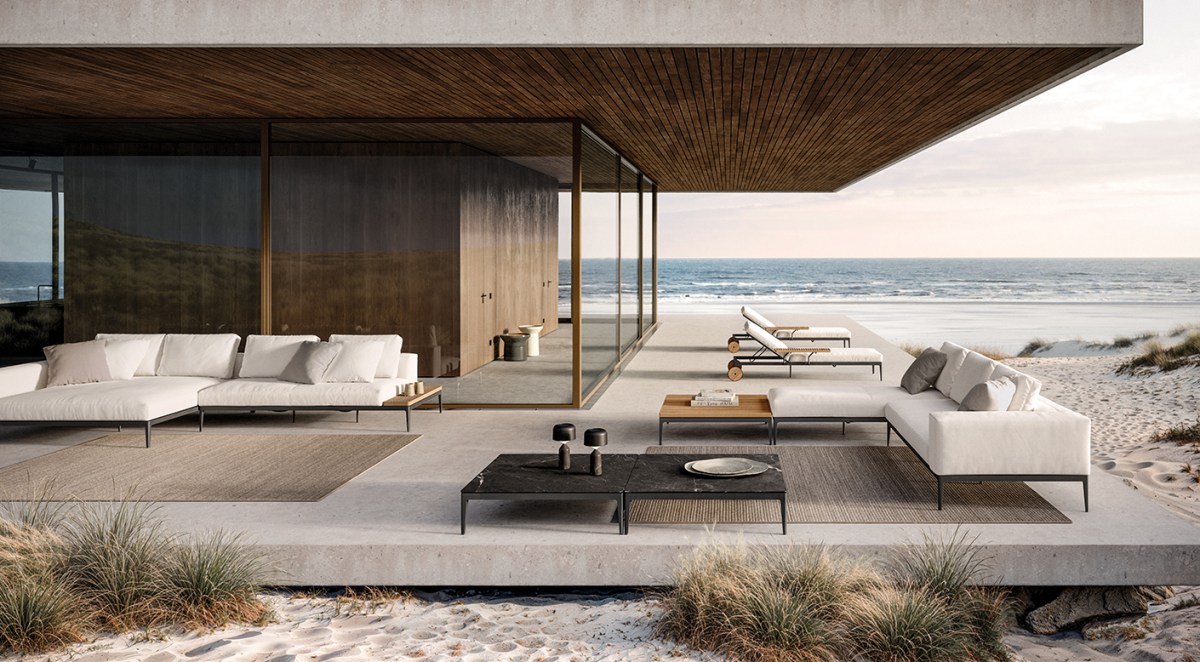
On Long Island, the backyard has quietly expanded its role.
Where it once held a table, a few chairs and maybe a pair of chaises pointed toward the sun, it now carries the expectations of a living room, a dining space and a gathering area all at once. Evenings extend later into the season. Shade matters as much as sunlight. Seating is arranged for hours, and the goal is not simply being outside, but staying there comfortably.
That shift has altered how homeowners approach furnishing their properties. Many now plan complete environments, a place to lounge, a place to eat, and a place to gather after dark, with layout guiding the decisions from the start. Materials and maintenance matter more, but layout matters most.
At Sanctuary Home & Patio in Oyster Bay, the showroom makes that approach visible. The floor allows visitors to compare styles, materials and layouts side by side and see how pieces work together. Customers often arrive thinking about a table or a set of chairs and leave planning an entire outdoor arrangement.
Designing for Everyday Living
According to co-owner Dottie Simons, the difference begins with how people use their yards today. Pools and patios are no longer the only destination. Homeowners are building plunge pools and saunas, adding courts for games, and designing outdoor seating areas meant for everyday living, not occasional entertaining. The expectation is closer to a resort experience that functions in daily life.
With that shift comes a different kind of buying decision. Sanctuary Home & Patio positions itself around what Simons calls “better goods”—manufacturers known for durability, strong warranties and long-term satisfaction, including names such as Brown Jordan, Gloster, and Ebel Inc.
Planning Before Purchasing
Many visitors arrive with only a rough idea of what they want. The first step is conversation. Staff members ask about household size, how often guests visit, how many seats are needed at minimum and maximum, and where sunlight moves across the yard during the day.
Shade placement becomes a practical discussion. In some cases, the store even advises how and where a cantilever umbrella should be installed to function properly.
From there, the backyard is divided into zones. The traditional dining-set-first layout has largely flipped. Lounging areas now anchor the space. Sofas, club chairs, and gathering seating are arranged for extended use while dining becomes a complementary feature that ties into the overall design. The goal is comfort without heavy upkeep.
Materials That Make It Work
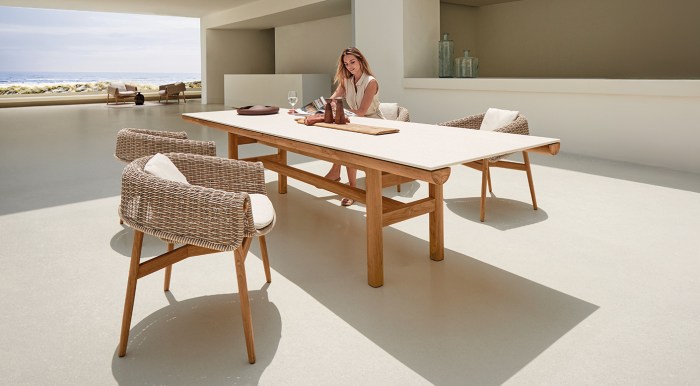
That emphasis on maintenance drives many material decisions. Aluminum frames have grown in popularity because they resist wear. Ceramic tabletops, fired at high temperatures, are selected for their resistance to staining and scratching. Man-made surfaces such as Dekton are chosen for durability in heavily used areas.
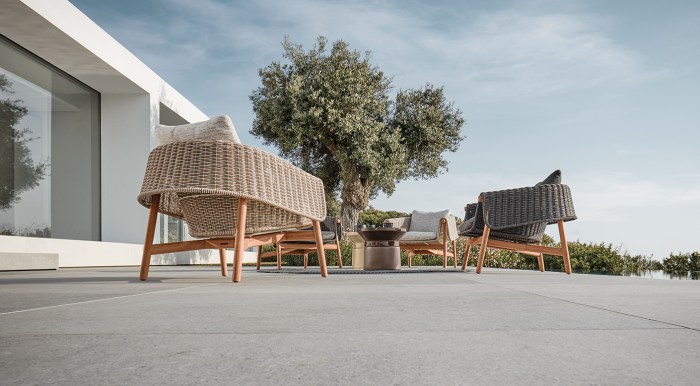
Teak appears as an accent to warm up a space, but not necessarily as the dominant material. Teak specialists like Barlow Tyrie sit alongside aluminum-forward lines so clients can balance warmth with practicality.
Sanctuary Home & Patio’s assortment reflects those choices. The showroom displays multiple umbrella styles and sizes so customers can understand how they operate before installation. High-performance shade from brands like TUUCI and Treasure Garden helps shape how a space is enjoyed throughout the day. Fire features are demonstrated with attention to safety and reliability, offering options in both liquid propane and natural gas. Fire collections from makers such as Brown Jordan and Homecrest Outdoor Living extend outdoor use well beyond summer evenings.
Seating moves from sling and mesh designs intended for low maintenance to deeper lounge pieces with performance cushions and outdoor fabrics. The overall effect mirrors the kind of comfort people notice in hospitality settings, where gathering areas invite longer stays. Accessories, lighting, pillows, and accent elements complete the environment and tie the space together.
Experiencing the Details
Some pieces require in-person experience to fully appreciate. Cantilever umbrellas reveal their movement and coverage only when operated. Certain daybeds use tensioned performance straps instead of large cushions, eliminating the need to carry components in and out each day. These details tend to shift decisions once customers see them firsthand.
Because layouts are planned as complete environments, items are frequently mixed across manufacturers to achieve the right scale and function. A dining table might pair with different seating, while lounge furniture coordinates with fire and shade elements nearby. The result is a backyard that feels considered and intentional.
From Delivery to Daily Use
The process continues beyond selection. Sanctuary Home & Patio handles its own deliveries with white-gloved precision, bringing furniture into the yard, placing each piece and removing all packaging. Staff then demonstrate how every component works, from opening umbrella mechanisms to safely operating fire tables and adjusting movable shade. Customers end up with a finished setup and a clear understanding of how to use it.
That level of preparation often shapes the long-term relationship. Many customers return when they move or change homes, and much of the business comes through referrals from previous clients. The experience does not end at delivery, and that continuity is what brings people back.
In that sense, the Oyster Bay showroom becomes a place to plan outdoor living. As Long Islanders continue to treat exterior areas as daily rooms, the distinction matters. Furnishing a backyard now centers on creating a place people live morning through evening and well beyond summer.
“We want it to work for you,” Simons says. “That’s the whole point.”
Sanctuary Home & Patio, 136-140 South Street, Oyster Bay, 516-870-3860, sanctuaryhp.com