



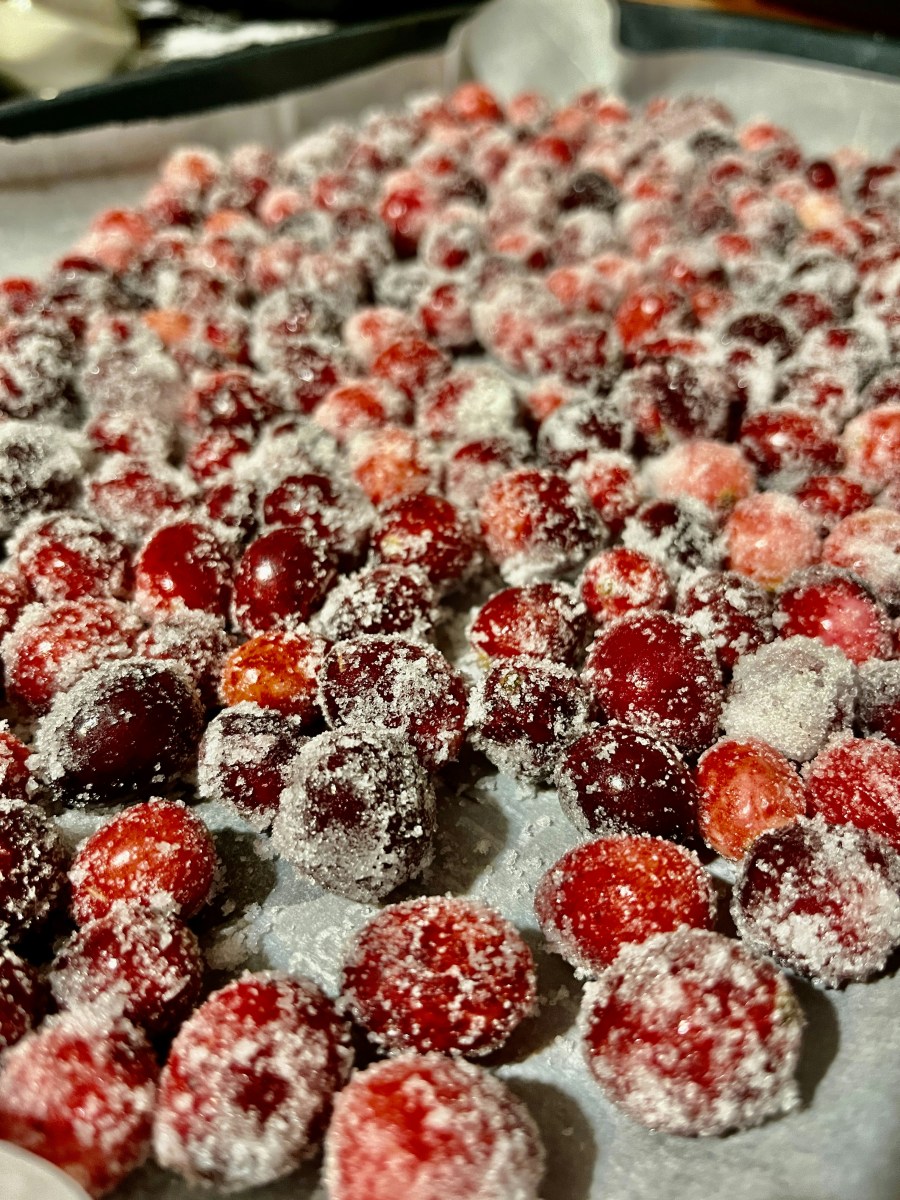
Candied cranberries have become a staple of holiday entertaining, adding vibrant color and a sweet-tart flavor to seasonal desserts, salads and garnishes. Their jewel-like appearance makes them visually appealing, while the sugary coating balances the natural tartness of the berry. The treat has roots in American culinary traditions but draws on broader techniques of preserving fruit with sugar, a method used for centuries across cultures.
Cranberries themselves are native to North America and have been used by Indigenous peoples for centuries, both as food and for medicinal purposes. Early European settlers adopted cranberries into their diets, often combining them with sugar and other flavorings to create preserves, sauces and sweet treats. The practice of candying fruit—coating it in sugar or simmering it in syrup—became especially popular in the 19th century as sugar became more widely available and affordable.
Candied cranberries are versatile in presentation and use. They are commonly sprinkled on cakes, incorporated into cookies, or arranged around cheeseboards and holiday platters. Their festive red hue makes them ideal for decorating winter-themed desserts or adding a pop of color to salads and beverages. Unlike cranberry sauce, which is often served warm or as a side, candied cranberries are firm and sweet, with a subtle tartness that lingers on the palate.
The process of candying cranberries is relatively simple, requiring only a few ingredients and minimal preparation time. Fresh cranberries are first blanched to soften their skins, then coated in a sugar syrup and left to dry. Once the sugar crystallizes, the cranberries develop a glossy, sweet exterior that preserves the berry while enhancing its natural flavor. Homemade versions allow for customization with spices such as cinnamon or cloves or a hint of citrus zest for added brightness.
Simple candied cranberries recipe
Ingredients:
-
12 ounces fresh cranberries
-
1 cup granulated sugar, divided
-
1/2 cup water
Instructions:
Rinse cranberries and discard any soft or damaged berries. In a small saucepan, combine water and 1/2 cup sugar. Heat over medium heat until the sugar dissolves and the mixture comes to a gentle boil.
Add the cranberries and cook for 2–3 minutes, until the skins begin to crack. Remove from heat and transfer the cranberries to a parchment-lined baking sheet. Let the cranberries cool for 15 minutes. Once slightly tacky, toss them with the remaining 1/2 cup sugar until evenly coated. Allow cranberries to dry at room temperature for at least 1 hour before using. Store in an airtight container for up to a week.
Candied cranberries are a practical and visually striking way to elevate holiday dishes. They offer a balance of sweetness and tartness that pairs well with desserts, cheeses and even cocktails. Making them at home provides the opportunity to experiment with flavors and presentation while maintaining control over sweetness and texture.
The treat reflects a longstanding tradition of using sugar to preserve fruit, adapted for modern celebrations where both taste and appearance matter. Whether served as a garnish, ingredient or standalone snack, candied cranberries capture the essence of festive cooking: simple, vibrant and seasonally appropriate.