



As extreme heat in summer and bitter cold in winter continue to push Long Island’s electric grid to its limits, state energy officials say new transmission infrastructure is increasingly necessary to prevent outages and soaring power costs.
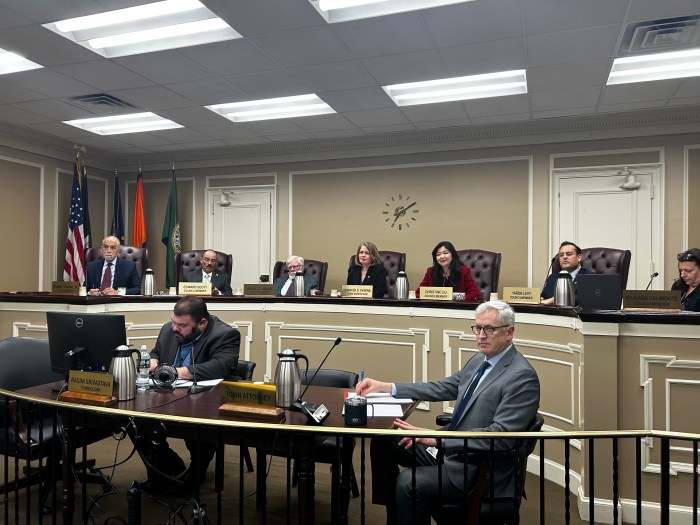
Concerns about the project were raised during a Village of East Hills Board of Trustees meeting, where speakers questioned the purpose of the underground transmission lines, potential health risks and the impact of construction on neighborhoods and businesses.
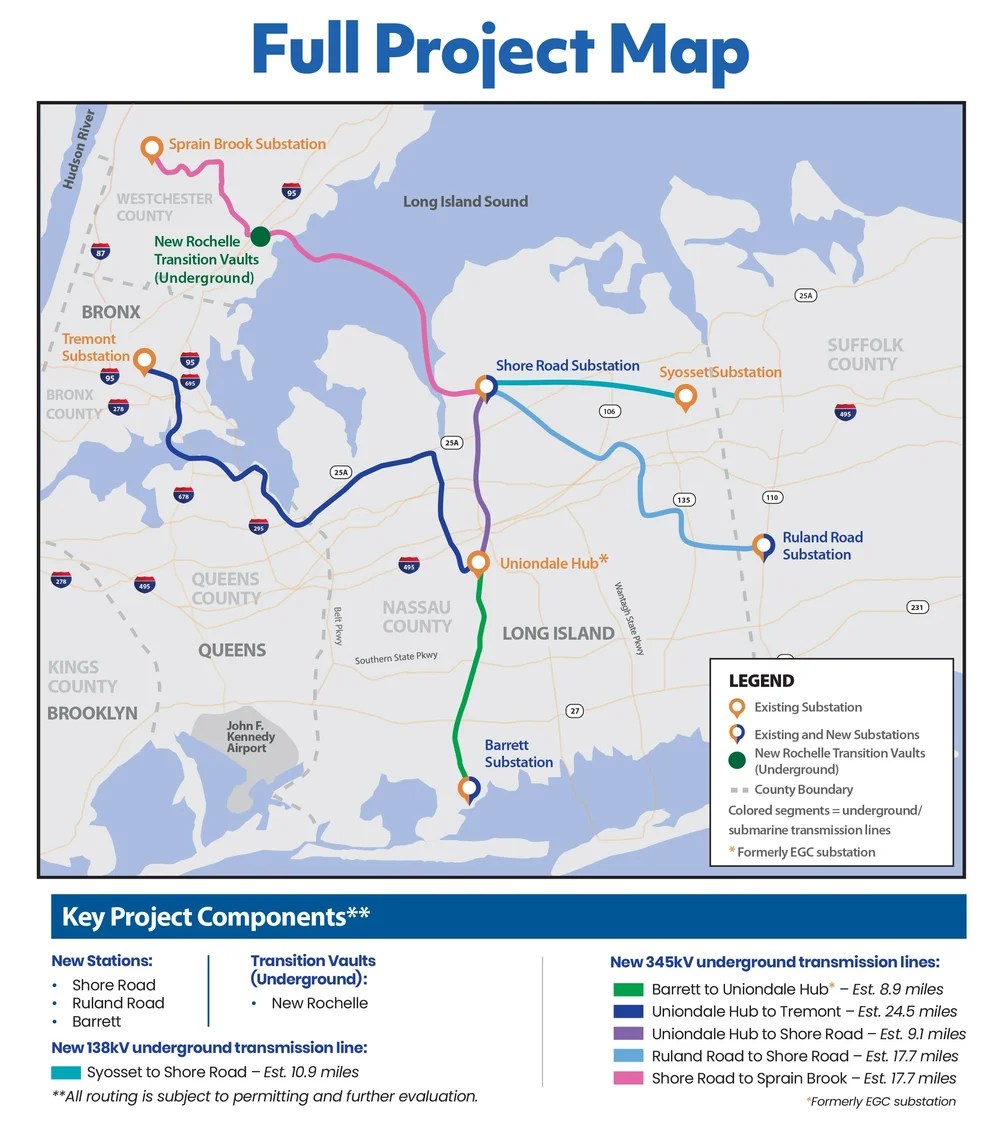
Propel NY Energy is a joint initiative of the New York Power Authority and New York Transco that would install new underground, high-vultage transmission lines aimed at strengthening reliability on Long Island and in New York City. Officials said the need has been underscored by recent weather extremes that have strained the statewide grid.
“Winter demands can be just as challenging as summer,” said Quentin McMahon, a director with NYPA working on the project. “When demand spikes across the region, congestion increases and areas like Long Island, which are isolated, feel it the most.”
During a widespread heat wave last summer, McMahon said congestion on the grid drove electricity prices on Long Island to more than double those elsewhere in the state. The New York Independent System Operator has warned that without additional transmission capacity, reliability deficiencies could begin appearing on Long Island as early as 2027.
At the East Hills meeting, a Glen Head resident suggested the project was intended to export wind energy off Long Island. Project representatives said that claim is incorrect.
“These lines are bidirectional and energy agnostic,” said Marykate Guilfoyle, manager of media and communications of New York Transco. “They can carry electricity in either direction and are designed to improve reliability, not move a specific type of power.”
Once in service, officials said, the added capacity would also allow Long Island to access cleaner energy granted elsewhere in the state.
The resident also raised concerns about electromagnetic fields from underground high-voltage cables near homes and schools. Project officials said extensive scientific research over decades has found no causal link between transmission lines and adverse health effects.
“This technology has been used safely across New York and the country for decades,” McMahon said, noting the state already has hundreds of miles of underground transmission lines.
Residents also expressed fears about prolonged construction, traffic disruptions and deep excavation. Project officials said construction would be conducted in short segments, typically advancing 50 to 150 feet per day, and that driveways and emergency access would not be blocked.
Business outreach was another point of contention. Guilfoyle said businesses along the route have received direct mail, newsletters and postcards and were invited to complete a survey designed to minimize construction impacts. She said the project team also conducted door-to-door outreach to more than 500 businesses and worked with local chambers of commerce.
Concerns were also raised about road restoration following construction. Shannon Baxevanis, director of communications and public affairs at New York Transco, said restoration plans will be dictated by municipal and state requirements and monitored through permitting and inspections.
“We are here to do a service and then have everyone satisfied with what is in the permit. If it’s in the permit, we owe it to you, and that’s what we agreed to do across this whole project,” McMahon said.
As electrification and population growth continue to increase demand, energy officials said projects like Propel NY are critical to maintaining reliability during increasingly unpredictable weather.