



Glen Head community residents expressed concerns at a public meeting on Thursday, Jan. 29, about the proposed Propel NY Energy project, a $3.2 billion initiative intended to improve the region’s electrical system, which would include installing 58 miles of underground power transmission lines throughout Nassau County.
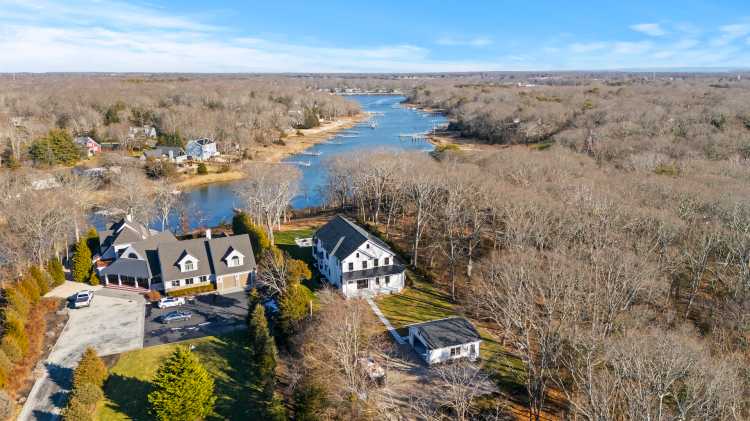
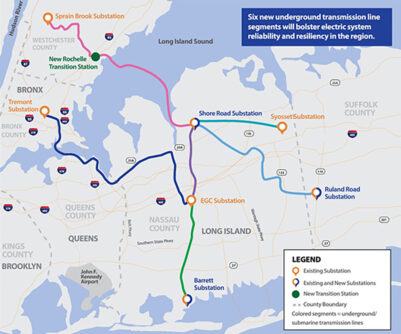
The project, which is a collaboration of the New York Power Authority and New York Transco, a New York developer, owner and operator of bulk electrical transmission facilities, would begin in Westchester and the Bronx and cross portions of Queens, adding miles of submarine electric transmission cables, predominantly in the Hempstead Harbour and Long Island Sound.
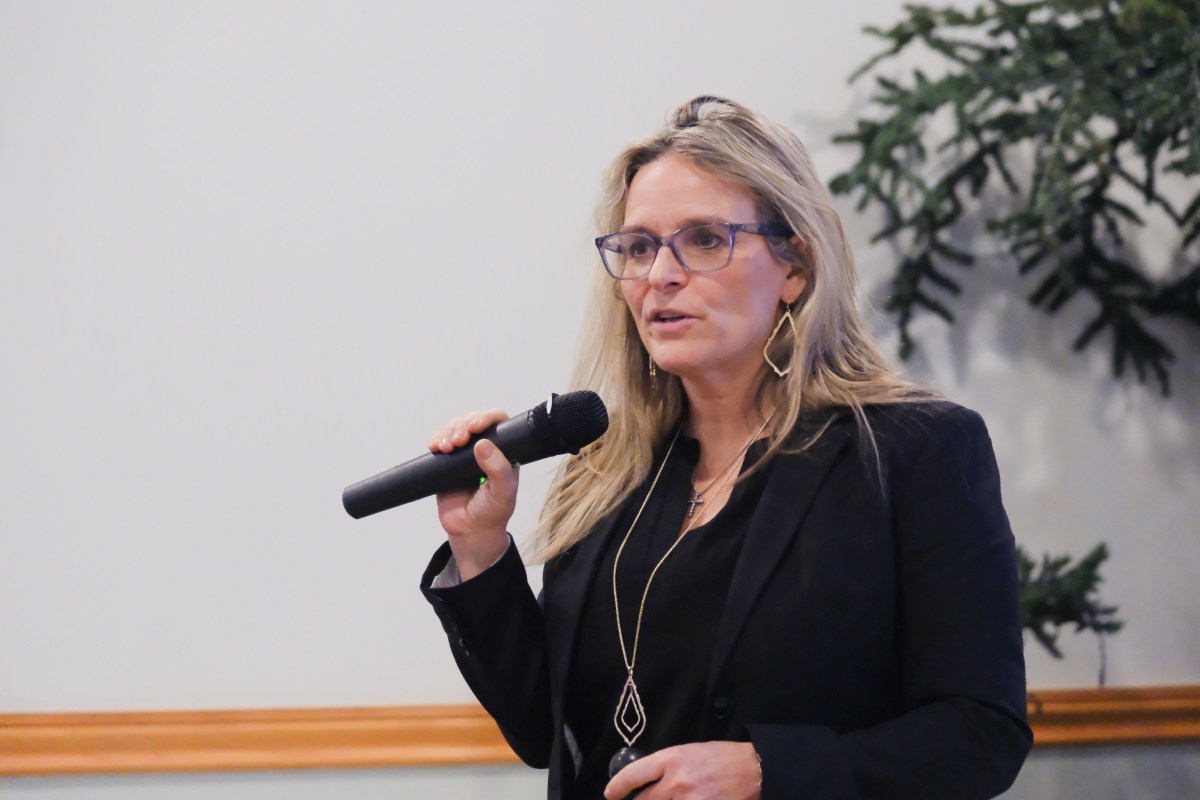
Community activists Christine Panzeca and Doug Augenthaler, who led a session at the Glenwood Landing American Legion Post 336, said the project would create financial, environmental and health problems, including the effects of underground transmission lines. They also pointed to the disruptions caused by the installation of the lines and how local life will be affected. Propel has staunchly defended the project as vital to the region.
Panzeca and Doug Augenthaler said they have been holding frequent gatherings to inform residents and urged people to contact their local elected officials to share their opinions on the project.
“Many of our local politicians are the only ones who are listening,” she said. “At the state level, nobody cares. When you go to the ballot box this year, know who you’re voting for and who’s going to represent your community vs. who is going to represent the interests of lobbyists and big business.”
Panzeca also said the project would be used to promote wind, solar, and battery storage systems – a claim that Propel Energy NY representatives strongly dispute.
“You have to understand, with renewable energy, the sun doesn’t always shine and the wind doesn’t always blow,” said Panzeca. “It’s not a reliable, plentiful source of energy and it requires battery storage.”
Propel officials have said their project is not related to offshore wind projects or to battery energy storage systems. The transmission lines simply carry electricity.
“Propel NY’s transmission lines are bi‑directional, meaning they can carry electricity both from upstate to downstate and vice versa, depending on system needs,” Marykate Guilfoyle, the manager of media and communications for New York Transco, told Schneps Media LI after the meeting.
Guilfoyle said her team has sought to educate the community about the project.
“Our entire team is proactive and consistent in providing communities with accurate, factual information about this vital transmission project that will ensure New York has a reliable, resilient electric grid,” she said.
Propel has said the state Independent System Operator released reports projecting an increased risk of power disturbances beginning as soon as next year on Long Island due to both generation and transmission constraints and that it is clear that its project is needed to help ensure the lights and heat or air conditioning stay on.
Guilfoyle said the project would use 345kV underground transmission technology that has “been safely and successfully built and operated across the country for decades. New York State has 831 miles of underground transmission, including 241 miles of 345kV lines.”
“Extensive scientific and medical research conducted over nearly five decades has found no negative cause-and-effect relationship between transmission lines and human or animal health,” she added. “Electric and magnetic fields are a part of everyday life and are present in common household appliances and anything that carries electricity.”
A majority of the lines will be placed in Long Island, with just 12 miles in New York City and 12.6 miles in Westchester County.
Nearly 10 miles of submarine lines will also be installed, cutting through Hempstead Harbor and the Long Island Sound. Of this, 6.25 miles will be considered part of Long Island.
The transmission lines are planned to be placed under existing public rights of way and utility properties throughout Nassau County and in Suffolk County, Queens, the Bronx and Westchester County.
The project would establish three ties between Long Island and the statewide power grid, mostly utilizing 345kV transmission lines.
Three segments of the transmission lines route will run through North Hempstead on Northern Boulevard, Mineola Avenue to Willis Avenue, and Glen Cove Road.
In Nassau County, a majority of the lines will run through the Town of North Hempstead and cut through 11 villages. Approximately 19.5 miles of lines will be installed in North Hempstead.
These lines would cut through the villages of Westbury, Old Westbury, East Hills, Roslyn Harbor, Mineola, Williston Park, Roslyn, Flower Hill, Lake Success, Russell Gardens, and Thomaston.
Guilfoyle said the construction timeline for this project is four years.
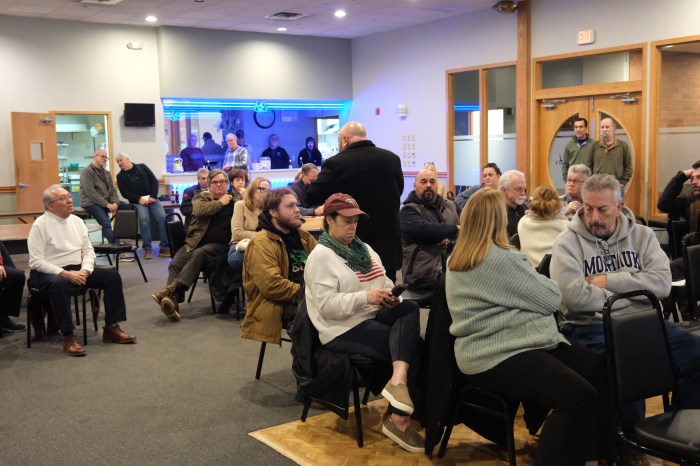
Panzeca said throughout the night that the project will cost taxpayer dollars, have lasting environmental impacts and that information has not been properly shared with the community.
Lori Golden said she asked her husband, John, whether they would need to sell their home at the meeting.
Panzeca maintained despite Propel’s statements that Propel’s electric transmission cables. is connected to offshore wind projects in the Atlantic Ocean and energy projects like Propel’s are also accompanied by battery energy storage systems, something the Glen Head community has opposed for years.
Panzeca and Augenthaler both said multiple times that despite Jupiter Power pulling out of its proposal for a 275-megawatt battery storage system that was proposed for Glenwood Landing in 2025, the company’s website is still running and that Jupiter Power, or any battery storage system, could try to come back to the area at any point.
“We are still a target,” Panzeca said.
“They will come back in a heartbeat,” Augenthaler said.
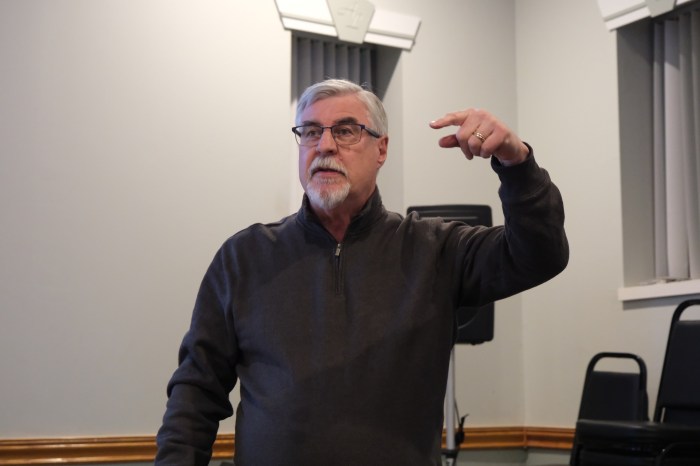
Augenthaler said any community that doesn’t have battery energy storage yet is bound to have it in the future.
“Even if you’re not living near one of these right now, you’re going to in a few years,” he said.
Construction is anticipated to begin this year and Propel has projected a four-year construction period.
“Construction will take place in phases to limit disruptions as much as possible,” Guilfoyle said. “We’re working closely with local stakeholders, including municipalities, school districts, first responders, and others, to develop detailed traffic and construction plans. Any impacts from the work will be temporary. No one will be blocked from getting in or out of their driveway and notifications for work on streets will be sent in advance. This kind of construction happens regularly across New York, and our teams follow well-established practices. “
Residents still stated their concerns with construction, saying it will shut down local businesses and create traffic throughout the area. Golden said she fears that Propel “has not done its due diligence” in looking into the composition of the land it plans to construct on.
Panzeca said that community advocates and local organization leaders have been involved in an Article VII settlement process with Propel, seeking to protect the community’s rights and local zoning.
Panzeca said they have been in the settlement process for months and Augenthaler said “if they plan to break ground in 2026, then settlement is ending quite soon.”
Propel has said construction will be temporary and not cause long-term hindrances to communities, something that community members have argued won’t be the case.
A majority of the lines will be placed in Long Island, with just 12 miles in New York City and about 9 miles in Westchester County.
Augenthaler said he doesn’t understand why energy projects are trying to come to the area at this moment, to which someone in the audience yelled “money grab!”
In Nassau County, 15 miles of lines are planned in North Hempstead, 12 miles in Hempstead and 31 miles in Oyster Bay. There are an additional 6.5 miles of submarine lines planned through the Long Island Sound.
One person in the crowd said Nassau County is the “beating heart” of the region’s proposed energy projects, and if they stop it in Nassau County, then the project can’t expand.
Long Island officials and residents have been publicly calling out wind and energy projects slated for the region for over a year. Panzeca joined Nassau County Republican officials at a rally in Long Beach in April 2025.
Several municipalities throughout Nassau have enacted moratoriums against battery energy storage systems as well. The short-term bans are not a permanent solution, though, Panzeca said on Thursday, as they only provide relief in intervals and have to be continuously approved by town boards and city councils.
Several members of the community voiced their concerns after the presentation and offered their own suggestions for how to address the project. Some said to call elected officials’ offices, others suggested raising advocacy through social media posts, protests or putting up fliers with information about the project.