



It was in high school that Andrew Cronson, the founder of the Manhasset Historical Society, realized his passion for understanding the history that surrounded him.
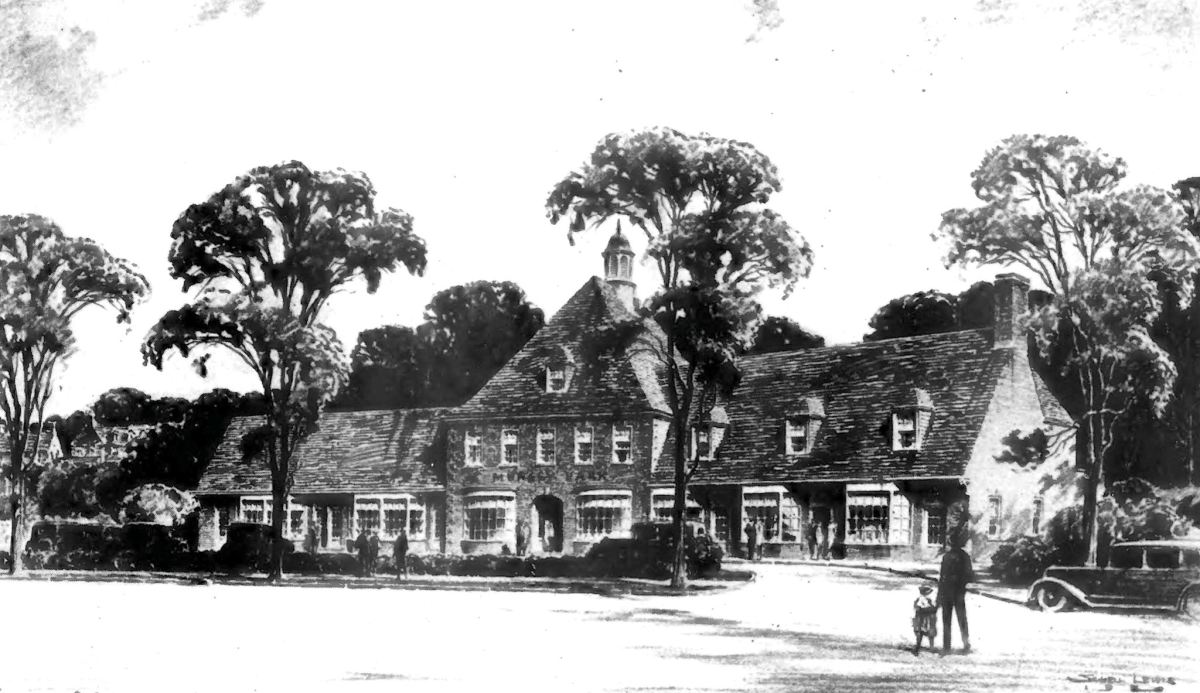
“I wish I could say it was a positive occurrence that sparked it,” he said, but instead it was the destruction of Inisfada in Manhasset, once one of the largest private homes in the United States which was later converted to be a Jesuit retreat house.
Cronson said he was the last person permitted to photograph the interior of the historic mansion in detail before it was demolished and redeveloped.
“This really brought home to me that our history is so fragile out here,” Cronson said.
Cronson took it upon himself to create the Manhasset Historical Society this year to advocate for the preservation of historic sites in the community, and he has already assembled a board of over 20 members.
Architects Laura Heim and Sussan Lari, architectural conservator Michael Devonshire Tony Wood and urban planner Jeremy Woodoff are consulting for the society, Cronson said.
He became involved with the Great Neck Historical Society in 2021 after a plan was proposed to replace the Tower Ford auto dealership with an apartment complex.
“It was slated to be demolished — this beautiful Tudor-revival building with so much history and really renowned within Great Neck,” he said, shaking his head.
Cronson said he helped lead a campaign petitioning the Village of Thomaston to designate it as a landmark, and in 2022, it succeeded.
But now, Cronson is turning his attention to his childhood home of Manhasset.
Cronson said Manhasset is distinct because of the way it was developed.
“As the 1900s come about, Manhasset really, without exception, is a place for very wealthy people to build their homes,” he said, where farmland were turned to country homes for very affluent residents.
Each neighborhood of Manhasset was developed by a different company with many of the buildings designed by the same architect.
T.B. Ackerson Co. developed Flower Hill; the Plandome Land Co. developed Plandome; Levitt & Sons, the famed developer of Levittown, developed North and South Strathmore.
Cronson said in Strathmore, one can see a “common set of building blocks” similar to Levittown, but the homes are still not identical.
“This is an area that has had such really extraordinary beauty and acclaim, but it has not had a focus on trying to plan for the future,” Cronson said.
“My vision for the group is really not to be an ordinary historical society that is one that puts on a country fair or cleans tombstones, but [rather] one that is really an advocacy society.”
Cronson said one of the Manhasset Historical Society’s primary goals will be to push back against the “increasing encroachment of speculation.”
And he said he is looking to the Historical Society of Palm Beach County in Florida as a model for a historical association with “enormous wealth and enormous pride of place” that is more activist in its nature.
Cronson said the society plans to put pressure on the Town of North Hempstead and incorporated villages in Manhasset to designate specific sites as landmarks.
“North Hempstead has not designated a single landmark in over 20 years,” said Cronson, before listing the group’s top priorities for designation.
The Works Progress Administration built the Manhasset Secondary School building as a New Deal construction project under President Roosevelt from 1933 to 1939.
There are also Revolutionary-era homes at 200 Port Washington Blvd. in Flower Hill and 263 Manhasset Ave. in Shorehaven.
Cronson also said there is reason to believe an underground railroad site exists in Manhasset, and he plans to push for landmark designation for all of these buildings.
The Manhasset Historical Society is also in touch with a few homeowners in Plandome Heights who have expressed interest in designating their own homes as landmarks.
“We want to see those get the full attention that they deserve,” Cronson said.
Cronson is currently working on an audio series where he records interviews with prominent Manhasset residents.
The urgency of the project hit him when he said he attempted to get in contact with someone who had lived in Strathmore her whole life, but had died before he could connect with her.
Cronson has talked with architects, developers, and owners of historic businesses in the community.
The audio series aims to “chronicle the attainment of the American dream,” and the project will be deposited with the Library of Congress.
“Those words get to live on forever as part of the broader American story,” Cronson said.
Cronson spoke with such pride for and encyclopedic knowledge of his community.
“It’s unlike anywhere else that I’ve really been or seen,” he said
“My success in preservation is ultimately what I hope my legacy will be, that I used my energy to leave a mark that is indelible for those who were here before us and especially all not yet known who will come after.”