



Irish food has become synonymous with potatoes, but it’s much more of a storied tale than meets the eye.
With St. Patrick’s day coming up on Tuesday, look to celebrate the Irish culture through their food – which goes beyond boiled potatoes and corned beef.
And to appreciate the meal even more, get to know the history of the country’s relationship with its famed spud.
The Irish Potato Famine
From 1845 to 1852, the Irish Potato Famine, otherwise known as the Great Famine, marked a deadly period in Ireland where mass starvation and disease ensued influenced by a blight of the crop.
In 1843, a potato blight was found in New York and Philadelphia, but it was first reported in Ireland in September 1845. The blight was caused by Phytophthora infestans, a type of mold.
In the first year of the blight in Ireland, which was then ruled as a British colony, historians estimate that about half of the country’s potato crops were decimated. Within the following seven years, that grew to 75%.
Potatoes were a key staple in the diet of the Irish, notably tenant farmers. Historians estimate that this led to the death of at least one million people, with another one to two million fleeing the country.
As a British Colony, Ireland was subject to the rule of Great Britain. In an attempt to combat the potato blight, Irish leaders lobbied for the British Parliament to repeal its “Corn Laws” and grain tariffs that made other staple foods like corn and bread too expensive for many Irish people to purchase. While these laws were repealed initially, it was not enough to combat the blight’s effects.
In tandem with the inability of the Irish to get food amid the blight, historians have also found that large quantities of food being produced by Irish farmers and livestock were primarily exported to Britain. Some historians suggest that exports even increased during the famine, making this food exponentially unavailable to the starving Irish.
While the blight ended in 1852, its effects were resounding afterward. One of the notable results historians note was the driver for independence from Great Britain, which was achieved 70 years later in 1922. Multiple memorials have also been erected to honor the lives lost in the Great Famine, even popping up in cities outside of Ireland where many Irish fled to escape the famine.
Food is often political, and that continues to be true for Ireland. To this day, the potato is a staple in Irish diets and highlighted in a variety of traditional dishes.
The potato today is more than a spud grown in the ground; it is a resilient crop that mirrors the resiliency of the Irish people, who continue to cultivate the crop while at the same time cultivating their culture.
Mashed potatoes’ fancy aunt
Now that we can appreciate the potato’s impact on Irish history, culture and cuisine, let’s actually celebrate it!
Potatoes are often a cheap and easy produce item grabbed from the store for a simple meal, and oftentimes found weeks later at the bottom of your pantry growing weird little phalang-like growths.
While you may want to pick up a new batch of potatoes, if that’s the case avoid preparing them in the same ole boring way.
Introducing Colcannon, a traditional Irish potato dish that I think of as the cool aunt to the mashed potato – an aunt you may have and see every few years, slinging a new designer bag, big sunglasses and probably a hot young man following her in tow.
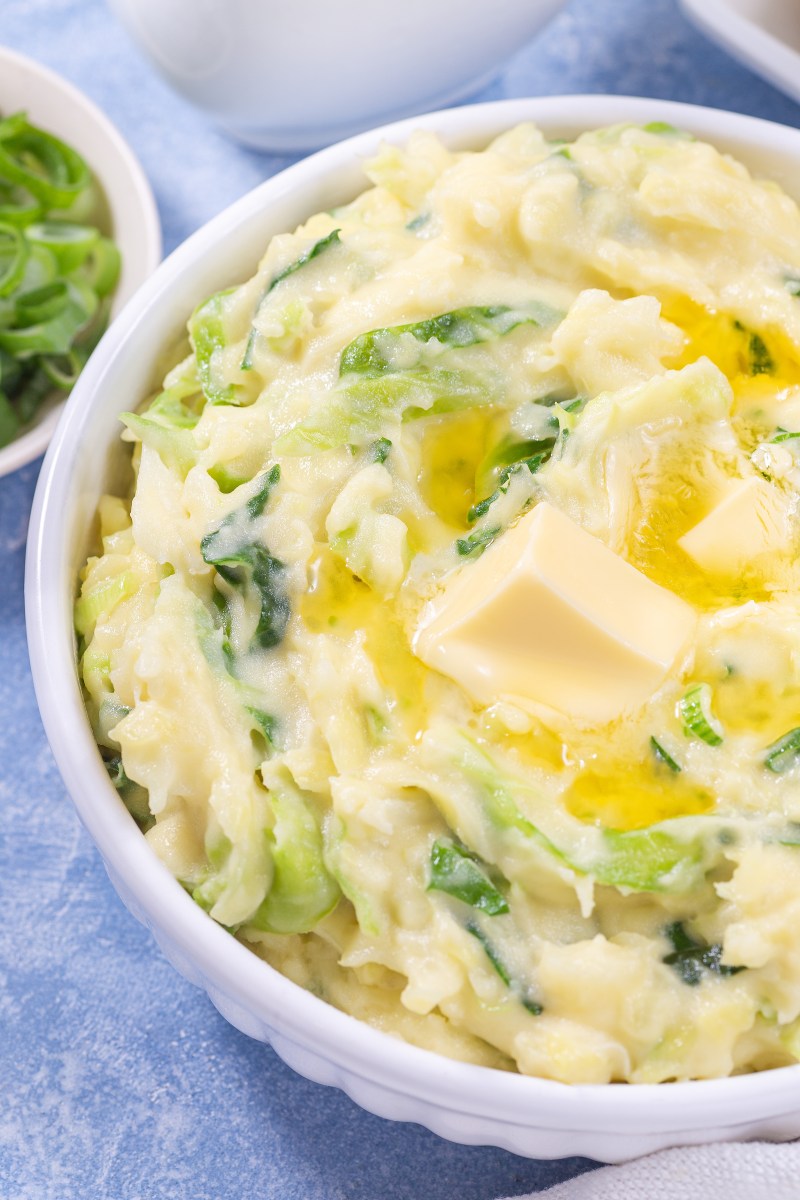
Colcannon is a type of mashed potato dish, whipped up with butter and cream and mixed in with leafy greens, like cabbage and aromatics such as onions, leeks or scallions.
The best part: It’s simple like mashed potatoes just embellished with all the good stuff you want to make a side dish pop!
The hardest part, in my opinion, is putting in the elbow grease to mash the potatoes. And no, do not even think about cheating by using an electric mixer! While it eases the physical labor required for the dish, an electric mixer will make your potatoes gummy and gluey. Yuck!
Colcannon can be served as a side dish to complement a main like roast pork or corned beef, but it can also be piped on top of a shepherd’s pie with lamb or a cottage pie with beef or any other type of casserole where mashed potato is used as the top layer crust.
Here is a simple recipe to make Colcannon at home to celebrate St. Patrick’s Day and Ireland’s rich heritage.
Irish Colcannon
(Yields four servings)
Ingredients:
– 2 ½ pounds of potatoes, peeled and cut into quarters (I suggest either Yukon Gold or the regular Russet)
– 1 stick of butter (8 tbsps)
– 1 cup of heavy cream (you can sub this out with any milk, but I prefer it creamier)
– 4 cups of any leafy green, finely chopped (I suggest kale or cabbage)
– 4 scallions, chopped
– 2 tsps salt (or to taste)
Steps:
1. Place potatoes into a stock pot and cover with water with at least one inch of water above the potatoes. Add a dash of salt to the pot. Bring to a boil and boil until fork-tender, about 15 minutes. Drain the potatoes from the water and return the potatoes to the pot.
2. Using a potato masher, lightly mash the potatoes. Then add in the butter and cream and continue to mash until smooth.
3. Boil another 4 cups of water, adding a dash of salt. Once boiling, add in the leafy greens and scallions and blanch for about 1 minute. Remove the greens and scallions from the pot and place them immediately into an ice bath.
4. Once cooled, squeeze out all the water from the leafy greens and scallions either using your hands or a cheese cloth.
5. Add the strained greens and scallions to the mashed potatoes and stir in with salt to taste.
This recipe can easily be modified to your taste and get creative with the seasonings! Treat this recipe as a baseline and alter it.
You can go simple by adding in garlic powder or even fresh minced garlic, add in leeks, make it cheesy with shredded white cheddar or go a little bananas and add in rainbow chard for a colorful visual.
Colcannon can be modified into what satisfies your taste buds, so think outside the box!