



March 20 marks the first day of spring, and while the weather outside aligns more with the groundhog’s prediction of a longer winter, some brightness may be coming to your table soon as spring seasonal produce begins to enter your local grocery stores and farmers’ markets.
With advances in agriculture, Americans have moved away from a diet based on seasonality. Today, you can find nearly every type of produce you want whether or not it’s grown near or far, in or out of season.
But data suggests people are still interested in buying food that is locally grown – and often in season.
According to a study by CivicScience, 65% of survey respondents said they shopped at a farmer’s market and enjoyed it. In another survey question, 51% of respondents said they are very likely to choose locally grown produce, while another 38% said they are somewhat likely to do this.
Eating locally and seasonally not only uplifts local economies but also is more sustainable for the planet, according to research by the University of Maryland. Eating local produce cuts down on the emissions from transporting it, whether by truck or plane (which is what it takes to get a pineapple from Hawaii to your local grocery store).
It can also be a huge benefit to your health, according to the American Heart Association, as seasonal produce is more nutritionally dense due to a shorter period of time between harvesting and getting to your plate. After harvesting, the nutritional value continues to decrease over time, losing valuable vitamins and antioxidants the longer it takes before being consumed.
And if that doesn’t convince you, take a bite. Produce picked at the height of its season is almost certainly going to blow your socks off with flavor, making it juicier, richer and sometimes sweeter.
Growing up in California, my family would line up in the summer to buy strawberries from local vendors selling them on the side of the road. Since moving away, I have yet to see a strawberry as red or taste one as sweet or as juicy as they were back home during peak season.
But you don’t need to travel far to gain this same experience, as New York has its own unique variety of seasonal produce that you should take advantage of this spring.
In late March and early April, New York is reaping the bounty of seasonal produce, so this is what you should look for at your local farmer’s market.
Late March
By the end of this month, produce is beginning to blossom and expand as everyone creeps out of winter. During this time, look for chives, horseradish, morels, mushrooms, nettles, ramps and sprouts.
While not all of these produce items are common ingredients you may be reaching for, a diversity of dishes can be made with them.
Horseradish is often purchased pre-ground in a jar sitting on the shelf. But fresh horseradish packs a bit more of a vibrant punch compared to the pickled, jarred variety. A little goes a long way, and can easily be grated to make the signature pulpy sauce that pairs well with meats and vegetables. Just maybe use a little less than you’re used to as you get familiar with its potency.
Ramps can initiate a craze when the season begins, as it’s something of a special phenomenon operating within a short three-month period and resulting from years of cultivation. Common preparations include simply charring them to serve as a side dish with fish or meat, subbing out basil to make a pesto, combining chopped up ramps with butter to make a spread, adding to a quiche or pickling them to snack on at any time.
Early April
Early April offers all the same seasonal produce as late March, but with a few more additions to spice things up – add in fiddleheads, parsnips, pea shoots and watercress.
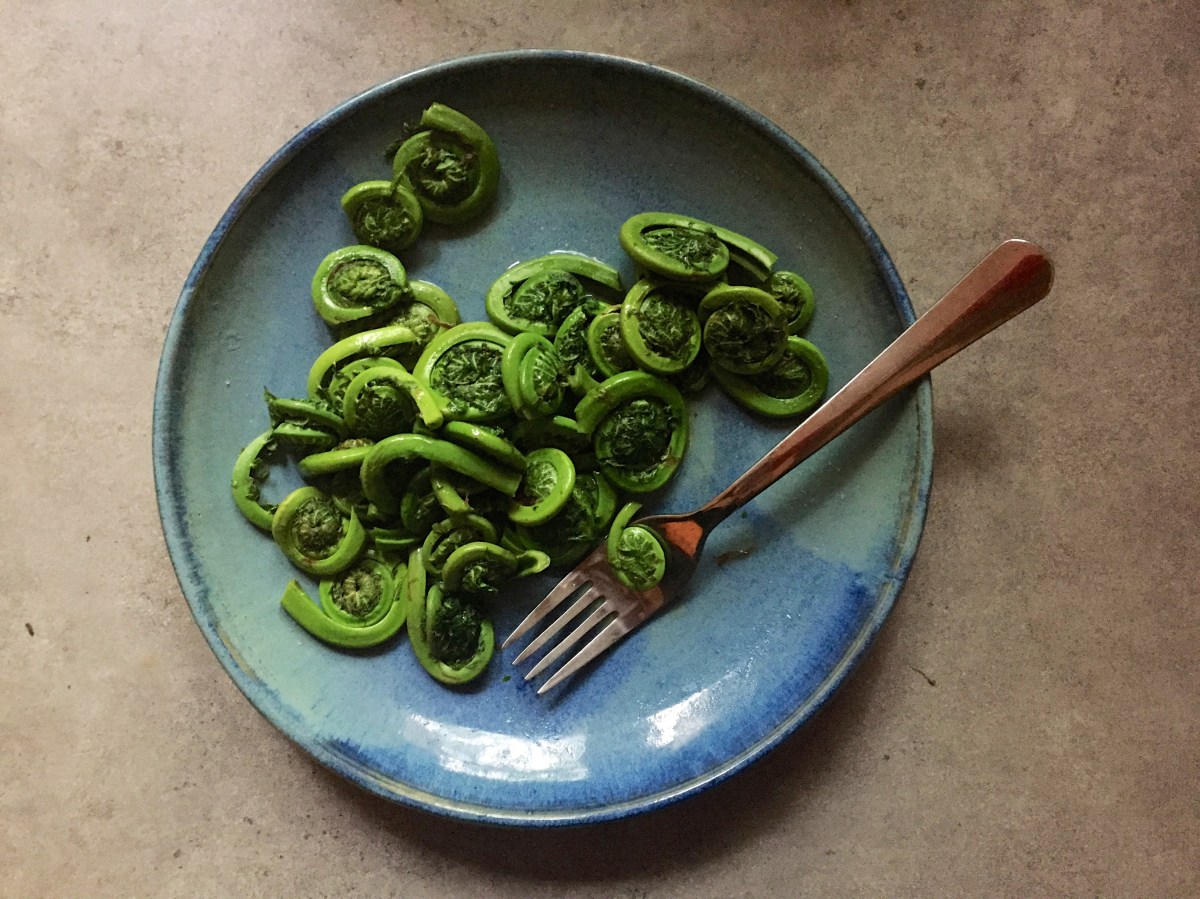
Fiddleheads can be such a treat, not only visually with their signature spiral shape, but also on the taste buds with their asparagus-like flavor. Just be careful! They must be cooked – steamed or boiled for about 15 minutes – to remove any harmful toxins. Once safe to eat, fiddleheads can be sauteed like any other vegetable with your seasonings of choice as a great side dish that celebrates the local ecology.
Parsnips are kind of like the ugly stepsister to the carrot – similar in shape but a ghastly shade and definitely not as sweet. But they can still be so good! The most common route is to roast it like a carrot, but my favorite is to blend it into a soup for an earthy and flavorful dish.
Seasonal produce can open you up to what is growing in your own backyard, so have fun with it and use it as an excuse to explore new flavors, cooking techniques and dishes you may not otherwise try.