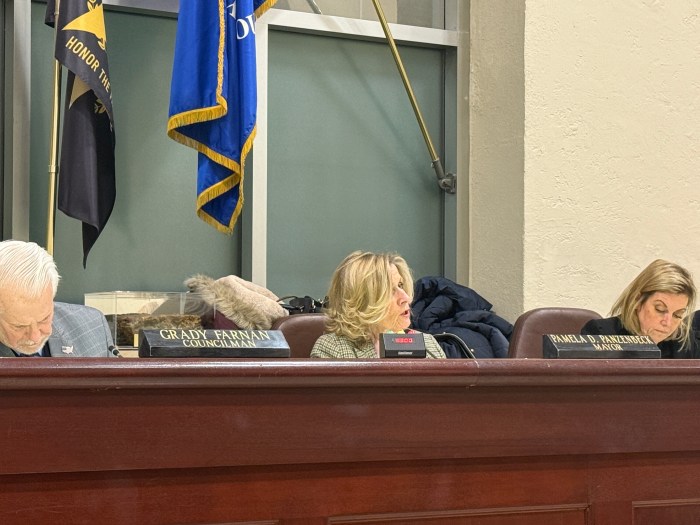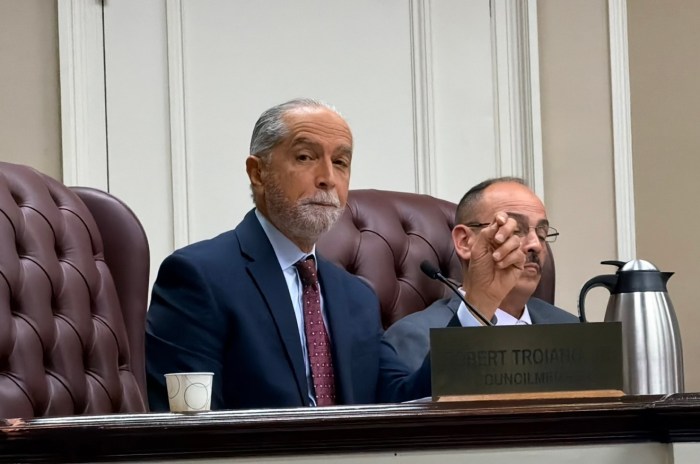




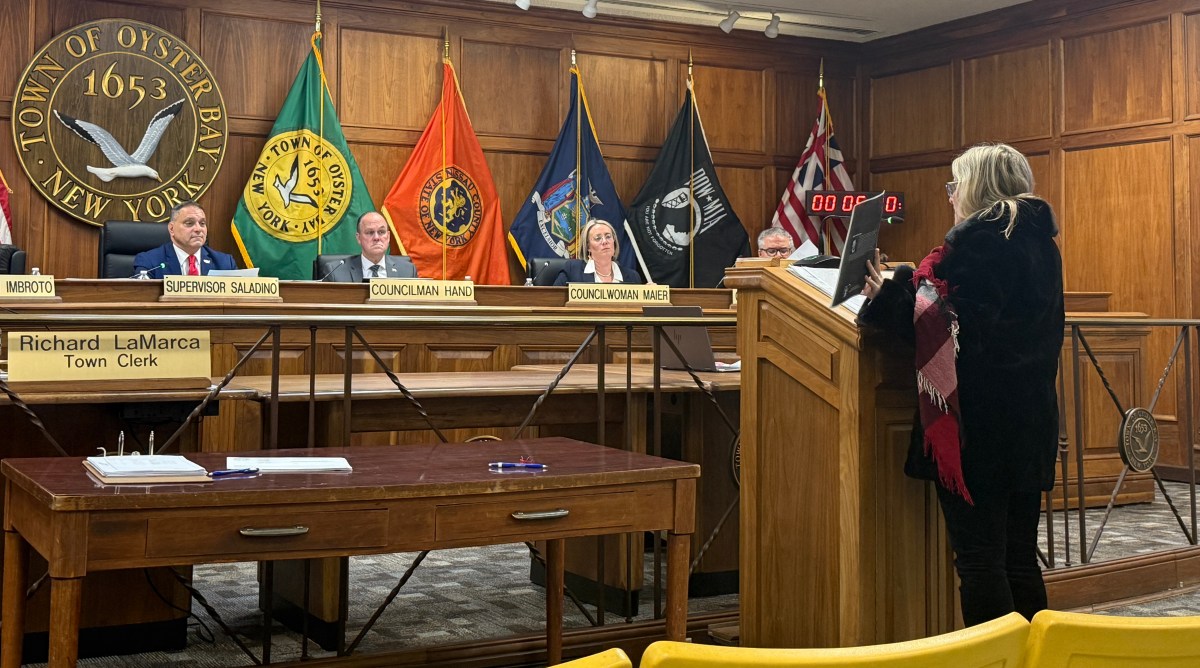
Several Town of Oyster Bay residents expressed concerns about battery energy storage systems on Wednesday, March 24, at a hearing held as the town board considers a 12-month moratorium on approving them, following a series of six-month moratoriums.
Michael Montesano, the special counsel to the town attorney’s office, said that, aside from the duration, the ban now being considered is the same as the current one.
Montesano said the current moratorium is set to expire on April 30. The proposed extension would extend the ban until April 30, 2027.
Montesano said the state had taken small steps to update its fire code – one of the town’s concerns – but there are still risks with the storage systems.
“We need to continue our review,” he said.
In explaining the board’s proposed moratorium, Montesano cited problems at the Moss Landing Energy Storage Facility fire in California in January 2025, which caused an evacuation of the facility, extensive damage, and many environmental concerns, as well as multiple storage-facility fires in Warwick in Rockland County.
As of early 2026, there are over 900 battery energy storage systems throughout the country, most of which are located in California and Texas.
Suffolk County has multiple battery energy storage facilities up and running, including the East Hampton Energy Storage Center and the Montauk Energy Storage Center, both with a total capacity of 5 megawatts, and several more proposals for facilities in the county adjacent to Nassau. There are also several facilities throughout nearby New York City.
Donald Sinski, the chief of the Glenwood Hook & Ladder, Engine & Hose Company, said local firefighters would be unable to safely combat potential storage facility fires.
“I worked 9/11, I survived that, and I don’t want to see that happen in my backyard,” he said.
Montesano and other town officials have also pointed out concerns over clean water, evacuation zones and health concerns relating to the storage facilities.
Lori Golden of Glen Head praised the board for its work against battery energy storage systems, saying that if the projects were allowed, they would pose a danger to the community’s water and livelihood.
“We need you to extend the moratorium,” she said.
Rob Mazzella said there is a need for a permanent solution and recommended that the board consider zoning changes to prevent storage facilities from being allowed in the town.
Chris Panzeca, who has long opposed battery energy storage systems, said the town and other local municipalities need to be proactive and protect human health.

“It’s time for Nassau County and its leaders to unite against the state’s misguided energy plans that aren’t green or clean,” she said.
The bans on battery energy storage systems mainly stem from Jupiter Power Company’s previously 275-megawatt lithium battery storage facility in Glenwood Landing.
The proposed lithium battery facility would have been near the Glen Head and Glenwood Landing elementary schools. The plan has since been abandoned, but residents have expressed concern that either Jupiter Power or another company could try again.
Montesano said there is also a proposed storage facility on one acre of land in Bethpage at the former Grumman site.
Oyster Bay Town Supervisor Joseph Saladino said he doesn’t understand why the state is “trying to take away our zoning powers” and that the issue is straightforward to him.
“This is not a difficult issue for me because we have focused on protecting the public and protecting the environment,” he said.
Officials from Nassau County’s three towns have been opposed to battery energy storage systems, with each town having its own moratorium in place and each town supervisor supporting several initiatives to protect local zoning and oppose large-scale energy projects in the area.
The board left the record open for 20 days and is expected to vote on the moratorium extension at its next meeting on Tuesday, April 14.