


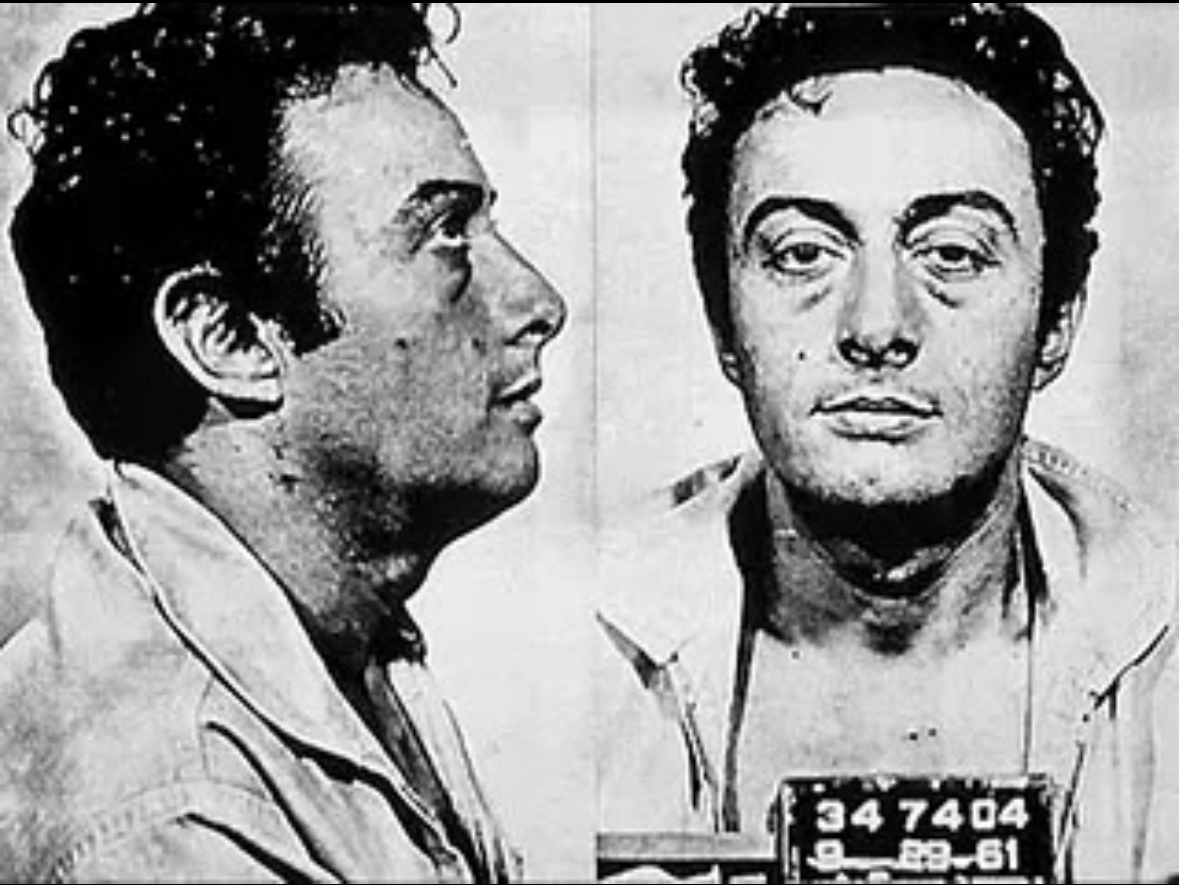
He ran away from home and worked on a farm digging up potatoes in the 1940s when Long Island’s potato industry was at its peak. He dropped out of high school and embraced stand-up comedy in the tumultuous 1950s and 1960s, becoming a lightning rod who never abandoned his controversial observations — and in the process, he invoked the wrath of law enforcement who arrested him repeatedly.
Lenny Bruce found fame as a shock jock who championed the concept of free speech, using vulgarity and satire to target topics like sex, religion, and politics. Taking a page from his playbook, comics including George Carlin, Richard Pryor, and Robin Williams expressed their opinions through social commentary. Critics called this controversial entertainment “blue comedy,” which was considered indecent or profane.
Today, Bruce is remembered as a martyr who paved the way for the so-called First Amendment “warrior comics:” Jimmy Kimmel, Steven Colbert, and Jon Stewart. As Stewart said at the Kennedy Center in 2022, “Comedy doesn’t change the world, but it’s a bellwether. We’re the banana peel in the coal mine [of free speech] … “When a society is under threat, comedians are the ones who get sent away first.”
PROPHET WITH A POTTY MOUTH
A Long Island native, Leonard Alfred Schneider was born in Mineola in 1925. His mother, Sally Marr, was a former dance teacher, actress and struggling comedian who would greatly influence him. His parents divorced when he was 5 years old and he lived with his strict father Myron Schneider, who was rarely home, and other relatives.
The family fell apart amid the economic and emotional instability of the Great Depression: They lived on welfare and young Bruce sneaked into movies and stole lunches from other students’ lockers. At Wellington C. Mepham High School in Bellmore he was a voracious reader who was fascinated by radio programs and the movies. To cope with reality, he fantasized about life on a farm. As a teenager, he ran away to work at the Dengler family chicken farm on Wantagh Avenue, where he labored as a farmhand, digging up potatoes and driving a truck.
When he was 16, he dropped out of high school and enlisted in the U.S. Navy during World War II. But he wanted to get out of the service, so he dressed in drag and performed for his shipmates, a stunt that got him dishonorably discharged. In 1947 he changed his name to Lenny Bruce and worked the low-rung comedy club circuit in New York City, starting out as an emcee before taking the stage. As actor Robert De Niro observed, “The cheesier the dive, the freer Lenny was.”
STIRRING THE POT
In those days, it was considered taboo to utter four-letter words in public clubs. Bruce built his act around the persona of a “prophet with a potty mouth,” as The Washington Post put it. He perfected his wild, free-form routines, riffing on an array of causes that included ending capital punishment or calling on organized religion to stop building opulent palaces and start feeding the poor.
“Take away the right to say ‘fuck’ and you take away the right to say ‘fuck the government,” he quipped.
At gigs in 1960, he sold The Pot Smokers, a self-published, satirical pamphlet that mocked the era’s hysteria about cannabis. His quote about marijuana was prescient: “Marijuana will be legal some day, because the many law students who now smoke pot will someday become congressmen and legalize it in order to protect themselves.”
He became what the Post described as a hero to the hip and a target for the prosecutors who busted him for obscenity. Critic Nat Hentoff wrote that every Bruce performance before a nightclub audience was laced with anxiety, which left audiences wondering, “How far will he go tonight?” A local Long Island bust was typical: In 1964 at the Cork N’ Bib Restaurant in Westbury, the police brought in a tape recorder and threatened to arrest the comic unless he cleaned up his act. Notables like Bob Dylan and Elizabeth Taylor signed petitions on his behalf.
He was a dissident who never backed down; instead, he stirred the pot, elevating the dialogue on free speech and the First Amendment. Nevertheless, his performances got him arrested, and after a six-month trial, he was convicted of the charges: word crimes. Club owners who feared police raids wouldn’t hire him, and many observers say that it was legal harassment, dwindling finances, and illicit drug use that led to his 1966 death from an accidental dose of morphine at age 40. In 2003, he was posthumously pardoned for his obscenity conviction.
First Amendment to the U.S. Constitution
“Congress shall make no law respecting an establishment of religion, or prohibiting the free exercise thereof; or abridging the freedom of speech, or of the press; or the right of the people peaceably to assemble, and to petition the Government for a redress of grievances.”