



An appropriations package that was passed by U.S. lawmakers early this year is expected to provide over $15 million in funding for over a dozen Nassau County projects that will improve water quality, law enforcement and infrastructure.
Long Island lost over $110 million in funding as a result of the federal government approving its budget on March 14, 2025. The continuing resolution led to several projects not having funds allocated for them.
Some of those projects received funding in the most recent package, but many of the projects that had their funding slashed from the continuing resolution are still seeking federal financial aid.
Funding for the projects below was included in a minibus appropriations bill passed by the House of Representatives on Jan. 8 and by the Senate on Jan. 15.
The following projects throughout the county were approved as part of the legislation:
- Glen Cove Police Department — $956,000 to purchase much-needed technology and equipment.
- Village of Sea Cliff — $1,092,000 to construct sewer lines connecting the existing Nassau County sanitary collection system tributary to the Glen Cove Water Reclamation Facility.
- Village of Manorhaven — $1,092,000 to replace a 60-year-old gravity sewer pipe with a new piping system.
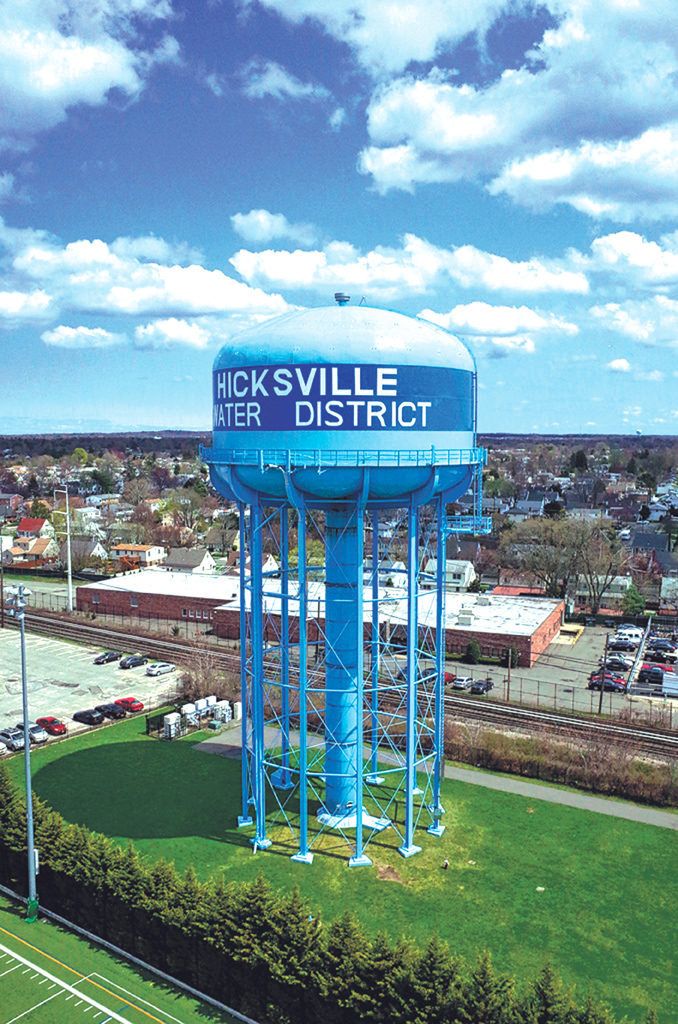
- Hicksville Water District — $1,092,000 to install wellhead treatment to ensure continued operation of Well No. 11-1, a 2.02 million-gallons-per-day public supply well supporting district-wide water demand.
- Port Washington Water District — $704,000 to improve resiliency at the Longview Booster Station, which provides increased water pressure to high-elevation areas of the district.
- Westbury Water & Fire District — $1,092,000 to build new infrastructure to remove 1,4-Dioxane and PFOS/PFOA from drinking water to meet new federal guidelines.
- Village of Farmingdale — $1,092,000 to replace an aging ground-level concrete finished-water reservoir with a new, state-of-the-art glass-fused-to-steel water storage tank.
- Port Washington Water Pollution Control District — $1,092,000 to improve the reliability and efficiency of Wastewater Pump Stations “C” and “F,” the district’s largest-capacity stations, protecting public health for more than 28,000 residents and the quality of Mill Pond and Manhasset Bay.
- Village of Roslyn — $864,000 to repair nearly 10 miles of sewer pipe that has been in service since the 1940s.
- Bethpage Water District — $1,092,000 to build new infrastructure to remove 1,4-Dioxane associated with the Navy-Grumman plume.
- Village of Sands Point — $1,092,000 to upgrade critical water supply infrastructure, including granular activated carbon treatment for emerging contaminants, installation of a new water supply well, and other system improvements.
- Williston Park Water Department — $1,092,000 to upgrade the Well 4 Facility, improving critical utility and equipment infrastructure, and addressing emerging contaminants in drinking water.
- City of Long Beach — $1,092,000 for a sand filter tank replacement
- Village of Rockville Centre — $1,031,000 for police security cameras
- Village of Hempstead — $1,092,000 for water treatment upgrades
“This funding will help keep our drinking water clean, strengthen sewer systems, and support our police departments,” U.S. Rep. Tom Suozzi said in a statement.
“I’m proud to have fought for and secured these critical federal investments to bring much-needed resources home to Nassau County,” U.S. Rep. Laura Gillen said in a statement. “These funds will support upgrades to our water infrastructure, helping communities access cleaner drinking water and provide law enforcement with the tools and technology they need to better serve and protect our communities.”