




The Trump administration rescinded a key scientific determination that has anchored federal climate policy for more than 15 years, on Thursday, Feb. 12, a sweeping rollback that could have significant implications for coastal communities such as those in Nassau County and is expected to face immediate legal challenges.
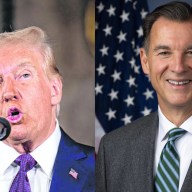
Alongside President Donald Trump in the White House’s Roosevelt Room, EPA Administrator Lee Zeldin announced what he called the “single largest deregulatory action in U.S. history,” eliminating the 2009 Obama-era Greenhouse Gas Endangerment Finding and all subsequent federal greenhouse gas emissions standards for vehicles from model years 2012 to 2027 and beyond.
Zeldin said the action would save American taxpayers over $1.3 trillion, restore consumer choice, make vehicles more affordable, and reduce costs for families.
“The Endangerment Finding has been the source of 16 years of consumer choice restrictions and trillions of dollars in hidden costs for Americans,” Zeldin said. “Referred to by some as the ‘Holy Grail’ of the ‘climate change religion,’ the Endangerment Finding is now eliminated. The Trump EPA is strictly following the letter of the law, returning common sense to policy, delivering consumer choice to Americans and advancing the American Dream.”
The 2009 endangerment finding served as the legal foundation for nearly all climate regulations under the Clean Air Act, including limits on emissions from motor vehicles, power plants and other major sources of pollution. The EPA said the repeal eliminates federal greenhouse gas emissions standards for cars and trucks and could open the door to undoing regulations on stationary sources such as power plants and oil and gas facilities.
Trump called the move “the single largest deregulatory action in American history, by far,” and described the 2009 finding as having “no basis in fact” or law. He praised fossil fuels for lifting people out of poverty. Scientists worldwide, however, have concluded that carbon dioxide and other greenhouse gases are driving worsening heat waves, stronger storms, drought, and sea level rise.
The EPA also announced a two-year delay to a Biden-era rule restricting greenhouse gas emissions from cars and light trucks and ended incentives for automakers to install automatic start-stop ignition systems designed to reduce emissions.
The endangerment finding followed a 2007 Supreme Court ruling in Massachusetts v. EPA that determined greenhouse gases qualify as air pollutants under the Clean Air Act and that the EPA has the authority to regulate them. Courts have since upheld the finding, including a 2023 decision by the U.S. Court of Appeals for the District of Columbia Circuit.
Environmental groups swiftly condemned the repeal. Fred Krupp, president of the Environmental Defense Fund, called the move unlawful and said it “rejects the overwhelming evidence that climate pollution threatens everyone’s health and safety.” He said the organization plans to challenge the decision in court.
The rollback could carry particular resonance on Long Island, where Nassau County’s shoreline communities are vulnerable to coastal flooding and sea level rise. Local officials in recent years have invested in storm hardening, flood mitigation, and infrastructure upgrades in response to increasingly severe weather.
U.S. Rep. Laura Gillen said the administration’s move disregards decades of established scientific research showing that climate pollution worsens natural disasters and threatens the safety of air and water.
“For years, I have worked to protect Nassau County’s shorelines and our water from coastal erosion and unchecked contamination,” Gillen said in a statement. “The administration’s decision to undermine efforts addressing the threats of climate disasters and toxic pollution will only hurt our communities.”
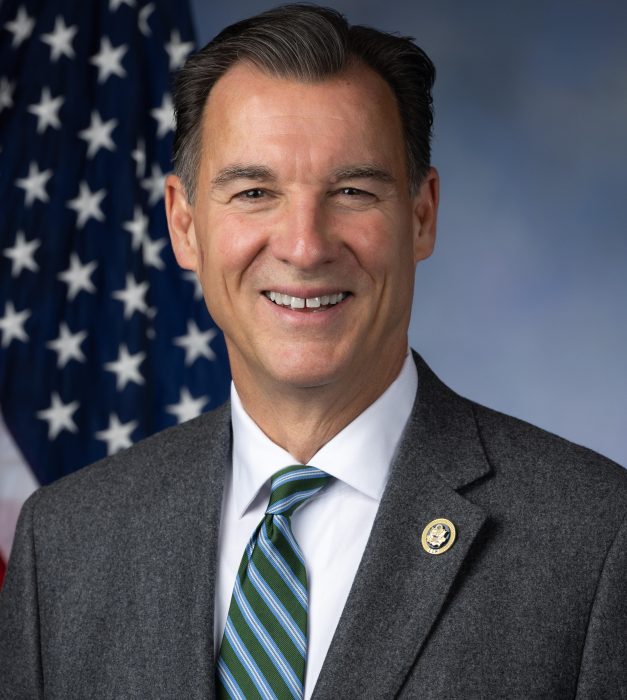
U.S. Rep. Tom Suozzi held a press conference on Tuesday, Feb. 17, to call out the administration’s revocation of the endangerment finding.
“We have to wake up. This is very real,” Suozzi said during the conference. “This is affecting the quality of your life.”
Legal experts say the repeal is almost certain to face court challenges that could determine how much authority the federal government retains to regulate climate pollution.
In addition to removing vehicle standards, the Trump EPA said the action ends all off-cycle credits, including the almost universally unpopular start-stop feature, and provides regulatory relief for automakers while lowering costs for American families. The agency also highlighted that even if the U.S. were to eliminate all greenhouse gas emissions from all vehicles, it would have no material impact on global climate indicators through 2100, according to the EPA’s reassessment using the same types of models employed by prior administrations.
The administration argued the move restores what it calls “the American Dream” by making vehicles more affordable and expanding consumer choice, particularly in rural areas and regions without robust public transportation. Officials said the endangerment finding had contributed to vehicle and engine regulations with an aggregate cost of more than $1 trillion and played a role in justifying other regulatory measures, including pushes toward electric vehicle mandates.