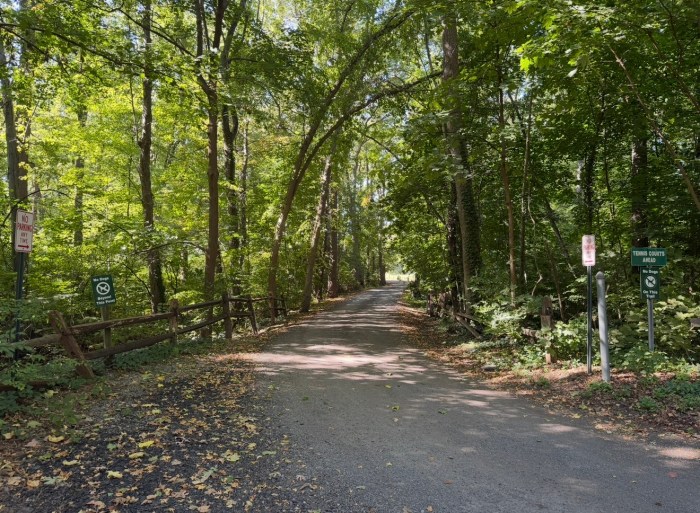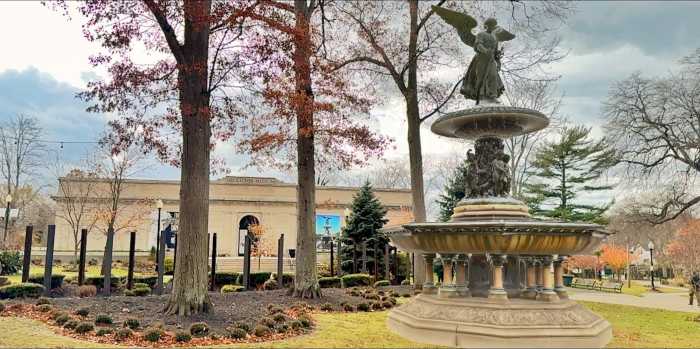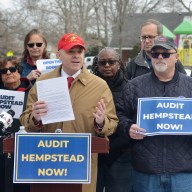




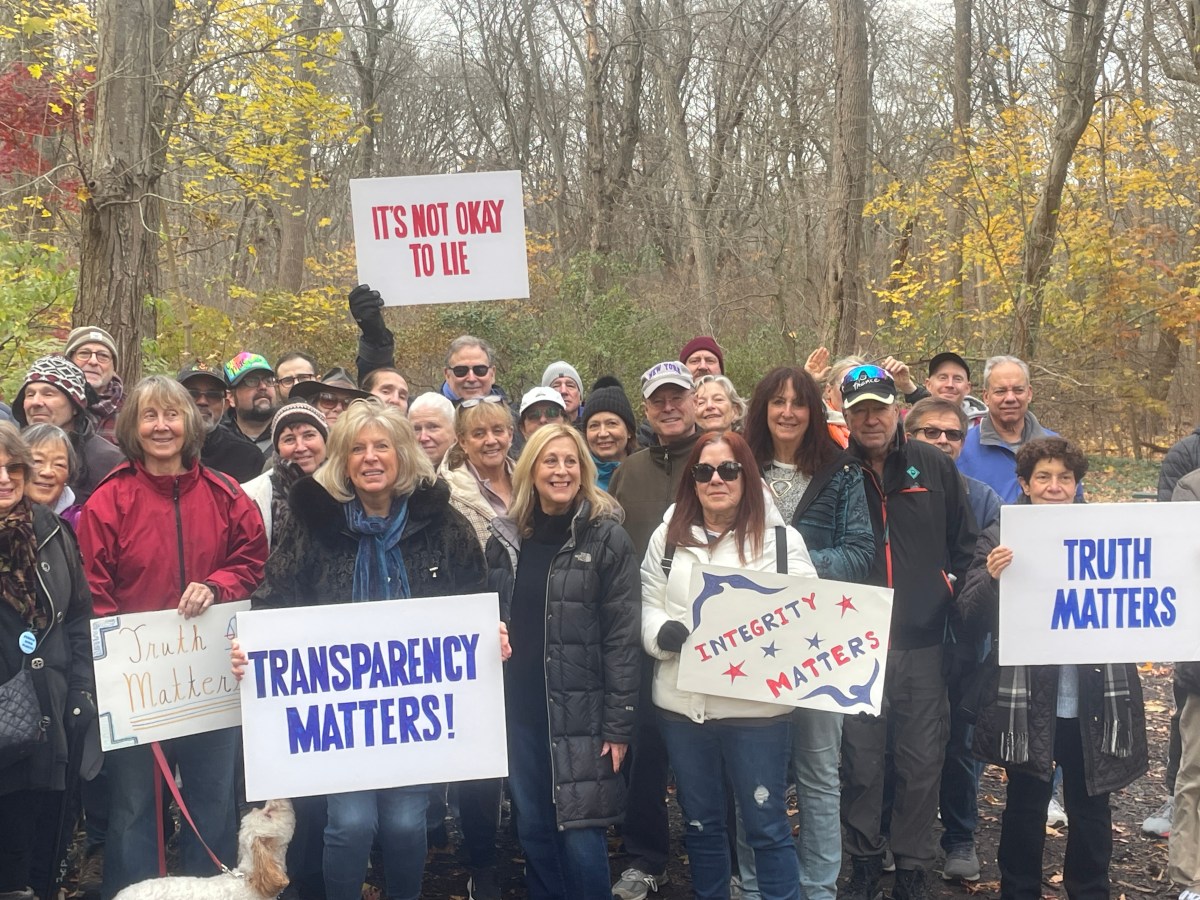
Residents, environmental activists and members of Concerned Citizens of NY-03 gathered Sunday, Nov. 23, at Kings Point Park to protest what they described as a lack of transparency in plans to convert nearly 2.5 acres of parkland into a private parking lot and recreational facilities.
“Today is really all about a call for transparency,” said Jody Kass Finkel, a longtime Great Neck resident and head of CC-03. “We love our parks. We have a right to know what is being planned, and we demand to be part of the decision-making about our parks.”
The event drew local families and park enthusiasts to the park’s Steamboat Road entrance for a demonstration and a guided nature walk.
The protest comes in response to a permit application submitted to the New York State Department of Environmental Conservation by the Village of Kings Point that could allow the village to fill wetlands, cut down trees, excavate in an archeologically sensitive area and construct a parking lot on a 2.5-acre section of Kings Point Park, Kass Finkel said.
The permit application was submitted in February, Kass Finkel said, months before the village offered to withdraw its request to alienate the land for private use in October, following the filing of a lawsuit by residents in September.
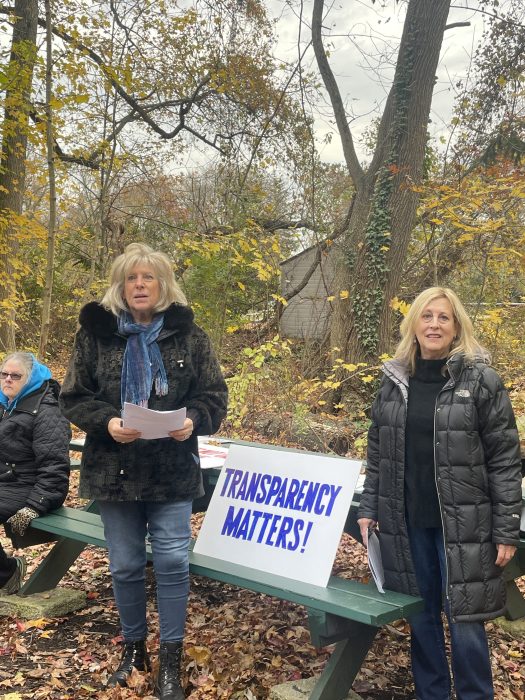
Kass Finkel sent a letter to state officials alleging that the Village of Kings Point may still be pursuing plans to develop, despite the village’s recent offer to withdraw its request to alienate the land for private use.
“Although the alienation legislation failed in the Assembly last June and is currently the subject of an Article 78 proceeding filed against the Village by community members shut out of the process, the Village of Kings Point and the United Mashadi Jewish Community of America appear to be advancing the private parking lot project through DEC permits, Kass Finkel said in her letter. “It appears that they are seeking to avoid or delay compliance with the environmental review and community participation requirements of the New York State Environmental Quality Review Act while creating a de facto parking lot.”
This means that even if residents win the lawsuit, the same development could still move forward through DEC permitting. Kass Finkel wrote that the DEC application appears to suffer from the same flaw as the negative declaration: it does not assess alternatives to avoid environmental harm.
The lawsuit, Capruso v. Village of Kings Point, was filed Sept. 29 by the Pace Environmental Litigation Clinic on behalf of several residents. It argues the village failed to perform the environmental review required under New York’s State Environmental Quality Review Act before seeking to alienate the parkland to turn it into a private parking lot for the United Mashadi Jewish Community of America’s community center.
On Oct. 23, the village offered to withdraw its request for state parkland-alienation legislation, a move intended to resolve the lawsuit.
But Kass Finkel of the “good government group” Concerned Citizens of NY-03 says the threat to the parkland remains. In a letter sent to Department of Environmental Conservation Commissioner Amanda Lefton on Nov. 20, Kass Finkel said the village submitted a DEC permit application on Feb. 10 — months before the alienation bill failed.
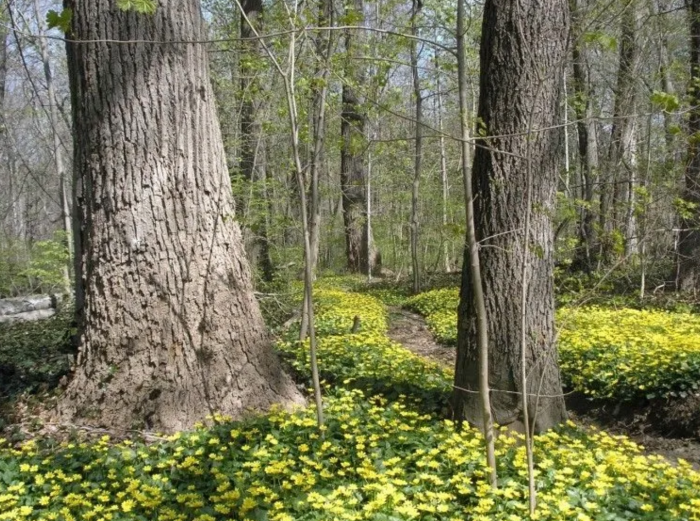
Kass Finkel says this permit was not included in the village’s August response to a Freedom of Information Law request seeking all state and federal permit applications. Instead, the village disclosed it had issued a SEQRA Negative Declaration, prompting residents to file an Article 78 challenge. She also brought attention to 28 newly tagged trees in the area and said the site contains rare plant communities that could be destroyed if the land is cleared or paved.
She is requesting that the DEC suspend or rescind any permits, arguing the village may be attempting to move the project forward without proper review or public transparency.
Representatives of the Village of Kings Point could not be reached prior to publication, nor could representatives of UMJCA.
Nancy Sherman, an advocate with Save Kings Point Park, emphasized the ecological significance of the threatened parkland during the protest.
“This park is comprised of 90% wetlands,” she said. “The alienation of 2.5 acres is significant because it includes areas within 100 feet of the wetlands, which are protected. This park is very special, and we are here to protect it from private development that would destroy these fragile ecosystems.”
Dan Capruso, lead plaintiff in the lawsuit, described Kings Point Park as “the last forest we have on this peninsula.” He warned that the proposed project threatens to remove ball fields, playgrounds, and wetlands critical to local flood control and wildlife habitats.
“Once they take that away, it won’t look like a park anymore,” he said.
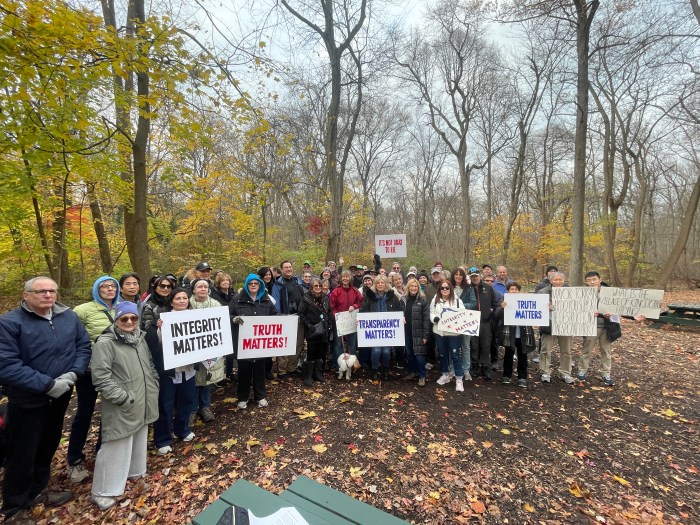
Kass Finkel also criticized local officials for failing to communicate with the public. She said residents only learned of the plans after submitting a Freedom of Information Law request and described the village’s disclosure as incomplete.
“Most of us pay taxes here, yet we weren’t notified about what was going to happen in our park,” she said. “Transparency is the most important thing we have in government.”
Local residents attending the protest expressed concern about the broader implications of park alienation.
“It’s scary to hear what goes on behind the scenes because you expect people in political office to be open and forthcoming about any changes. We’re here to support the park,” said Arlene Levine, a Great Neck resident.
Jack Levine, Arlene Levine’s husband, emphasized the need for community action.
“We have a choice. We can protect this park for our children and grandchildren or we can allow it to be destroyed,” he said.