



Across the holiday season, families gather around tables laden with dishes that reflect both heritage and festivity. Despite their different origins, Christmas and Hanukkah share surprising similarities in the foods that define their celebrations. From fried treats to sweet confections, the culinary traditions of both holidays often center on comfort, symbolism and communal enjoyment.
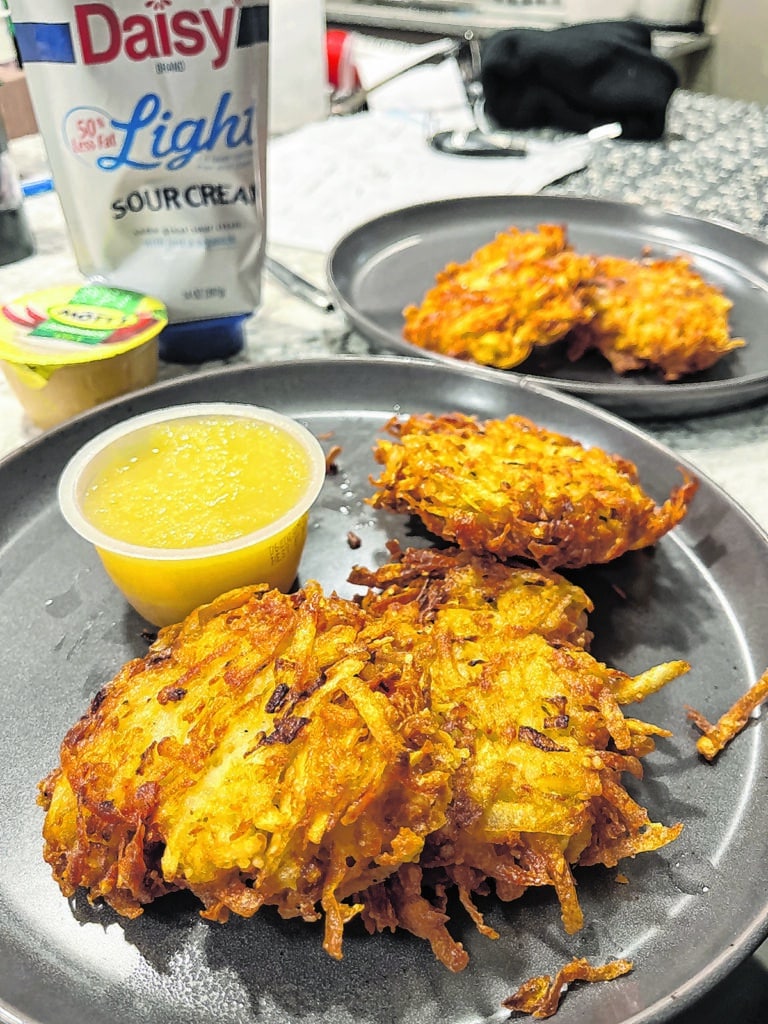
Fried foods are a hallmark of Hanukkah, commemorating the miracle of the oil that lasted eight days in the ancient Temple of Jerusalem. Latkes (potato pancakes) are the most recognizable example.
Typically served with applesauce or sour cream, these golden discs are fried in oil to honor that historic event. Similarly, Christmas traditions in many European countries include fried or baked items, such as doughnuts, fritters and pan-fried pastries. In Germany, for instance, the holiday season brings stollen, deep-fried pastries, and in parts of Eastern Europe, families prepare fried cookies and sweet breads. Both holidays demonstrate a shared appreciation for dishes cooked in oil or fat, emphasizing warmth and indulgence during winter months.
Sweet treats also dominate both celebrations. Hanukkah’s sufganiyot, jelly-filled doughnuts dusted with powdered sugar, mirror Christmas confections such as candy canes, sugar cookies and marzipan figures.
These desserts are often prepared in large batches to share with neighbors, friends and extended family, reinforcing the communal nature of holiday meals. The emphasis on sugary, festive items highlights a broader cultural trend: both holidays use food to create sensory experiences tied to celebration, memory and family togetherness.
Another commonality is the role of dairy. In many Hanukkah households, cheese-based dishes like kugel or blintzes are served, reflecting ancient traditions and biblical references. Meanwhile, Christmas tables often feature creamy desserts such as eggnog, custards or cheese-based tarts. Both sets of traditions integrate rich, indulgent foods that are typically reserved for special occasions, emphasizing the holidays as times for abundance rather than daily moderation.
Seasonal ingredients further link the two celebrations. Root vegetables, potatoes and winter squash appear frequently on both Hanukkah and Christmas menus, while fruits such as apples, oranges and dried figs provide color and sweetness.
Nuts, often roasted or incorporated into pastries, offer texture and symbolism, with walnuts and almonds appearing in holiday desserts from both traditions. The use of these ingredients reflects historical availability and regional culinary practices while fostering a shared aesthetic of abundance.
Overall, while Hanukkah and Christmas emerge from distinct religious and cultural contexts, their holiday foods overlap in meaningful ways. Both feature fried and sweet treats, dairy-based dishes and seasonal ingredients that emphasize warmth, indulgence and togetherness. These similarities underscore how food serves as a bridge between cultures, offering a universal language of celebration during the darkest months of the year.