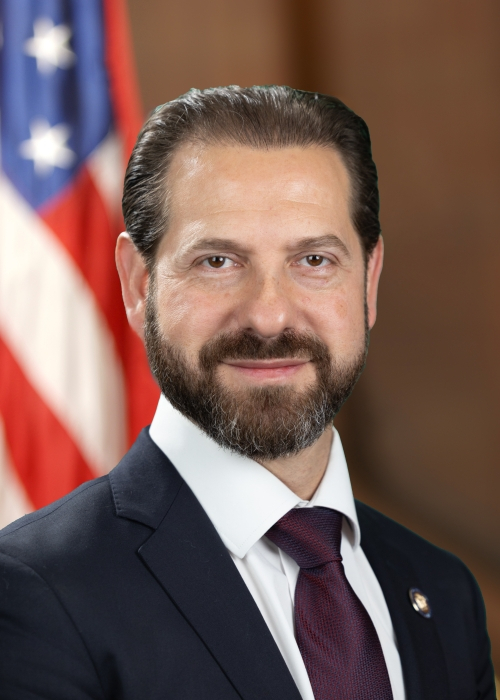




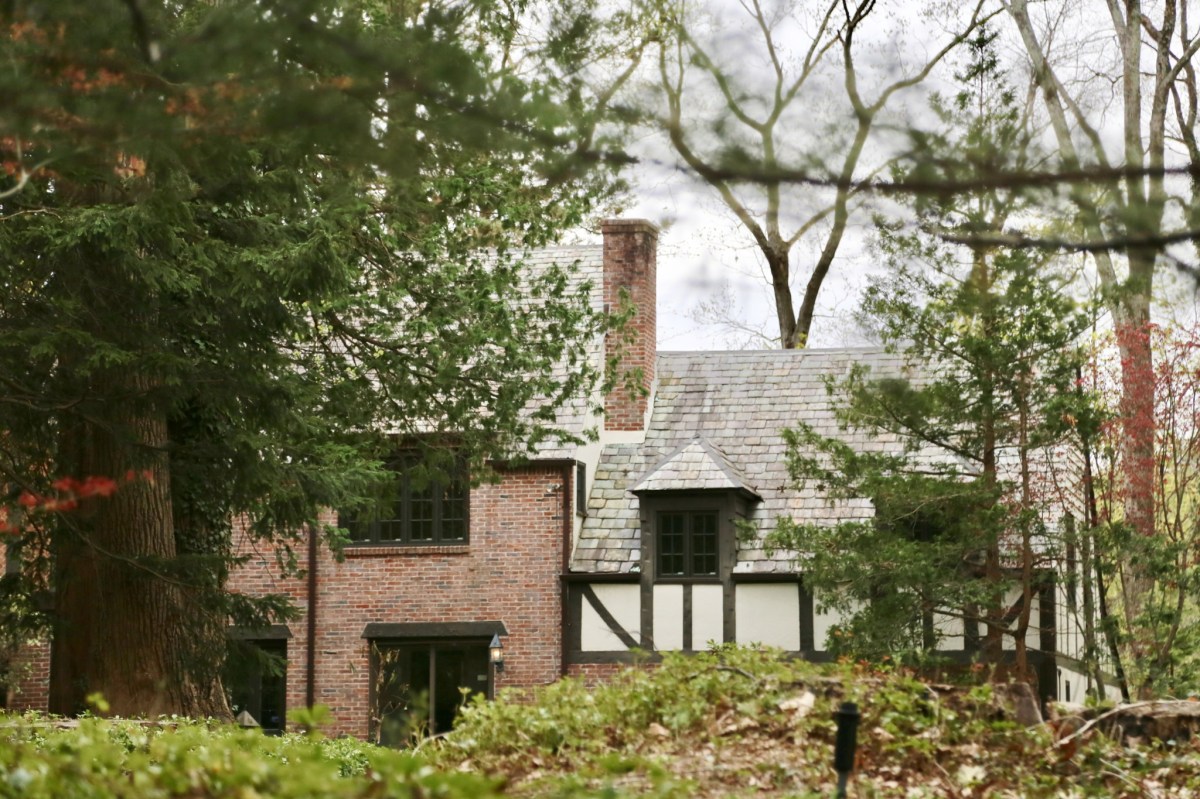
Andrew Cronson, a Columbia University–trained urban planner and longtime Manhasset resident, says he is growing increasingly concerned that a historic home at 535 Manhasset Woods Road could be demolished without public input or review, despite repeated efforts to initiate a landmark nomination with the Village of Flower Hill.
Cronson said he has contacted village officials multiple times since August seeking guidance on how to nominate the property for landmark designation, but has received no response. Emails sent Aug. 4, Sept. 4 and Oct. 6 went unanswered, he said, and the village’s website does not provide a nomination form or clear instructions for members of the public to begin the landmarking process.
“It’s effectively ended before it starts,” Cronson said. “There’s a process laid out in the statute, but there’s no way to actually initiate it.”
Efforts to reach Flower Hill Mayor Randall Rosenbaum for comment by email were unavailing. A request was also made to Village Treasurer Suzanne Tangredi to contact Rosenbaum.
The property, which was recently sold for the first time in nearly 50 years, is believed to have had ties to the Sloan family of General Motors. Alfred P. Sloan served as the longtime CEO of General Motors and is widely regarded as one of the architects of modern corporate management. His brother, Clifford Sloan, a senior General Motors executive, lived in the Flower Hill home, according to Cronson.
Cronson said the house represents one of the village’s most historically significant properties, not only for its architecture but for its national cultural relevance.
Cronson said he learned from a previous owner that the buyer intends to demolish the house. While he has not seen formal plans, he said the recent appearance of roughly 40 trees marked with pink ribbon on the property has heightened his concern.
“In landscaping, that usually means pruning at best or removal at worst,” Cronson said.
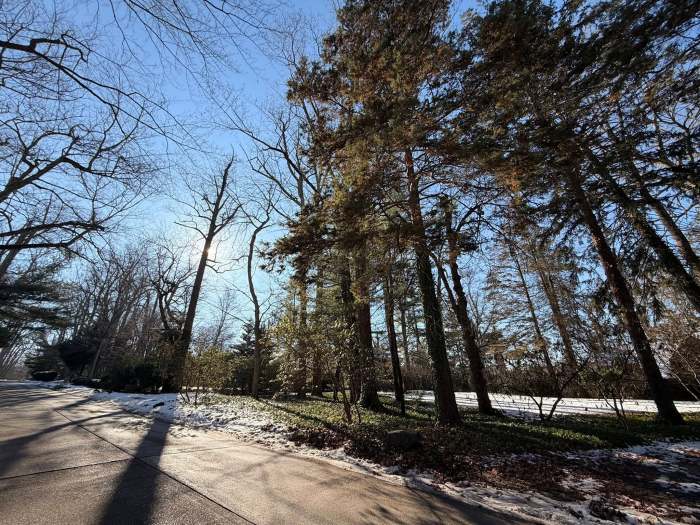
Cronson said he has repeatedly sought clarification from the village about future plans for the site but has received no information.
The lack of response is particularly troubling to Cronson, who said Flower Hill has a local landmarks law designed to protect historic properties. That law outlines a process in which nominations are reviewed, researched and discussed in a public hearing before a decision is made.
“The statute expects a nomination to be submitted to the village clerk, who then seeks information and refers it to the landmarks board,” Cronson said. “There’s supposed to be a system of checks and balances. But without guidance or a form, residents can’t even take step one.”
Cronson said his concern is shared by neighbors on Manhasset Woods Road. He said residents who live in historic homes along the street have expressed strong support for preservation.
“These are people who chose this neighborhood because of its history and character,” Cronson said. “They’re not opposed to change, but they want restoration with reasonable modifications and retention of the landscape.”
The street is known for its Tudor Revival homes, mature trees and rural design, much of it dating back to early 20th-century planning efforts intended to create country-style residences near transit and golf courses. Cronson said that character is being eroded by what he describes as outsized development and widespread tree removal.
Cronson said his passion for preservation began when he was 16 years old, after learning that one of the largest homes in America — located in nearby North Hills — had been demolished.
“That building wasn’t just architecturally important,” he said. “It was a retreat house, a place of spiritual connection and healing for decades. It was gone in a week.”
The demolition, he said, resulted in dozens of new homes, increased traffic, more students for local schools and higher tax burdens — consequences he fears could be repeated if historic properties continue to be lost.
“This isn’t just about one house,” Cronson said. “It’s about whether we use the tools we already have to work with our history instead of erasing it.”
With the nation approaching its 250th anniversary in 2026, Cronson said the timing is critical.
“This would be an opportunity to affirm that Flower Hill values its past and wants to protect it for future generations,” he said. “Once a property like this is gone, it’s gone forever.”