


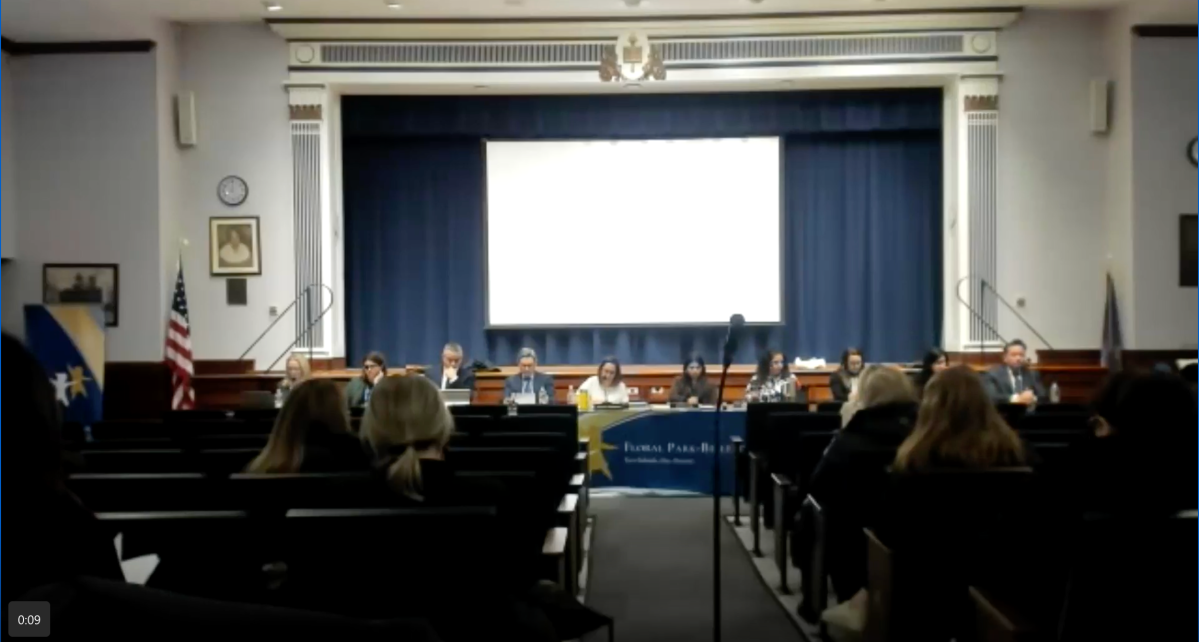
The Floral Park-Bellerose Board of Education met on Thursday, March 5, to review a second draft of the district’s proposed 2026–2027 budget. The discussion outlined plans that include a 1.93% tax levy increase while also voting to place a proposition on the May ballot that would change how school board members are elected.
Assistant Superintendent for Business Christine Kim said the district’s proposed budget includes a tax levy increase of about $540,000, bringing the total levy to approximately $20.57 million for the 2026–2027 school year.
“The tax levy increase will be 1.93%, which is less than the 2%,” Kim said, referring to the property tax cap.
Local property taxes represent the largest share of the district’s revenue. Taxes account for about 70% to 75% of district funding, while state aid makes up roughly 24%, officials said. Based on the governor’s proposed budget, the district expects to receive about $1.1 million more in state aid, a roughly 12% increase, contributing to an overall revenue increase of about 4.46%.
Despite the projected increase, administrators said districts still face financial pressures when developing annual budgets.
“There are challenges that every district faces each year,” Kim said. “It’s the political and economic landscape, inflation, the state aid landscape… changing enrollment, contractual obligations.”
District officials also discussed academic initiatives they hope to implement next year, including updates to curriculum and staffing.
The district is currently reviewing new phonics programs for early elementary students. A phonics committee is in the final stages of making a decision, evaluating Foundations and Reading Horizons before selecting a program for kindergarten through second grade classrooms.
“To ensure every student receives high-quality research-based education, we’re moving forward with the implementation of a new phonics curriculum,” said Melissa Corbett, assistant superintendent for curriculum and instruction.
Corbett also said the district is considering hiring a full-time teacher to expand the gifted and talented program and updating teacher technology devices that were last replaced about five years ago.
Despite projected increases in state aid and revenue, the district has not yet finalized the budget. Kim said administrators are still working to close a funding gap before the spending plan is adopted.
“We have a budget gap of $545,000 to close at this time,” Kim said. “We will close that gap depending on how our revenue changes with state aid funding.”
Additionally, the board approved a resolution allowing voters to decide whether future school board elections should be conducted at large. All candidates would appear on the same ballot and those receiving the highest number of votes would fill the available positions.
During the public comment section of the meeting, a resident raised concerns about transparency surrounding executive sessions and workshop meetings.
“Why can’t we follow the guidelines in open meeting rules to state what the board is doing behind closed doors?” the speaker said. “I think the issue is transparency and responsibility.”
The board will continue reviewing the proposal in the coming weeks before adopting the final budget on April 16. Residents will vote on the spending plan and the proposed election change during the district’s annual budget vote on May 19.