



Across Nassau County, Reform and Conservative temples are seeing fewer congregants filling its pews.
Temple leaders say the decline is primarily driven by changing demographics and decreasing affordability on the island as they grapple with ways to mitigate the shrinking of its congregations.
“At one time we had probably triple the size we have now,” Temple Tikvah President Cheryle Levine said.
Levine said the congregation’s size peaked at 700 to 800 members regularly attending services. Now it has 160 congregants.
“Unfortunately, the few remaining Reform temples in the area are experiencing the same thing,” she said.
Temple Tikvah, a Reform synagogue in New Hyde Park, is one of several temples that have consolidated with other synagogues to mitigate the challenges of a shrinking Reform community in the area. The congregation was previously named Temple Emmanuel before it merged with Temple Israel in Jamaica Estates 16 years ago. Each congregation had around 130 congregants before merging and forming a congregation of 260 people.
“It strengthened both congregations into one,” Levine said. “Both congregations, because of the demographics, were losing congregants.”
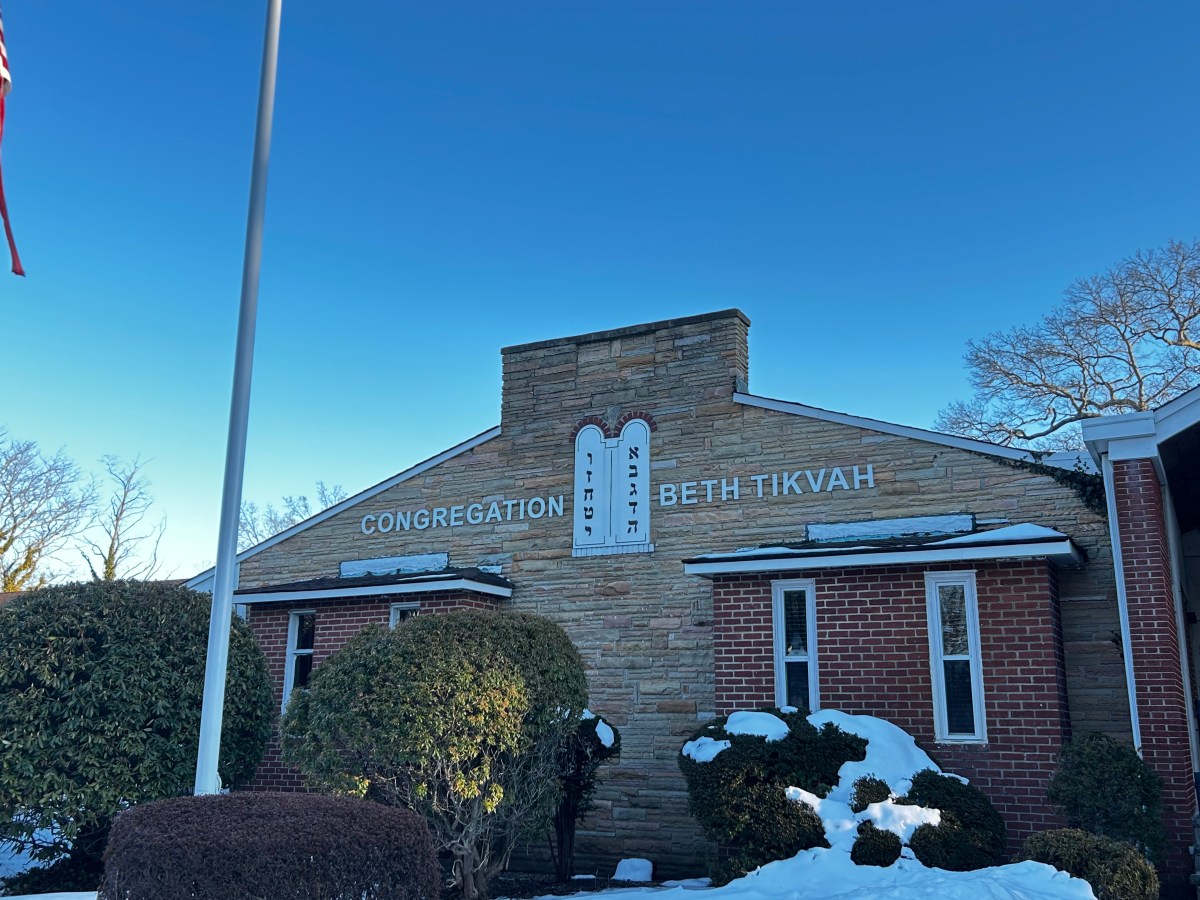
Congregation Beth Tikvah in Wantagh has also seen a decrease in its congregation, serving more than 500 families at its peak and a little more than 200 now.
Media relations spokeswoman Jo-Ann Hertzman said consolidation with other congregations has kept the community strong.
“We are a very alive congregation,” she said as the temple continues to increase its program offerings.
“Congregation Beth Tikvah is a consolidation of three former long-standing conservative congregations,” Hertzman wrote in a statement.
In 2007, the Farmingdale Jewish Center and the Wantagh Jewish Center merged to form the Farmingdale Wantagh Jewish Center.
In 2010, the Israel Community Center joined as well after its congregation numbers dropped, and “in July 2019, a large contingency from Temple Beth-El of North Bellmore joined our congregation as they closed their doors.”
Hertzman said she grew up attending services at Temple Beth-El of North Bellmore so she knows the pain congregants feel when their synagogue closes. Her voice was full of emotion as she recalled some of her earliest memories in the community.
“My father would hold my hand, and we would walk to temple,” she said
“I was raised in that temple. I was married in that temple. It was painful for me.”
“When you have a shift in demographics, you definitely lose members,” said Temple Beth Sholom President Sanford Berger.
Berger said Temple Beth Sholom, a Conservative synagogue in Roslyn, once had 980 congregants at its peak, but now the membership is almost half that, at 550.
But Berger said this was inevitable when communities change.“If a non-Jewish family moves into the area, that’s one less person that could feed our growth as a synagogue,” he said.
“I think younger families are moving out of the area,” Levine said. “We all know that New York is becoming unaffordable.”
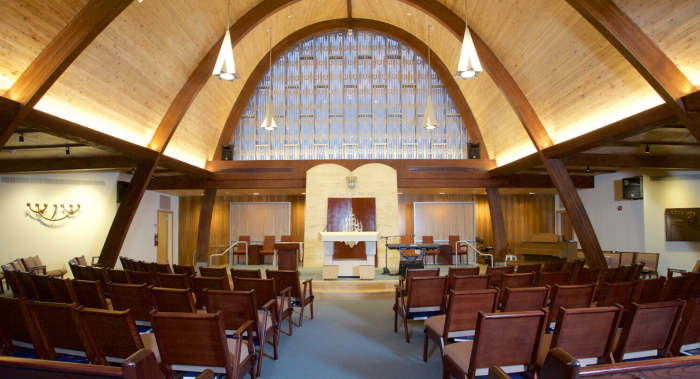
Temple Beth-El, the first synagogue on the Great Neck peninsula, was historically a large community with 1,500 families in the congregation at its peak and 500 on its waiting list.
The Reform temple faced such high demand that it inspired spin-off congregations, such as Temple Emmanuel and Temple Israel in Great Neck.
Now, as the Orthodox community has grown on the peninsula, its congregation stands at fewer than 500 members.
“Members feel a certain sense of loss,” said Temple Beth-El Rabbi Brian Stoller. “There’s a lot of nostalgia for how things used to be.”
Every synagogue reported that its congregation’s average age was between the late ’60s and early ’70s although many still had well-attended early education programs. Temple Tikvah’s Hebrew school has over 40 students from kindergarten through seventh grade, and Temple Beth Sholom has over 80 students enrolled in its early childhood education program.
Hertzman said Congregation Beth Tikvah’s religious school is still growing, with more than 15 students currently attending.
Temple Beth-El recently closed its Early Childhood Education Center, but now rents some of its space to an Orthodox yeshiva.
It recently announced plans to sell the temple but will continue renting space in its historic building.
Executive Director Stuart Botwinick said, “Historically, it was about how big can you build your building? How nice can you make your building?”
But now “a building that was built for 1,500 families is no longer of need to us.”
Temple Tikvah sold its building in 2025 to Beacon Church, but continues to lease a section for its services.
“Because of the demographics, our building became too big for us,” said Levine.
Levine said the temple is actively looking for a new space to rent and many potential locations are other temples, which could merge if everything goes well. Levine also spoke of creating “one Reform center of western Queens and Nassau.”
“In numbers, we would have strength,” she said
“If we would all join our forces and maybe have one building which would be for the Reform movement to continue, then we could stay strong. We need to really get past our own individual wants and look at the bigger picture.”
“You have to understand,” Berger said, “That if you aren’t able to adapt to the changing landscape in any profession, what do they say? ‘Adapt or die.’”
“We adapt. We have to adapt.”