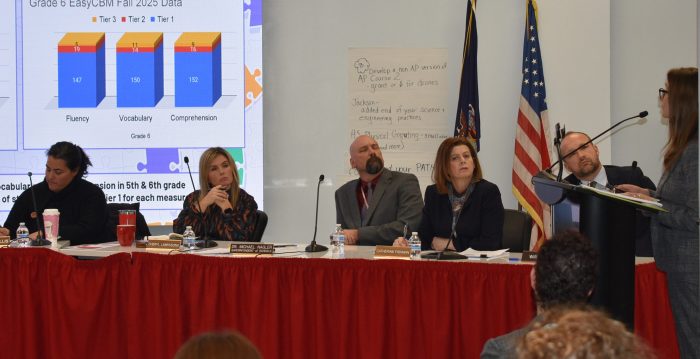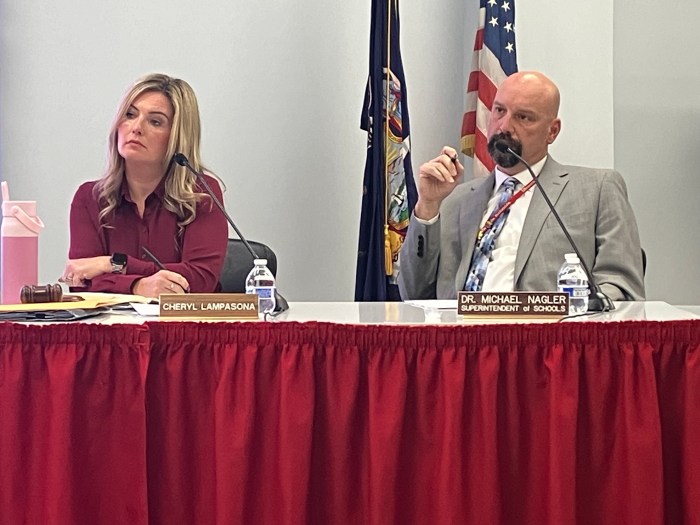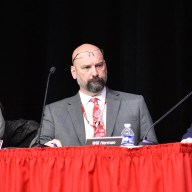



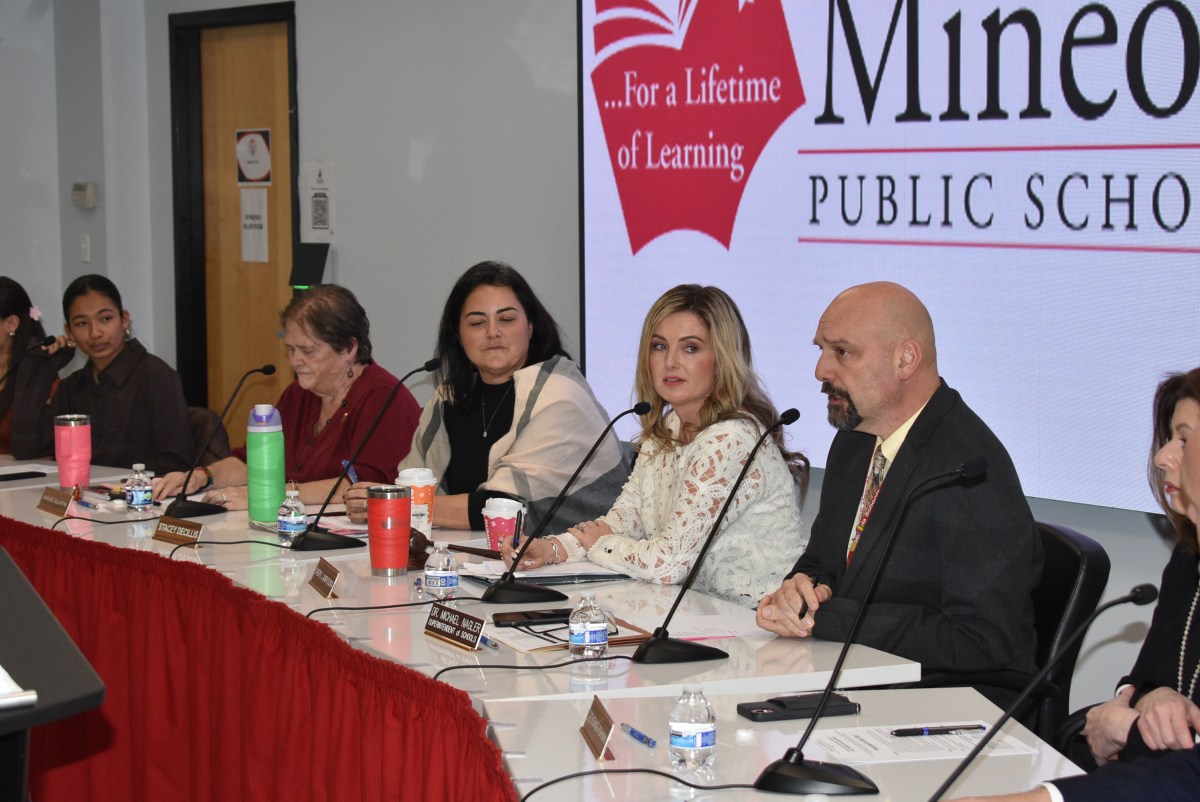
Mineola’s Board of Education and district administration heard public comment about district transparency from community members at their meeting on Thursday, Dec 18.
Many parents expressed interest in moving toward healing, but some continued to raise concerns about board accountability and public participation in decision-making.
This meeting comes while an investigation into the district regarding this year’s Build Your Own Grade curriculum is ongoing. The investigation, which was approved by the board in October, will be presented in full with findings to the community on Jan. 8, according to the district.
“Board service necessarily involves hearing difficult feedback, especially when student interests are at stake,” said parent Gina Angelillo. “Respectful public comment is not a failure of governance, it’s a core function.”
The BYOG program, a video-based learning platform integrated into the 8th-grade curriculum, caused backlash from students and parents this academic year. The program was developed by a company called Quave, owned by Superintendent Michael Nagler and his son, James.
Community members mounted a petition for the removal of the program and raised concerns about data privacy for students using the platform.
The district said that it has listened to all concerns, acted with transparency and raised concerns about the tone of public comments in a letter to Schneps Media LI.
“We are listening, we have taken concerns seriously, acted promptly, and remained fully transparent,” Board President Cheryl Lampasona said.
Despite assurances that all public comments have been heard, parents continued to raise concerns to the board.
“My biggest regret is that I didn’t pull my kid out of Synergy and Mineola High School at the start. Mineola High School failed to educate the Synergy students,” said parent Laura Pollak. “The school board and Dr. Nagler need to be held accountable for that. I would like to see a formal investigation of Synergy, as you have been investigating what happened with Build Your Own Grade in the 8th-grade.”
She is referring to the Synergy program, which was started by Superintendent Nagler to create a safe learning environment for students burdened by stress in a traditional high-school classroom.
The board noted that the questions were heard and indicated a future follow-up with the parent regarding her comment.
Other parents indicated concerns that public comment is not accessible enough during board meetings, especially regarding presentations and resolutions.
“I believe public discussion benefits everyone. Silencing comments because you may not like them is not the solution,” said parent Stephanie Guariglia. She said that public comment should be part of any meeting where significant voting occurs, and added that a Q&A session should be added to the agenda of the Jan. 8 meeting at which the BYOG investigation results will be shared.
Board President Lampasona said the board will review its policy regarding the matter.
“To date, the New York State Education Department has confirmed that the district is compliant with the Parents’ Bill of Rights, all FOIL requests have been fulfilled, and the Nassau County District Attorney’s Office has indicated that it does not suspect any criminal activity,” the district said in the letter to Schneps Media LI regarding the investigation.
“[Students] need to see the healing, the empathy, and the forgiveness, and that is what I think we are missing right now. I’ve never worked in a district where teachers, parents, and children show up for each other as they do here in Mineola,” said Rory Parnell, principal of Mineola High School.
The board also heard an academic update from Mineola High School principal Rory Parnell. School administrators reported above-average performance on the Regents exam and a platinum distinction from the College Board for AP education.
Trustees also voted in favor of an alteration to the senior citizen real property tax exemption program. The exemption, which is available to qualifying homeowners over the age of 65, will now have an annual income limit of $58,399.
Trustee Patrick Talty raised concerns about the income considered for this program, noting that IRA gains and inheritances are not included in the income used to determine exemption percentages.
“You could potentially be shifting a tax burden from somebody who appears to have less income, but really doesn’t, over to someone who genuinely does have less income,” he said. He voted in favor of the altered exemption.