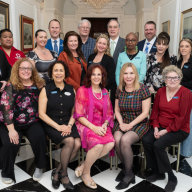




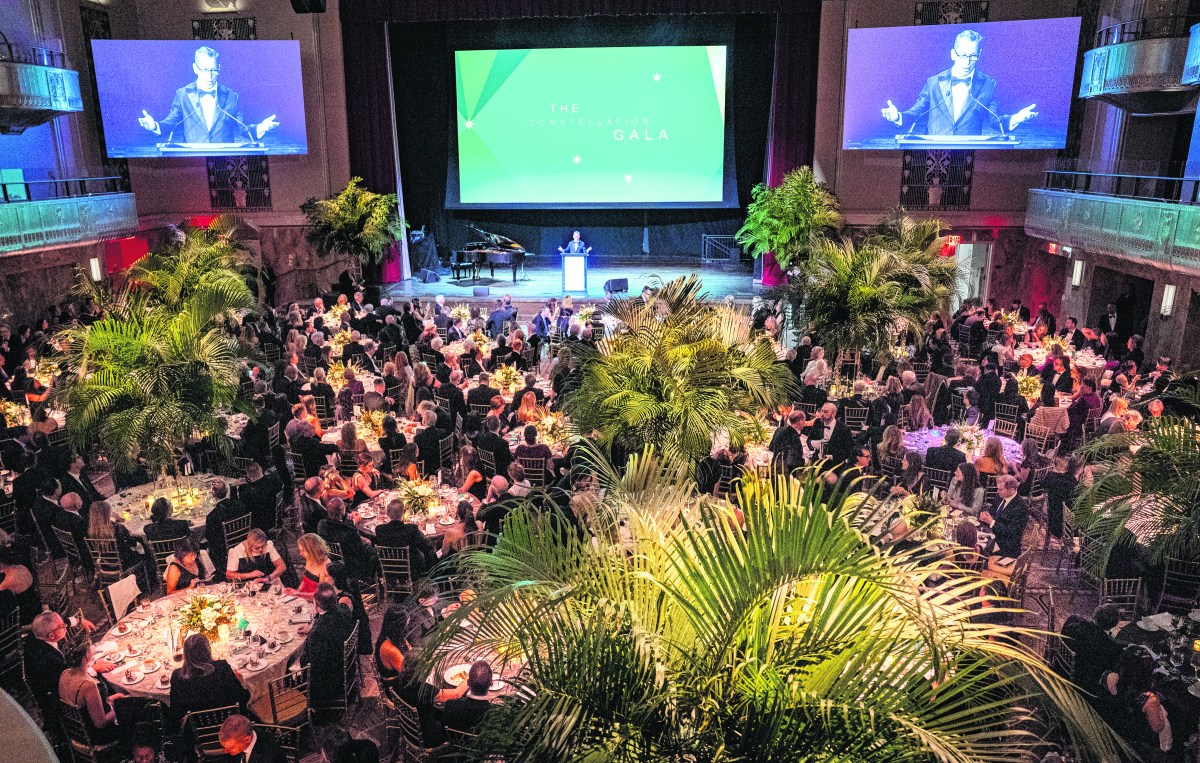
Northwell Health had a big day on Nov. 19, raising more than $3.2 million at its annual Constellation Gala at the Metropolitan Museum of Art with big-name philanthropic sponsors such as Margaret M. Crotty and Rory Riggs.
Actress and comedian Cecily Strong and the Orchestra of St. Luke’s performed, making it a night to remember as well as to raise funds for three of the health system’s Manhattan hospitals and the Victoria and Lloyd Goldman Health Care Pavilion, an outpatient care facility slated to open on the Upper East Side next year.
“The support of our donors propels us forward as we continue our pursuit of a future with improved health for all people in our care and in our communities,” Northwell CEO Emeritus Michael Dowling said in a statement at the time.
Timing and technology are key for fundraising, as year-end increasingly becomes the moment to give, including galas. The biggest giving days, it turns out, are Dec. 29, 30 and 31 with Dec. 31 alone generating 5% of 2024 nonprofit revenue, up 11% from the prior year, according to the 2024 M+R Benchmarks Report.
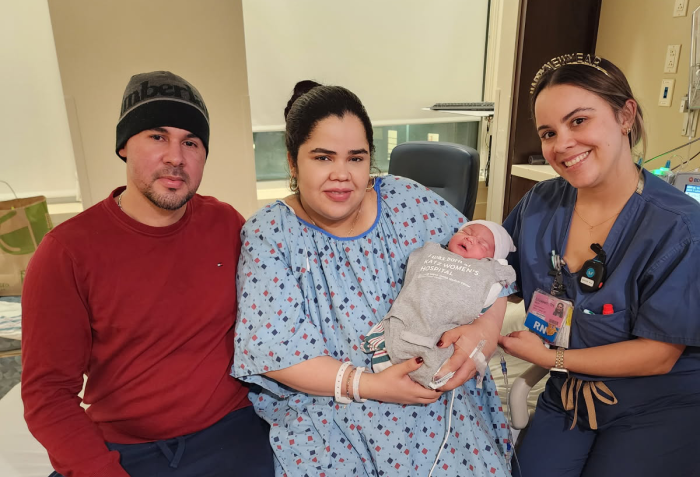
READ ALSO: Northwell welcomes first babies of 2026
“The end-of-year giving season is a huge deal for the nonprofit sector, driving billions of dollars in the span of a month, with a vast amount of that giving coming in the final few days of December,” according to Neon One, which provides fundraising services.
If year-end is a big time and Northwell had a big day, and has been effective year-long, this hasn’t been an easy year for many nonprofits, as government aid often has been reduced and inflation raises costs.
“Overall, things have been difficult for the sector,” said Bohemia-based Cerini & Associates Managing Partner Kenneth Cerini, who specializes in accounting for nonprofits. “Federal government cuts have trickled down to the state and local levels, which ultimately find their way to nonprofit organizations.”
Certain sectors have felt the squeeze of the federal government’s shifting priorities. Environmental and food programs, Cerini said, have watched as the federal government “tightly constricted funding or shut it off completely.” He said one nonprofit focusing on the clean/alternative energy sector is losing all of its $6 million of federal funding, 60% of its budget, as of year-end.
Melissa Firmes, president and co-founder of Amityville-based KiDS NEED MoRE, which provides services and support to children with cancer and their families, said the trend has forced nonprofits to pivot.
“Watching them struggle has reinforced this trend: nonprofits have to be more self-reliant than ever before,” she said.

She said her group received a “local government grant award last year that could significantly strengthen our operations,” but after waiting over a year for the funds to arrive, she is hopeful although “the delays are challenging.”
Poverty is on the rise, or at least inflation has been putting financial pressure on individuals and families.
“While salaries have increased, they have not kept pace with the cost of inflation,” Cerini said, “creating a whole new layer of working poor who need to tap into some layer of economic support to make ends meet.”
Firmes said she’s seeing growing need for her group’s, as well as others’, services amid financial challenges.
“Families coping with a serious illness in the family, be it a child or a parent, are looking for more community, more emotional support, more respite, and more continuity of care,” Firmes said. “The challenges are rising, not shrinking. About 70% of our families also report they are financially struggling or food insecure.”
The sheer number of groups — 3,500 nonprofits on Long Island and over 35,000 in the New York Metropolitan area — makes fundraising tougher, Cerini said.
“There is a tremendous level of competition for funds,” he added. “Nonprofits need to find ways to differentiate themselves.”
There are billion-dollar campaigns, attracting big donations, such as Northwell’s Outpacing the Impossible campaign, which since 2016 has attracted more than 207,000 donors and raised more $1.4 billion.
“Philanthropic support has made a meaningful impact on Northwell’s ability to fuel groundbreaking research and teaching, bring new treatments and technologies and raise health for all,” Brian T. Lally, president of the Northwell Foundation and chief development officer, said in a written statement.
Firmes said they, on the other hand, “receive modest support from many individuals, families, and local businesses and corporate partners.”
“That diversification has actually helped protect us especially in this tough economy,” she said. “When one area tightens, we’re sustained by many small acts of generosity.”
Online fundraising is providing an increasingly important lifeline. Nonprofit Tech for Good said 33% of donors say email inspires them to give compared to 29% social media, websites at 17%, and print at 9%. Meanwhile, the group said 72% of individuals said that the presence of a charity rating badge increases their likelihood of giving.
About 84% of online donors are more likely to give if their donations are matched by their employer, according to Nonprofit Tech for God. The group said 75% of donors look for “concrete information about a nonprofit’s achievements before making a decision to give.” Online giving, however, still accounts for only 13.4% of small nonprofits’ revenue, 8.3% for medium-sized nonprofits, and 4.1% for large nonprofits, that group said.
While fundraising is up and some groups are successful with large numbers of small donations, Cerini said donations are largely fueled by an increase in large gifts amid a “dramatic decline in the number of people making smaller (under $500) contributions.”
Firmes said they’re “seeing more success in partnerships than in traditional fundraising.” They collaborate with corporations, community groups, and other nonprofits, “where giving is connected to a shared action and shared values” so giving “feels more like an investment rather than a transaction.”