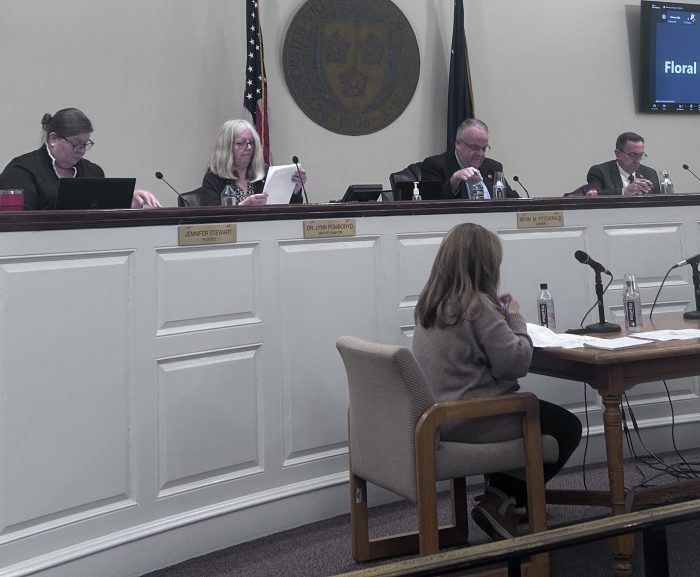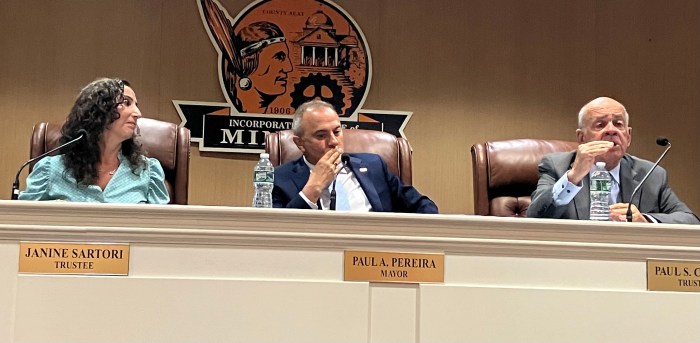




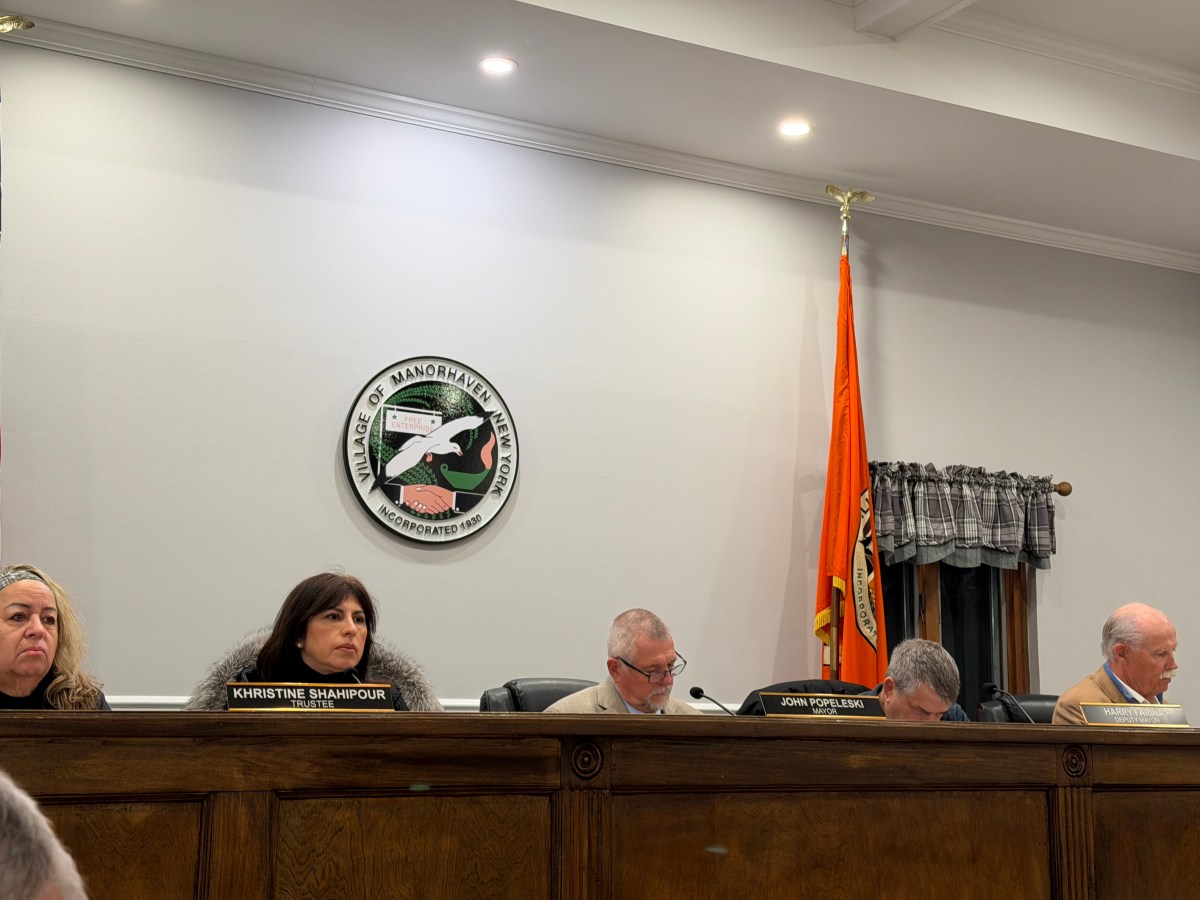
After hours of testimony and sharply divided arguments over development, parking and the future character of the village, the Manorhaven Board of Trustees voted unanimously on Monday night to deny a proposed subdivision at 42 Inwood Road and tabled action on a separate subdivision at 28 Kaywood Road, decisions that drew applause and visible relief from many residents in attendance.
The rulings came at the end of a lengthy Wednesday, Jan. 28, meeting dominated by concerns over density, traffic congestion, emergency access and what residents repeatedly described as the steady erosion of Manorhaven’s residential character.
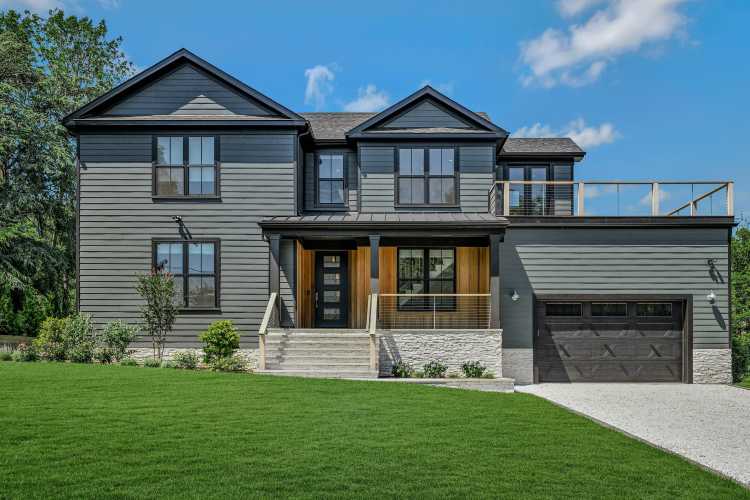
The board voted 5–0 to reject the application to subdivide a 10,000-square-foot corner lot at 42 Inwood Road into two 5,000-square-foot parcels, where the developer proposed demolishing an existing two-family home and constructing two new two-family dwellings.
For residents who packed village hall and spoke passionately during public comment, the decisions marked a rare pause in what many described as relentless overdevelopment.
“This is exactly why we need a comprehensive plan,” said Christine Zahn, a resident of Manorhaven. “Because in an emergency situation, no one can move. No one.”
The most contentious application of the night involved 42 Inwood Road, a corner property at Inwood Road and Queenbridge Avenue. Representing the contract vendee, attorney Joshua Brookstein of Zahn Ward Braff Koblenz PLLC argued the proposal was a “minor subdivision” that complied with the village code and reflected the existing character of the neighborhood.
“The subject property is a 10,000-square-foot corner lot,” Brookstein told the board. “The proposed subdivision will result in two residential lots consistent with the existing neighborhood pattern and entirely compatible with the streetscape.”
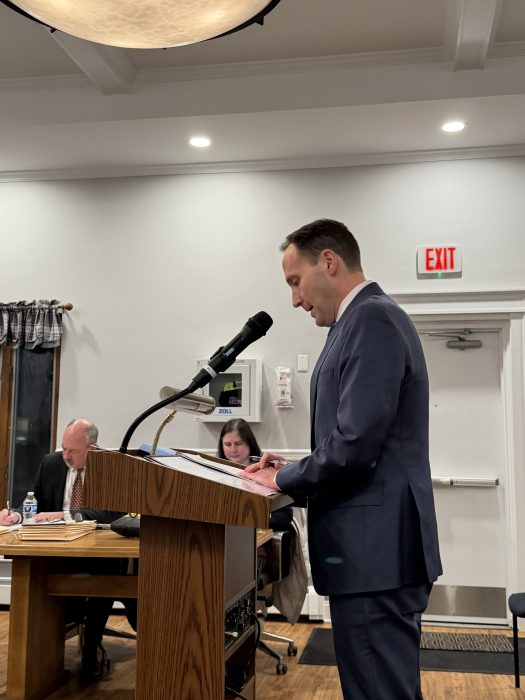
Brookstein emphasized that two-family homes are permitted as of right in the village’s R-1 zoning district and said that 76% of the properties within 200 feet of the site are already two-family homes.
The Village of Manorhaven currently has a building moratorium in effect.
The moratorium “temporarily suspends land development, construction of buildings and structures, and changes in the use of residential property while the village of Manorhaven considers changes and adopts amendments to its land use regulations in the C-1, C-2, C-3, I-1, I-2, I-3, E-1 R-3, R-4, and the business overlay district zones.” R-1 and R-2 zones have not been included in the moratorium. A move that Mayor John Popeleski has said would soon be included.
Brookstein also argued that parking and traffic impacts would be minimal and that the plan met minimum lot-size requirements.
“Even in the worst-case scenario, there would be at most a single parking space deficiency,” Brookstein said, referencing a traffic and parking analysis prepared for the application.
But trustees and residents sharply disputed that assessment.
Popeleski raised concerns about curb cuts, street safety and parking availability, particularly during snowstorms and emergencies.
“I don’t like the curb cut on Cambridge,” Popeleski said. “I don’t like the curb cut right next to a stop sign on Inwood.”
The mayor also cited inconsistencies in the application materials, including whether the existing structure was classified as a one-family or two-family home, and noted that back taxes were owed on the property.
“It’s my recommendation that this application gets rejected, the taxes get paid, and you come back to us,” Popeleski said.
Trustees echoed those concerns, pointing to the cumulative impact of similar developments throughout the village.
When the vote was finally called, it was a unanimous denial.
Public comment on the Inwood Road proposal included residents lining up to describe daily struggles with parking, traffic and access during emergencies.
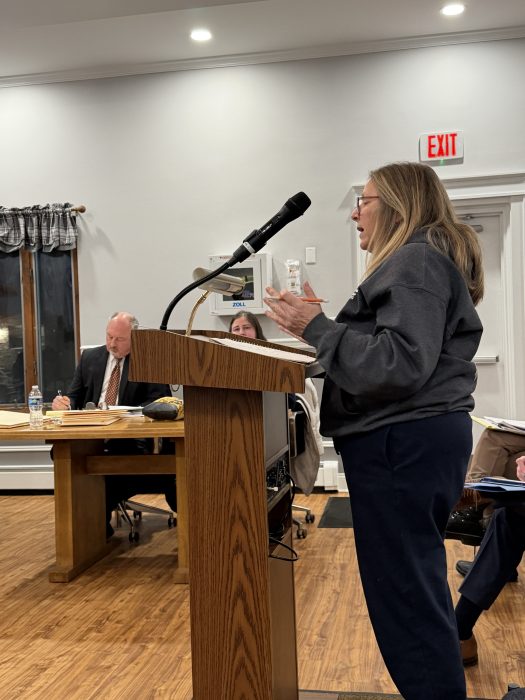
Zahn, who said she owns a home on Inwood Road, criticized the repeated use of technical language by developers and attorneys.
“I am sick and tired of the use of the word ‘de minimis,’” she said. “The character of this village has been changed time and time again by the votes and the allowance of the builders.”
Zahn argued that while developers have a right to build, they do not have a right to reshape the village at the expense of residents.
“Builders buy a property. They have the fundamental right to build,” she said. “But they don’t have the fundamental right to cut up the rest of the village and tell us they’re following code when they’re asking for variances.”
Another resident, Sherry Den, questioned the assumption that future tenants would use driveways rather than street parking.
“They think that the tenants are going to utilize the parking spaces,” Den said. “They’re not.”
She described streets packed with cars during alternate-side parking and said increased density would only worsen the situation.
Resident Christian Hommerich accused developers of selectively invoking village code while simultaneously seeking exceptions.
“You can’t stand here and tell us to enforce the code and then ask for variances to the code,” Hamer said. “If the law needs to change, change the law.”
Several residents warned of broader consequences beyond parking.
Resident Gina Volcano described being delayed by traffic during a recent emergency.
“There’s one way in and one way out,” she said. “If something catastrophic happens on Manhasset Island, people are going to die.”
Others raised concerns about the village’s aging sewer and water infrastructure and questioned whether it could support continued development.
Village Engineer Rebecca Goldberg addressed criticisms of the parking study, clarifying that daytime observations were not intended to represent peak demand.
“I never represented that daytime parking is a peak parking demand,” Goldberg said. “Peak residential parking is overnight.”
Goldberg defended the use of Institute of Transportation Engineers data, saying it is widely accepted and regularly updated. However, she acknowledged that the village code does not require parking calculations based on bedroom counts.
Still, trustees remained unconvinced that the application adequately addressed safety and neighborhood impacts.
Later in the meeting, the board turned to a separate application involving 28 Kaywood Road, where the owner is seeking to “unmerge” lots that were combined in 2017, maintain an existing single-family home and construct a new two-family dwelling on a newly created vacant lot.
Attorney Bruce W. Migatz of Albanese & Albanese LLP said the proposal differed from prior subdivision cases and was intended to restore historical lot lines dating back to a 1927 subdivision map.
“This application is really to unmerge lots,” Migatz said. “We’re not increasing density beyond what historically existed.”
Migatz argued that many of the dimensional nonconformities cited by critics already exist throughout that section of Manorhaven and are not the result of the proposed subdivision.
Despite the explanation, trustees declined to vote on the application, citing the need to see a site plan.
Rather than approving or rejecting the proposal, the board voted to table the matter, signaling that further review will be required before any decision is made.
The decision to deny the Inwood Road subdivision and table the Kaywood Road proposal was met with quiet applause and nods of approval from residents.
Several said the board’s actions reflected a growing recognition that the village has reached a tipping point.
The board then moved to its regular meeting, approving routine business along with new resolutions.
As the meeting adjourned, residents said they hoped the votes would mark the beginning of a more deliberate approach to development, particularly as the village continues work on its long-awaited comprehensive plan.
“This is about our quality of life,” Zahn said. “Please choose wisely.”