


February is Tinnitus Awareness Month
One of the most common questions, and complaints, we get from patients is about the ‘ringing’ in their ears! Tinnitus (pronounced tin·ni·tus or tin-night-us), is defined as a sensation of sound in your ears, sometimes in your head. Each person with tinnitus has a different sound experience; for most it is described as a ‘ringing’ sound, but many patient’s also report a ‘shooshing’, ‘buzzing’, ‘whooshing’ sound – similar to the sounds inside a conch shell.
Too many people dismiss the ringing, when in fact this sound essentially represents an internal alarm alerting you that something is not as it should be. Whether the tinnitus is constant, only noticeable in a quiet room or at night, pulsating or seems to have certain triggers (i.e., exercise or caffeine), it is important that the root cause of the problem be determined, and a proper treatment plan be put in place with your doctor of audiology at HearingandBrainCenters.com.
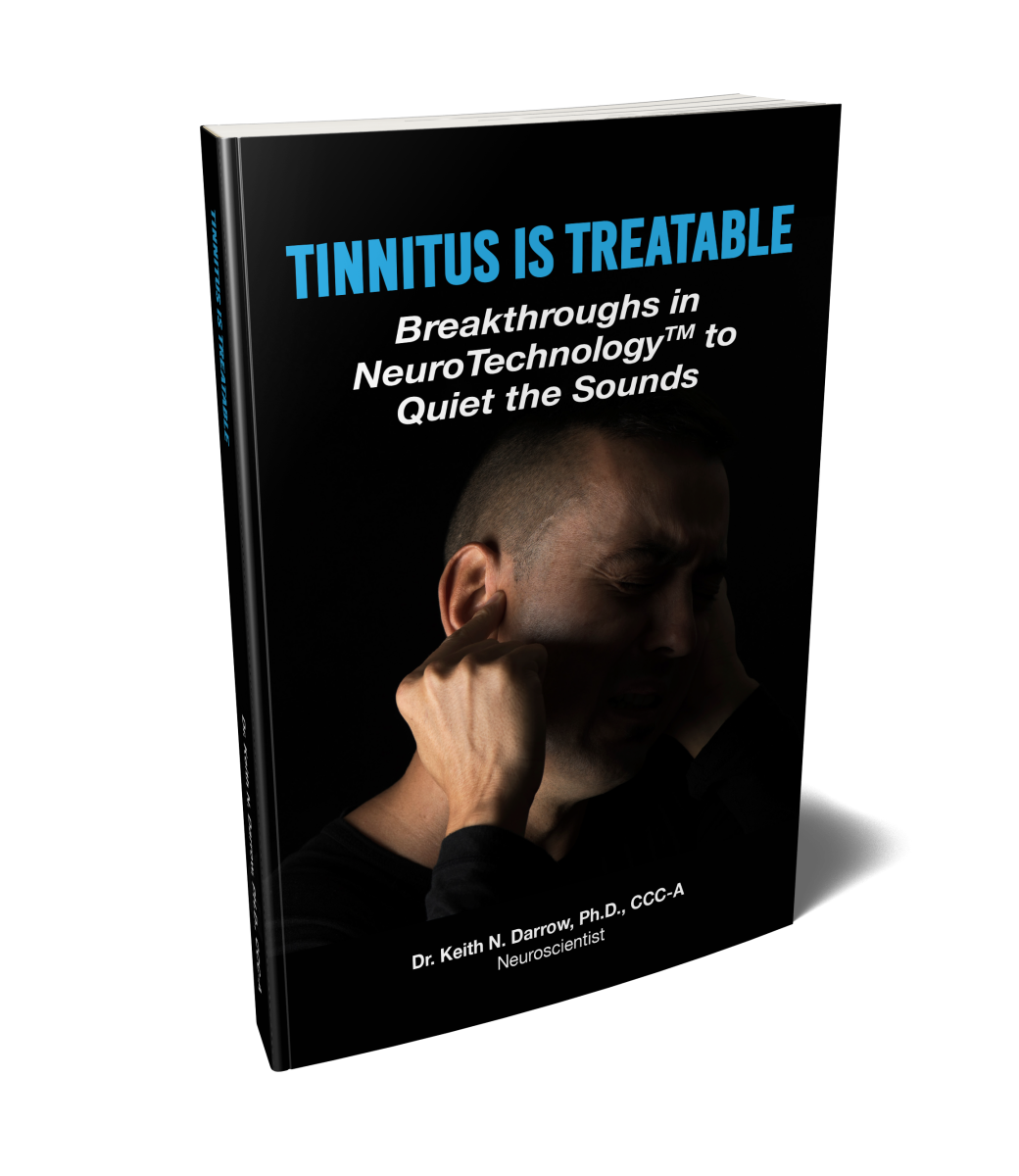
For more information on tinnitus, click here to request a free copy of Dr. Darrow’s book, or call (516) 212-7722.
Understanding Tinnitus: The Numbers & The Science.
It is currently estimated that nearly 50,000,000 American adults live with tinnitus. Some people only notice their tinnitus in a quiet room, whereas many others experience the sound all day long – and it can interfere with daily life. In some people, the sound can cause depression, anxiety and affect concentration. Patients often ask, “what is causing the ringing in my ears?”. Admittedly, that is not the easiest question to answer. However, it can be answered once the doctor of audiology is able to dig deeper into the symptoms, recognize the individual’s tinnitus triggers, and have a full understanding of the patient’s hearing profile and results of a complete audiological evaluation that includes cognitive function testing.
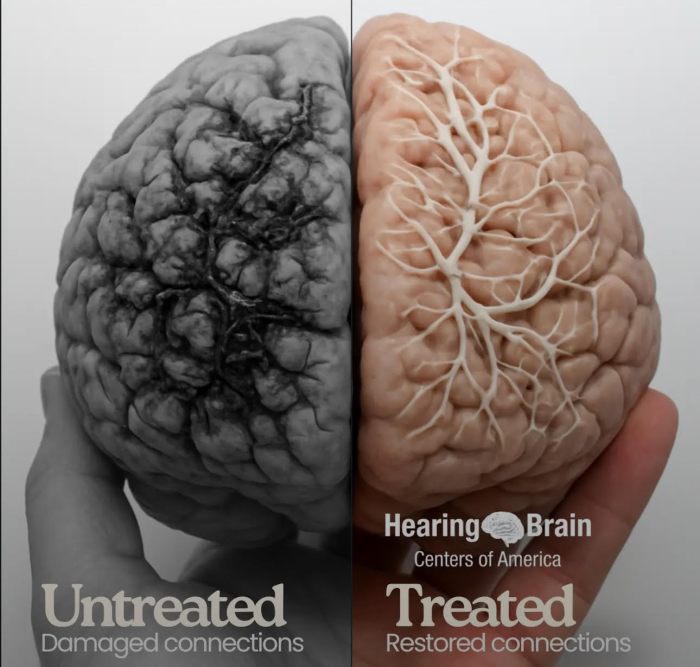
The most common cause of tinnitus is damage to the sensory organ of hearing, the cochlea (i.e., the inner ear). The cochlea is to hearing what your eyes are to vision. Within the cochlea are tiny ‘hair-like’ cells, called hair cells. When these cells are damaged, the nerves that connect the hair cells to the brain (and give us the ability to hear), become permanently damaged; and often times the ringing will ensue.
The most common cause of damage to our hair cells is aging. Think about it – as we get older, we tend not to see as well or as sharply as we used to; especially in low-light environments. Unfortunately, the same process happens in our ears as we age; we tend not to hear as clearly, especially in noisy situations.
Other causes of tinnitus that result in hair cell damage include excessive noise exposure – either a single intense noise (like a shotgun blast) or long-term exposure either from work or play (e.g., musicians, concert attendees, carpenters, machinist, landscapers, etc.). Tinnitus can also result from physical trauma to the head or neck. Physical trauma to the head that can impact hearing and tinnitus is commonly found in individuals that have been in a car accident or for those who have had a slip and fall.
A smaller percentage of tinnitus cases are the result of other medical conditions that include hypertension (high blood pressure), acoustic neuroma (tumor on the hearing nerve), thyroid disease, vascular disorder, temporomandibular joint (TMJ) disorder, ear infection, impacted cerumen (ear wax), nutritional deficiency, aneurysm, multiple sclerosis and other disorders. In some patients, prescription and over-the-counter drugs can result in damage to the auditory system and cause or exacerbate tinnitus. Ironically, several hundred drugs listed in the Physician’s Desk Reference (“PDR”) cite tinnitus as a side effect! In some, but very few, of these cases, the tinnitus may reduce or disappear when the prescribed medication is discontinued.
We hope you can understand and appreciate why we would say it is rather difficult to answer the question ‘What is causing my tinnitus?’ as it can be the result of any number of medical conditions, or by something as simple as ‘too much wax in your ears’. We also hope you have come to realize the seriousness of experiencing tinnitus and the urgency with which finding the answer to the question must be pursued with your doctor of audiology.
For more information on tinnitus, click here to request a free copy of Dr. Darrow’s book, or call (516) 212-7722.

Understanding Tinnitus: Triggers
For many patients, the ringing can be virtually undetectable until a certain ‘trigger’ ramps up the volume of the sound. Below is a list of the most common triggers patient’s report as influencing their tinnitus:
- Loud noise. Avoid loud sounds at all costs! The use of power tools, guns, motorcycles, noisy vacuum cleaners, etc., must require the use of hearing protection. While the ringing that occurs after exposure to loud sounds and concerts may seem temporary (often referred to as the ‘hearing hangover’, the damage is PERMANENT. Ask your doctor of audiology which is best for you and your hearing needs visit com to find a specialist near you!
- Excessive use of alcohol or so-called recreational drugs can exacerbate tinnitus in some individuals. Toxins introduced to the body can have a range of effects on our nervous system. Alcohol and drugs exert their effects on people by influencing neural activity; thus, tinnitus is a potential side-effect of these toxins.
- Caffeine, found in coffee, tea, chocolate, and some cola drinks, can also increase tinnitus. Like most things in life, nothing is that bad for you in moderation. However, when most things are taken in excess, they can have adverse side effects. Caffeine, a nervous system stimulant, can ramp up neural activity and lead to the brain’s perception of sound. Fortunately, when tinnitus results from the ingestion of caffeine, the simple fix is to reduce your intake.
- Nicotine has a direct effect on our vascular system. Changes to our vascular system, which are often times permanent from nicotine and smoking, can influence blood flow to the ears – which will have a direct effect on the health of the cochlea and hair cells. This impact can lead to a ‘suffocation’ of required oxygen to the ear, and thereby compromise neural connections to the brain; thus, resulting in tinnitus.
- Aspirin, quinine, some antibiotics, and hundreds of other drugs are causative tinnitus agents and can make existing tinnitus worse. If you are prescribed medication, always inform your physician and pharmacist of your tinnitus and discuss the drug and dosage options. Even with tinnitus, it always makes sense to ensure that your doctor and pharmacists are always in the ‘know’ about you and any issues you may be dealing with as that information will help them best serve you.
- Managing stress is certainly easier said than done for most of us – but that doesn’t take away the importance of learning how to manage and reduce our stress. While we understand very little about ‘how’ stress impacts the body, we do know that stress can be the root cause for many medical conditions, including tinnitus.
Understanding Tinnitus: Treatment Options
Unfortunately, too many patients have said to their doctor of audiology, ‘I have tinnitus, and I’ve been told there is nothing that I can do about it’. I emphatically say to each of these patients, and to you – that is not true! Is there a cure for tinnitus? No. Are there valid, F.D.A. approved treatment options available to reduce, and in some cases, eliminate, the ringing? YES!
Tinnitus and NeuroTechnology™
The single most effective treatment option available for patients suffering with tinnitus is NeuroTechnology™. The F.D.A. (Food and Drug Administration) has approved treatment for individuals with tinnitus by providing the brain with restored proper stimulation. And while most people with tinnitus also suffer with hearing loss, that is not always the case. Fortunately, newly available NeuroTechnology™ has been designed for people with hearing loss and with audiometric ‘normal hearing’. Many studies show that patients who use this tinnitus support technology have a significant reduction in their daily tinnitus experience – with some even reporting that ‘the ringing is gone all day.’
Take Action Today!
If you or a loved one is experiencing hearing loss or tinnitus, now is the moment to invest in a future of clarity and vitality. Contact Hearing and Brain Centers of America today to learn more. Our team is prepared to conduct thorough evaluations and guide you through the enrollment process and guide you on your wellness journey for life.
For the most up-to-date information on hearing loss or tinnitus, visit hearingcenterofli.com
To learn more about tinnitus, visit SilencetheSounds.com.
For hearing loss education and ways to prevent further decline, visit HBCABookOffer.com.
Take the first step. Call (516) 212-7722 to request a book, get your questions answered, or schedule an appointment!