



The Great Neck Board of Trustees addressed two of the most contentious issues in the village on the agenda—the surplus designation of Wooleys Lane and the potential alienation of a piece of Kings Point Park.
In a unanimous vote, the board agreed to designate a parcel of undeveloped land on Wooleys Lane as surplus at its Tuesday, Jan. 6 meeting.
The designation now allows the village to negotiate a sale of the property.
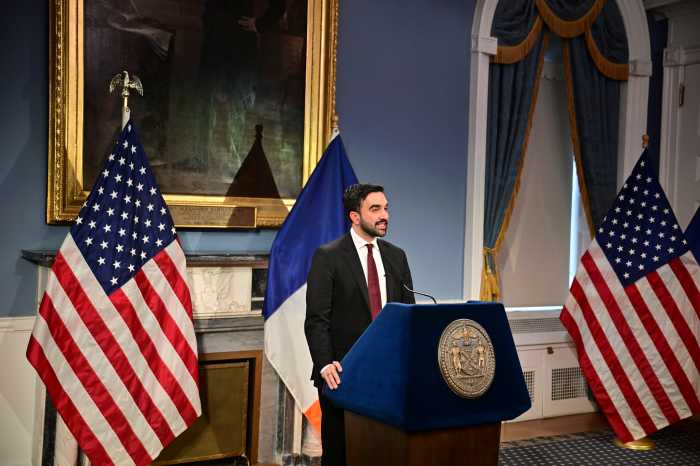
There is already an interested party who wants to buy and develop the land, Mayor Pedram Bral said without identifying the interested party.
The push to designate the plot as surplus and the resulting backlash were initiated when the interested party began surveying the land after consulting with the board.
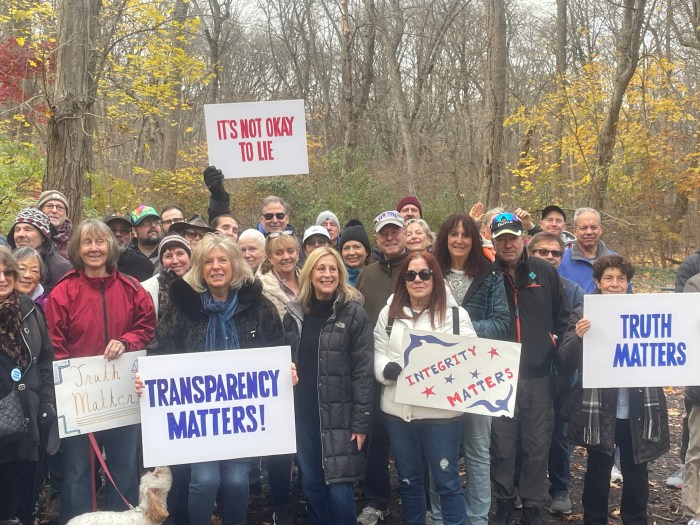
In the public comments before the vote, Natan Hamerman, a lawyer who lives on Wooleys Lane, argued that declaring the land as surplus would violate the public trust doctrine, a legal principle that holds certain natural resources must be preserved for public use.
Hamerman cited articles in local publications from over 50 years ago to support his claim that the land had “at a minimum” an implied dedication for public use.
Hamerman said the news clippings showed that “village officials stood with village residents opposing development of the area,” and therefore the land had an implied dedication for public use.
The articles include details of the property’s use by all sections of the community and a quote by a former Village of Great Neck trustee, who says that the village does not have any plans in the future to divest the Wooleys Lane property to Nassau County, which was attempting to sell the land to developers at the time.
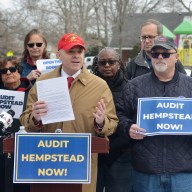
Hamerman, who has organized community members to attend previous meetings to voice their disapproval, also stated that the land is regularly used by the community.
The parcel “was used by dozens of children for hours two and a half weeks ago after the snowstorm,” Hamerman said.
In a heated exchange, Bral told Hamerman that children’s use of the land did not make it parkland.
“I’m just telling you what the law is,” Bral said to Hamerman.
Hamerman replied, “Doctor, you’re not telling me what the law is,” referring to Bral’s medical degree.
Village Attorney Stephen Martir cited case law stating “acts and declarations [in this case, by the village] should be deliberate, unequivocal, and decisive, manifesting a positive and unmistakable intention to permanently abandon his property to a specific public use.”
“That standard, in our view, has not been met,” Martir said, and that “the burden of proof rests on the party asserting that the land has been dedicated to public use.”
After the surplus designation passed, Hamerman asked the board what the timeline of next steps was.
Hamerman, who has suggested he may sue the board in the past, said, “I’m interested in asserting our legal rights,” but declined to say whether he would take the matter to court as of Tuesday night.
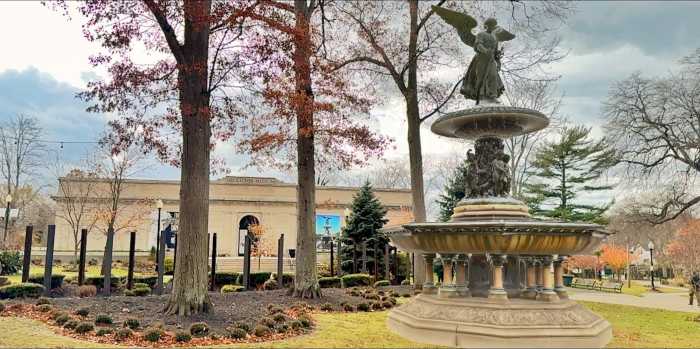
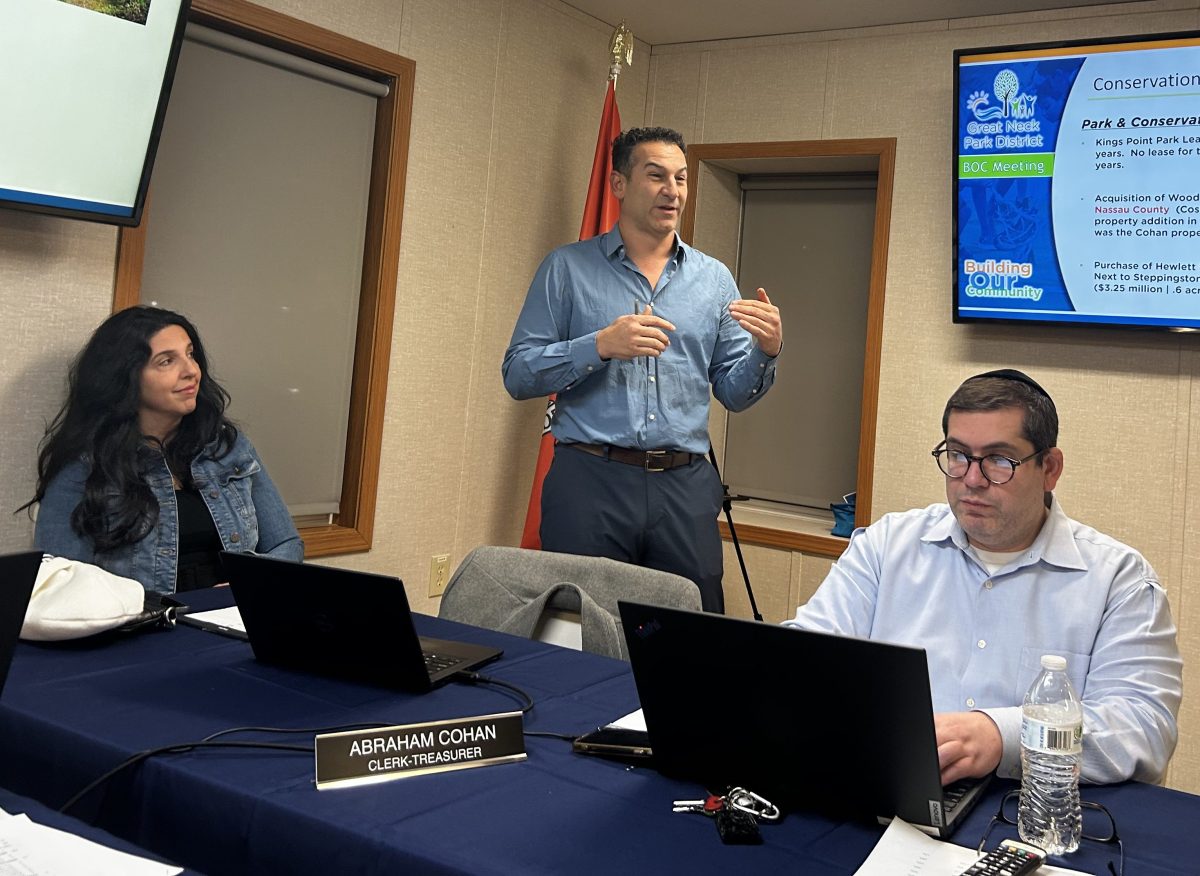
In another contentious section of the meeting, the board hosted a presentation by Great Neck Park District Superintendent Jason Mara and Commissioner Vanessa Tamari on Kings Point Park land alienation.
The park district made the case that the community would benefit if the village of Kings Point alienated 2.48 acres of parkland in order to facilitate a swap for 13.48 acres of land, some of which is owned by the United Mashadi Jewish Community of America and some by Kings Point.
If the swap happens, Mara said the park district plans on converting the Wildwood Property, currently owned by the UMJCA, to gardens, greenhouses, or some other new attraction that the district’s other parks do not currently have.
Part of the 2.48 acres suggested for alienation includes the Steamboat Road entrance to Kings Point Park, but Mara said the park district plans to add an improved entrance with two lanes for cars and a walking lane, as opposed to the current one-lane gravel entrance.
Daniel Capruso, who sued the village of Kings Point, park district, and UMJCA over the issue, objected, saying, “This is 30 acres in the middle of Kings Point that hasn’t been developed. There’s a reason. This is a wetland. This is a swamp.”
Bral said that the swap was a compromise in everyone’s interest.
“The community that is complaining about this believes that one small portion of the community is gaining and we’re all losing. I don’t look at it that way.”
After more than three hours and many cups of coffee, the board closed the public section of the meeting.