



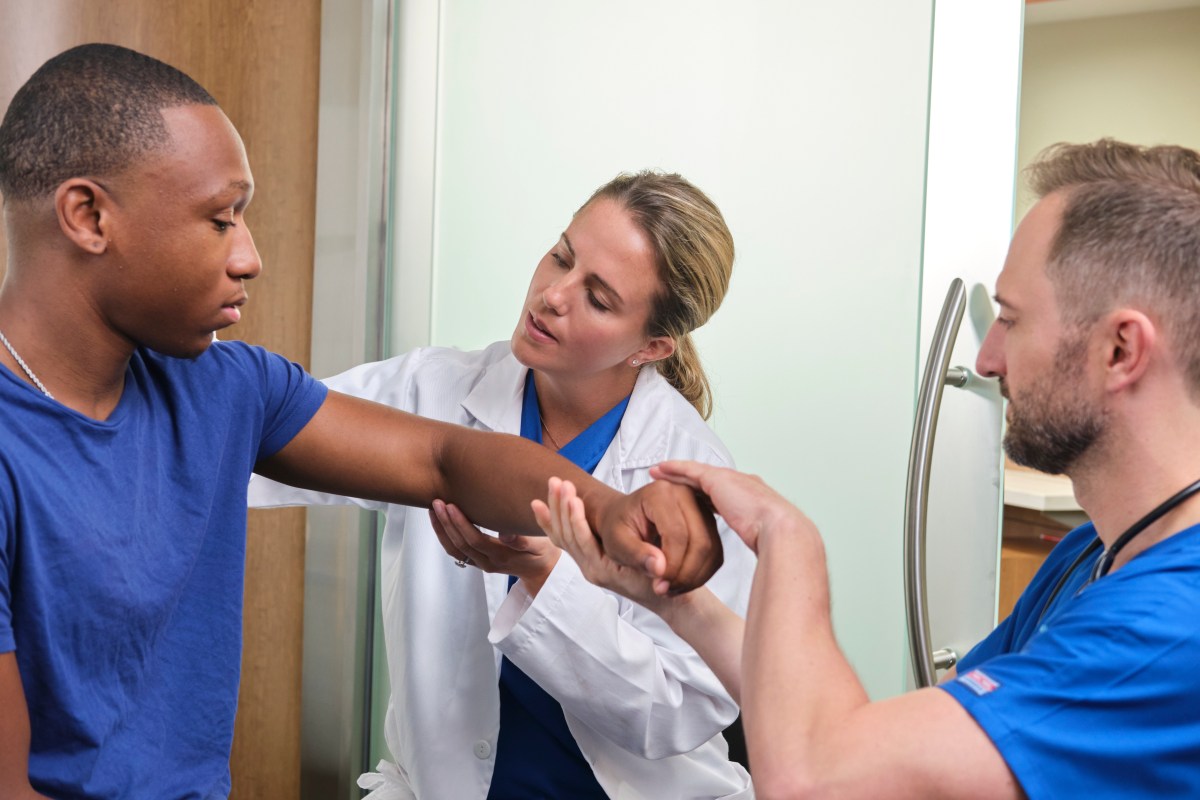
Over a foot of snow blanketed Nassau County this weekend, and with sub-freezing temperatures and heavy snowfall, Schneps Media LI spoke with urgent care professionals at Northwell Health to pinpoint dangers and healthy habits during winter.
Lyndsie Watkins is a physician assistant who works as the Clinical Director of the Eastern Region of the Northwell Health-GoHealth Urgent Care Market, and she said low temperatures and high-exertion activity are some of the leading causes for urgent care visits during the winter months.
“Lately the temperatures have been incredibly cold. Very often with that, you run the risk of things like frostbite or frostnip. Being outside exposed to cold weather and wind can increase that risk,” she said. “We see a lot of slip-and-falls this time of year, unfortunately, with all of the ice we get out there.”
She said that frostnip can present with red skin or painful stinging at the beginning, and can be resolved by going inside and warming up for about 15 minutes. Frostbite, according to Watkins, is much more serious. It can present with blisters and a purple color in skin as well as a dull, waxy appearance.
She said frostbite is very dangerous and requires close monitoring, and that anyone who experiences it should seek medical attention quickly. She said that even with minor frostnip, it’s important to warm up slowly at room temperature rather than placing affected areas in hot water.
Watkins said slip-and-fall risk is increased in the winter months due to icy conditions. Medical professionals treat injured extremities and sometimes bruised backs or hips, Watkins said.
She said shoveling can pose a risk beyond just strains and sprains from lifting heavy snow.
“Shoveling snow is actually quite rigorous,” Watkins said. “It could be the precipitating factor that triggers an event.”
She said it’s important to stay hydrated and warm up your body before going out to shovel snow, as if you were preparing for any other exercise.
“If you notice shortness of breath or chest discomfort, dizziness, if you feel a little nauseous, we would encourage you to stop and make sure those symptoms are getting better,” she said, adding that if symptoms don’t improve, people should seek medical help right away.
Watkins said the winter months can bring an increased risk of colds, flu and other respiratory viruses or infections.
Watkins said it is important to know that severe symptoms, such as chest pain, shortness of breath, confusion or severe dizziness, should be addressed at the emergency room, but that more minor symptoms can be addressed by an urgent care. She added that the urgent care can always recommend higher levels of treatment if needed.
“We’re always equipped to handle an emergency patient, and we can definitely make sure someone is safe and stable,” she said.
She said people can prevent all of this with proper preparation, bundling up and warming their bodies up before over exerting. It’s important to stay dry to prevent temperature-related symptoms and stay in communication with family or community members when you may need additional help.