


In 1647, Roger Williams, an ambitious resident of colonial Hempstead who is credited with founding Jericho, began acquiring land from the native Algonquins north and east of the Hempstead Plains.
By 1660, Williams had settled some of his extended family on his “Plantation” near a natural spring pond that provided them with fresh water.
More families, such as the Jacksons, Seamans and Willets, settled here and the area was named Jericho in 1692.
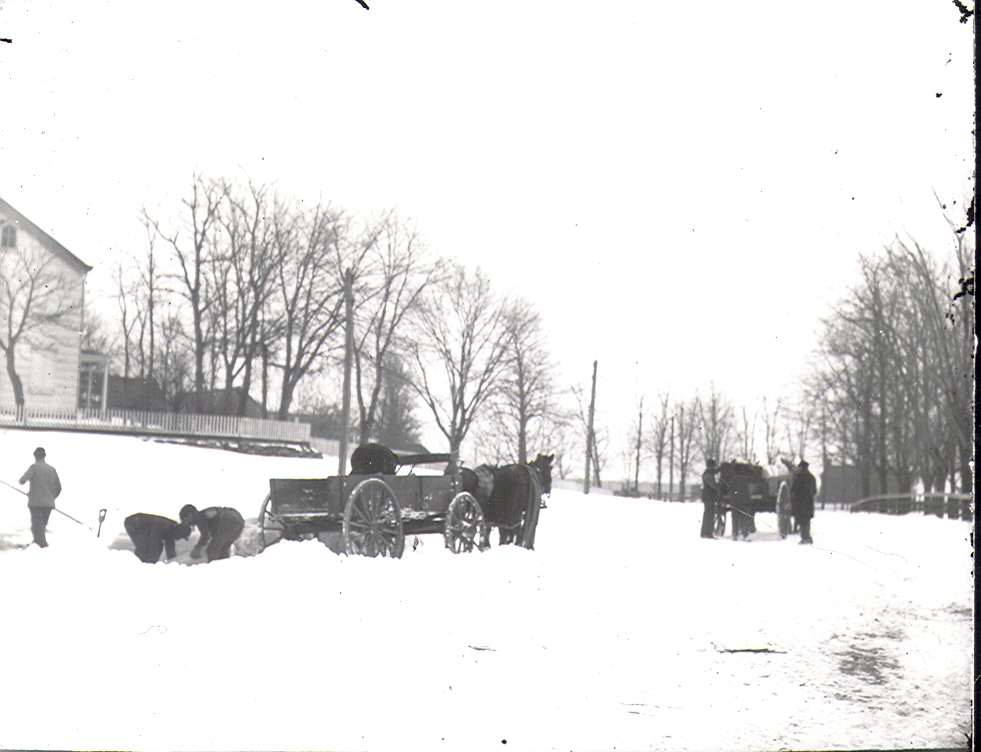
The Spring Pond was a prime source of water. People came with barrels on wagons to fill with good water.
In the winter, when the pond froze over, they used a method of “cutting the ice.” The men used huge, specialized metal saws to cut the ice into blocks measuring 12 inches by 20 inches.
These ice blocks were hauled away by teams of horses and wagons to be stored in personal ice houses on private property. The ice blocks were wrapped in straw and sawdust in ice houses for storing food during warmer weather.
This practice, invented in New England, became a major industry during the 1700s. Pond ice is very dense and doesn’t melt that quickly when properly stored. Ice blocks were shipped to far-off places such as the Caribbean islands and big cities. People relied on ice deliveries to their home “ice box” until the invention of modern electric refrigeration in the 1900s.