



New York leaders reacted after the Supreme Court struck down President Donald Trump’s global tariffs on Friday, Feb. 20, with Gov. Kathy Hochul praising the ruling and Nassau County Executive Bruce Blakeman having previously defended the president’s trade policies, even as he has not publicly commented on the latest decision.
Hochul campaign spokesperson Ryan Radulovacki said in a statement that the ruling confirms concerns about the cost and legality of the tariffs.
“New Yorkers knew the Trump tariffs were expensive, to the tune of $4,200 a year — now we know they’re illegal, but that won’t stop Trump’s number one cheerleader, Bruce Blakeman, from continuing to fight to take money out of New Yorkers’ pockets,” the statement said. “As Trump blows past his handpicked Supreme Court’s ruling, he can rest assured knowing the one person left in his corner defending higher costs for New York families is Bruce Blakeman.”
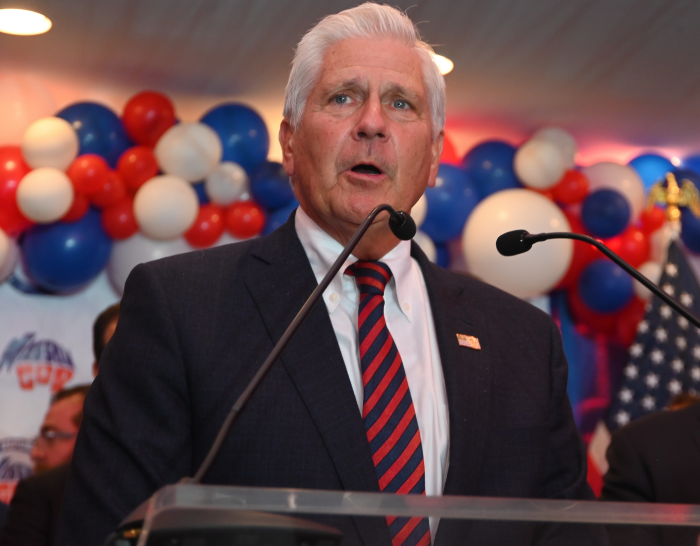
Blakeman, a Republican and Trump ally running against Hochul, has previously defended the president’s tariff policies, describing them as part of an economic strategy to strengthen domestic industry and national security. Blakeman’s candidacy sets up a high-profile contest between the two as tariff policy remains a key political issue. Efforts to reach Blakeman were unavailing.
The Supreme Court struck down President Donald Trump’s sweeping global tariffs on Friday, Feb. 20, ruling 6-3 that the president exceeded his authority by imposing the duties under an emergency powers law and delivering a significant setback to a cornerstone of his economic agenda.
The majority held that the Constitution assigns Congress the power to levy tariffs and that the executive branch cannot unilaterally impose and change them under the statute Trump invoked. Chief Justice John Roberts wrote for the court that the law does not authorize the broad import taxes at issue, stating that “the Framers did not vest any part of the taxing power in the Executive Branch.”
Justices Brett Kavanaugh, Samuel Alito and Clarence Thomas dissented.
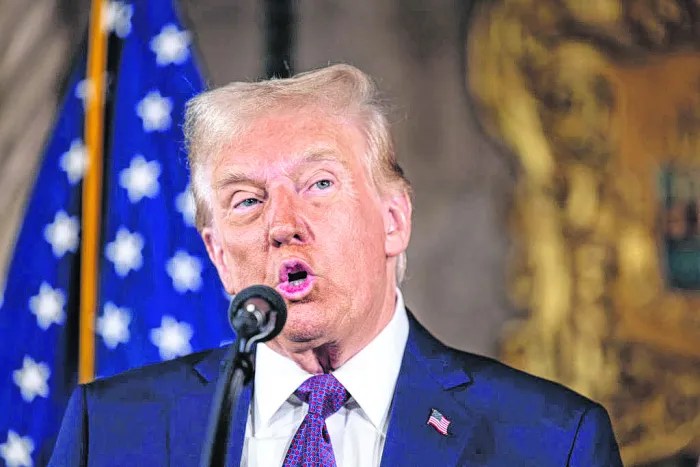
Trump, who appointed three members of the court during his first term, sharply criticized the decision and the justices in the majority. He said he was “absolutely ashamed” of some justices, calling them “disloyal to our Constitution” and “lapdogs.”
“Their decision is incorrect,” Trump said. “But it doesn’t matter because we have very powerful alternatives.”
Despite the ruling, Trump pledged to impose a new global 10% tariff under a different law that has never previously been used for tariffs and is limited to 150 days. Administration officials indicated they expect to maintain tariff policies through other statutory authorities, though with more restrictions.
The case centered on tariffs Trump imposed under a 1977 emergency powers law, including sweeping “reciprocal” tariffs placed on nearly every country. Lower courts had already ruled against the administration. Legal challenges came from a coalition of multiple states and small businesses, which argued that the emergency statute does not mention tariffs and that the administration’s interpretation violated constitutional limits.
The tariffs have been a central part of Trump’s effort to reshape global trade relationships.
Economists and policymakers have warned of broader economic consequences. The Congressional Budget Office has estimated that the tariffs could have a multitrillion-dollar impact over the next decade, and federal data show that the Treasury has collected more than $133 billion in duties imposed under the emergency law. Several companies have filed lawsuits seeking refunds.
The Supreme Court decision marks the first major component of Trump’s agenda to receive a final ruling from the high court. While the ruling limits the administration’s use of emergency authority for tariffs, it does not prevent the White House from pursuing trade actions under other legal frameworks.