



The Oyster Bay-East Norwich Central School District is proposing a $69.4 million budget with a 2.58% tax levy for the 2026-2027 school year.
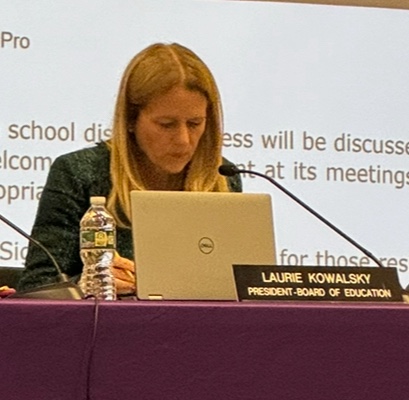
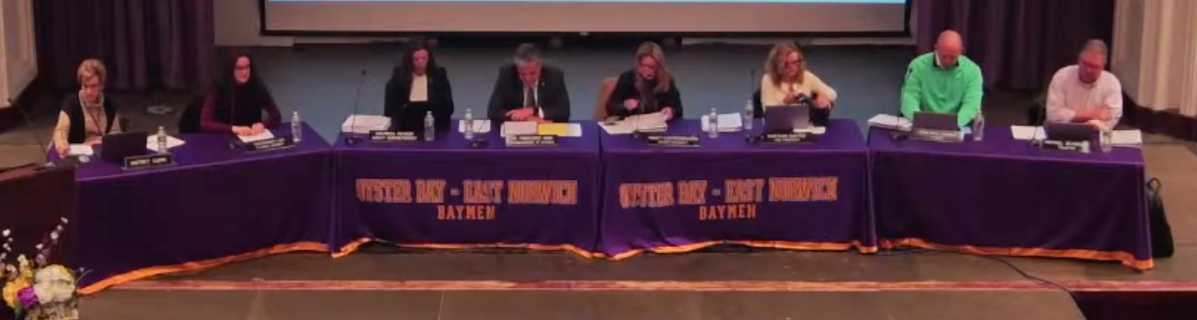
The district is proposing a $69,378,079 budget for the upcoming school year, marking a $1,587,018 or 2.3% increase from its current $67,791,061 operating budget, Deputy Superintendent Maureen Raynor said at the board of education meeting on Wednesday, Feb. 25.
The district is proposing a 2.58% tax levy for the upcoming budget, Raynor said. The tax levy increase will be equal to the tax levy limit of $61,435,317 for the proposed budget, marking a $1,544,095 increase from the district’s current budget.
The Oyster Bay-East Norwich Central School District had a 2024-2025 student population of 1,310.
According to a calculation by Schneps Media Long Island, based on the 2026-2027 proposed budget divided by the total students from the 2024-2025 school year, the district will spend $52,960.37 per pupil. This calculation does not reflect how the state calculates its aid package for the school system.
“For 2026-2027, we have again been able to propose the budget that is within the allowable tax levy limit, not because costs have stabilized, but because a disciplined resource alignment has been applied,” Raynor said.
She said the tax levy will make up 89% of the proposed budget’s revenue, with 5% coming from state aid and 6% coming from its reserves, fund balance on other miscellaneous areas.
The state’s 2026–27 proposed budget, set to be finalized by April 1, gives the district $ 1,977,171 in foundation aid, reflecting a 1%, or $19,575 increase from the current budget, and a $4,202,558 in total state aid, reflecting a 2.56% or $104,927 increase from the current budget.
The district anticipates more than $1.5 million in its year-end fund balance and plans to appropriate $1.5 million for the 2026–2027 budget, consistent with previous years, Raynor said. She also said the district will plan to spend $1 million from its reserves and an additional $1,949,094 on miscellaneous costs.
Raynor said the district’s expenditure budget is comprised of $53,076,702 or 76.5% for programs, $8,583,829 or 12.4% for administration and $7,717,548 or 11.1% for capital.

“Administrative and capital percentages have declined while the program percentage has increased,” Raynor said. “This trend reflects the board’s goals and demonstrates the deliberate shift towards increasing program investment and reducing administrative and capital share.”
Raynos said salaries account for the largest share of the budget, reflecting that education is a people-driven enterprise. She said 50% of the budget will go towards paying over 400 district employees $34,715,710.
Raynor said 23% of the budget will cover benefits, including healthcare, pension, social security, unemployment, dental insurance, life insurance, workers’ compensation and disability insurance, totaling $16,126,743.
The district will also spend $5,167,200 (roughly 8% of its budget) on transportation, $4,955,174 (roughly 7% of its budget) on contracted services, $3,510,649 (roughly 5% of its budget) on BOCES, $2.3 million (roughly 3% of its budget) on debt service and tax anticipation, $1,655,904 (roughly 2% of its budget) on facilitiies, $796,699 on equipment and supplies and $150,000 on a transfer to federal funds to support federally funded programs and mandated services, Raynor said.
Salaries, benefits, transportation and contracted services account for $1,577,918 of the increase in the expenditure budget, Raynor said.
The district said it plans to stay within the allowable tax levy cap, continue to strategically direct resources into its academic, athletic and arts programs, leverage its capital reserves and budget allocations and meet the needs of its students, which Raynor emphasized during the presentation on Wednesday.
The 2026 2027 budget maintains the programs and opportunities our community values most,” she said. “It preserves small class sizes at the elementary level, it sustains our arts and music programs, it maintains all athletic and co-curricular activities and protects all academic course offerings.”
Raynor said the current capital reserve fund is set to expire in June and that community members will vote on establishing a new capital reserve fund when they vote on the budget. She said the proposed fund will not exceed $25 million, have a 15-year term, and that annual transfers of surplus funds will not exceed $2 million per year.
Raynor said if the new capital reserve fund gains voter approval, the remaining balance of the current capital fund will likely be transferred into the new one.
The board of education held its first of several budget meetings in January, which gave a timeline for the budget process. The board will hold one more budget meeting in March before adopting the proposed budget in April.
The district’s annual budget vote and trustee election will take place on Tuesday, May 19, at the Oyster Bay High School in the Chorus Room from 7 a.m. to 9 p.m.