


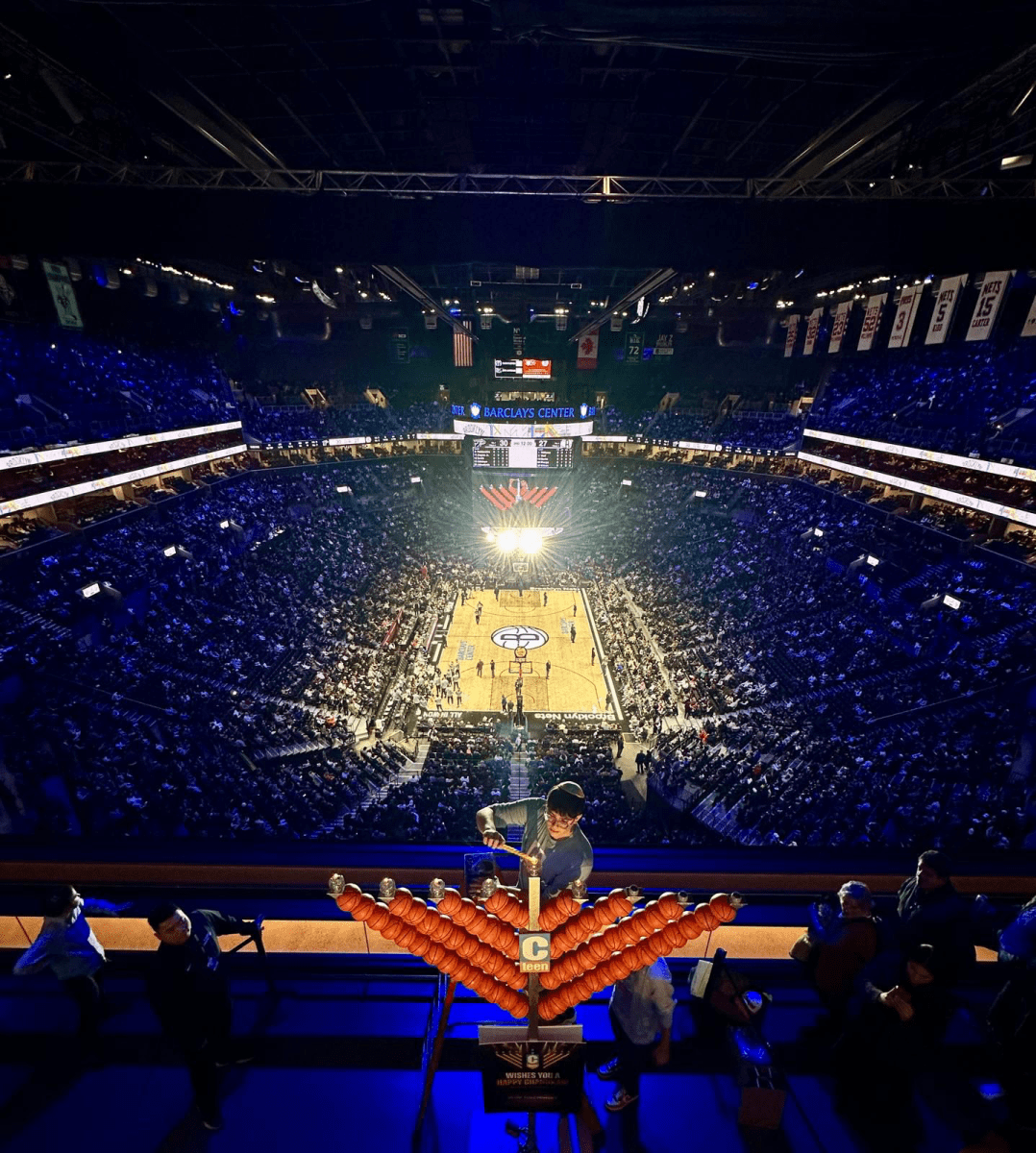
The Barclays Center held a menorah lighting at Thursday’s Brooklyn Nets game on Dec. 18 with CTeen International and local Chabad chapters, honoring the victims of the antisemitic Hanukkah attack in Australia earlier this month.
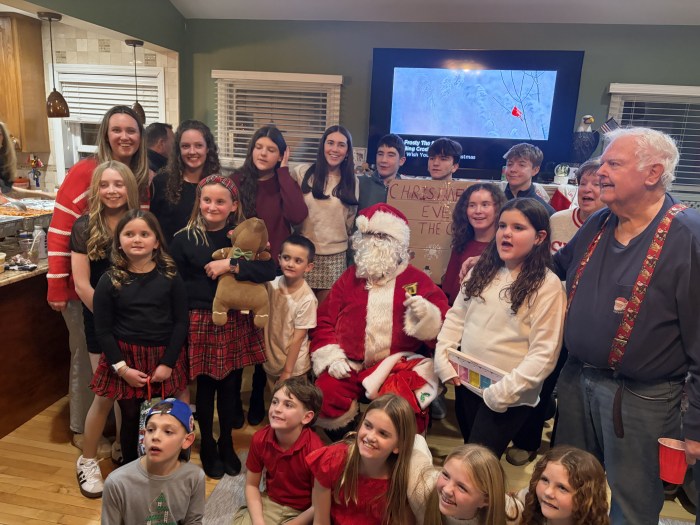
Around 250 people involved with the Chabad of Great Neck were among the nearly 18,000 who came to Thursday’s Nets game against the Miami Heat.
Yair Elias, a junior at Great Neck North High School who is active in Chabad, lit the shamash, which is used to light all the other candles on the special Nets basketball menorah.
“It’s so important for me to be together with my brothers and sisters at this time, proudly celebrating our tradition publicly. Sending the world a message we aren’t going anywhere,” Elias said. “It was an honor to represent Great Neck on the court.”
The menorah was then lit by Eli Drizin of Brooklyn, the 14-year-old nephew of Rabbi Eli Schlanger, a Chabad rabbi who was killed in the Bondi Beach shooting. Drizin was accompanied by Rabbi Zevy Geisinsky from the Chabad of Great Neck, Rabbi Mendy Hecht of Chabad Prospect Heights, and Rabbi Shimon Rivkin, director of CTeen International.
The Jewish community of New York has deep ties with the Sydney Jewish community, including Geisinsky.
Geisinsky, who helped organize the tribute, has been to Sydney before to visit family, and his first cousin was present at the Bondi Beach attack.
“Thank God he was not shot, but he was right next to somebody who was,” Geisinsky said. “And he literally, he wrote in the family chat, that he had to keep on tapping him to keep him alive.”
Geisinsky grew up in Great Neck, where his parents founded their local Chabad.
In 2021, Geisinsky went on to found The Jewish Community Center of Great Neck, JCC, a sports recreation center for Jewish youth which has over 1,500 weekly visitors.
Geisinsky is also involved with CTeen, the largest Jewish teen organization.
The Great Neck JCC has partnered with the Nets in the past, but Rabbi Avi Winner, the director of marketing and media relations for Chabad Headquarters, said “this year it was so much more important, poignant, and powerful.”
The kids at CTeen were also able to play a special quick halftime game on the court Thursday night.
“We’re strong,” Geisinsky said. “You can’t walk around scared. You have to walk around confident and brave.”
The first public menorah lighting is credited to Chabad Rebbe Menachem Mendel Schneerson in Philadelphia just over 50 years ago in December 1974. Schneerson advocated for Jews to unapologetically celebrate their faith.
“We don’t need to change who we are if people don’t like us,” Geisinsky said, “We do what we need to do—increase security, increase security patrols, be in touch with different law enforcement, but we don’t change who we are.”
Geisinsky said that there has been an increase in antisemitism since Israel’s war in Gaza and against other regional actors, but it’s not his focus. “I don’t think it’s healthy so much to focus on the negative,” Geisinsky said, “When times are dark, we got to add in light.”
Hanukkah is celebrated during the darkest time of the year for this very reason.
Winner talked about the defiance of continuing to celebrate publicly. Chabad alone organizes more than 15,000 public menorah lightings worldwide. In the Upper East Side, their lighting had double the turnout that was expected.
“You’d expect people to lay low,” said Winner, but he said he was pleasantly surprised. “You have to show up. Otherwise, you’re letting evil and darkness win.”
Geisinsky talked about the advice that he gives Jewish kids growing up today. “No. 1, be knowledgeable. No. 2, don’t cower. No. 3, it’s OK to ask questions and learn more.”
Geisinsky also talked about Chabad’s Ambassadors of Light program which encourages Jews to share their culture, gifting menorahs to colleagues, friends, and family.
He said it was this outward looking approach Chabad advocates that is important to stem the rising tide of antisemitism.
“It’s very hard to hate someone you know,” Geisinsky said.