


High blood pressure, or hypertension, damages blood vessels and organs over time and is a major risk factor for heart disease, stroke and other health conditions, including kidney disease, dementia and retinal disease. Unlike some risk factors, hypertension can be modified with medication, lifestyle modifications and other interventions.
To prevent cardiovascular damage, the American College of Cardiology and American Heart Association, together with sister organizations, released new guidelines in August 2025 that call for earlier intervention and tighter control of hypertension.
TREATING HYPERTENSION
What is considered high and normal blood pressure has not changed from the previous guidelines. The ranges remain:
Normal blood pressure: Less than 120/80 mm Hg (systolic/diastolic)
Elevated blood pressure: 120-129 mm Hg and <80 mm Hg
Stage 1 hypertension: 130-139 mm Hg or 80-89 mm Hg
Stage 2 hypertension: ≥140 mm Hg or ≥90 mm Hg
“The new guidelines call for taking earlier action on high blood pressure,” says John P. Reilly, M.D., director of cardiology endovascular intervention at the Stony Brook Heart Institute. Previously, treatment was recommended for patients with readings at or above 140 mm Hg (systolic). The starting point has been lowered to 130 mm Hg, which translates to earlier treatment for many patients.
The guidelines also introduced a new tool called PREVENT, an online calculator that allows health care professionals to input relevant factors such as age, gender, cholesterol levels, kidney function, blood sugar, and other details, along with blood pressure, to calculate an individual’s long-term cardiovascular risk. The individual’s PREVENT score impacts the treatment protocol.
“Someone with Stage 1 hypertension (130-139/80-89 mm Hg) with a PREVENT score of less than 7.5% can try lifestyle modifications for three to six months first,” Reilly says. “If that doesn’t get them to their goal, we need to add medication.”
For individuals diagnosed with Stage 1 hypertension who are rated as having a 7.5% or higher risk of developing cardiovascular disease over the next 10 years, the protocol is to start medication right away along with lifestyle modifications.
A diagnosis of Stage 2 hypertension calls for starting medication right away along with lifestyle modifications. “Patients should start with combination therapy that includes two different medications, which act in different ways to impact blood pressure,” says Benjamin J. Hirsh, M.D., director of preventive cardiology at North Shore University Hospital in Manhasset.
According to Reilly, a significant addition to the 2025 guidelines is the inclusion of a procedure known as renal denervation as an option for people with resistant hypertension. “These patients have not achieved control despite taking three or more medications in conjunction with their lifestyle modification,” he says. “Renal denervation is a minimally invasive, one-time treatment for hypertension that was approved by the Food and Drug Administration in 2023. Multiple research studies have shown it to reduce systolic blood pressure by 5 to 8 mm when added to medications or as the only therapy. These studies have demonstrated that its benefit persists for years.”
LIFESTYLE MODIFICATIONS
Lifestyle modifications, including weight loss, exercise, reduction of salt, elimination or reduction of alcohol, and stress management, can have a major impact on blood pressure.
“Especially with weight loss, we have seen numbers drop 20 to 30 points, allowing people to reduce or come off their blood pressure medications,” says Hirsh, noting that the new guidelines recommend the use of GLP-1 drugs as a weight-loss option for many hypertension patients.
Reilly adds that for every 10 pounds lost, “blood pressure should go down about 5 points.”
Reducing or eliminating alcohol can also substantially decrease blood pressure, says Dr. Hirsh, adding that the previous thinking that red wine was healthy for the heart “has gone by the wayside.”
Salt reduction, too, can be “really powerful,” Hirsh says, noting that the goal should be a daily sodium intake of under 1,500 mg.
“Be mindful of what you eat when you go out to eat, since restaurants tend to load everything with salt,” he says. “Try to temper that by choosing menu items that don’t have a lot of salt and telling the wait staff that you need to limit your salt.” Certain diets, such as the DASH diet, are effective for reducing hypertension, he adds.
Adding an exercise program can also make a difference. “It doesn’t have to be something crazy – you don’t have to jump right into CrossFit,” says Reilly. “Keep in mind that even small improvements will reduce your risk. By lowering the upper blood pressure number by 20 points, you reduce your cardiovascular risk by 20%, which is significant.”
DIAGNOSING HYPERTENSION
One high blood pressure reading does not equate to a hypertension diagnosis.
“If you go in for your annual doctor’s visit and you get a reading of 140/90 and you’ve never seen that before, you won’t be diagnosed with hypertension,” says Reilly. “But your doctor would have you come back for a repeat visit to recheck your blood pressure. Three consistently high measurements are needed to make a diagnosis.”
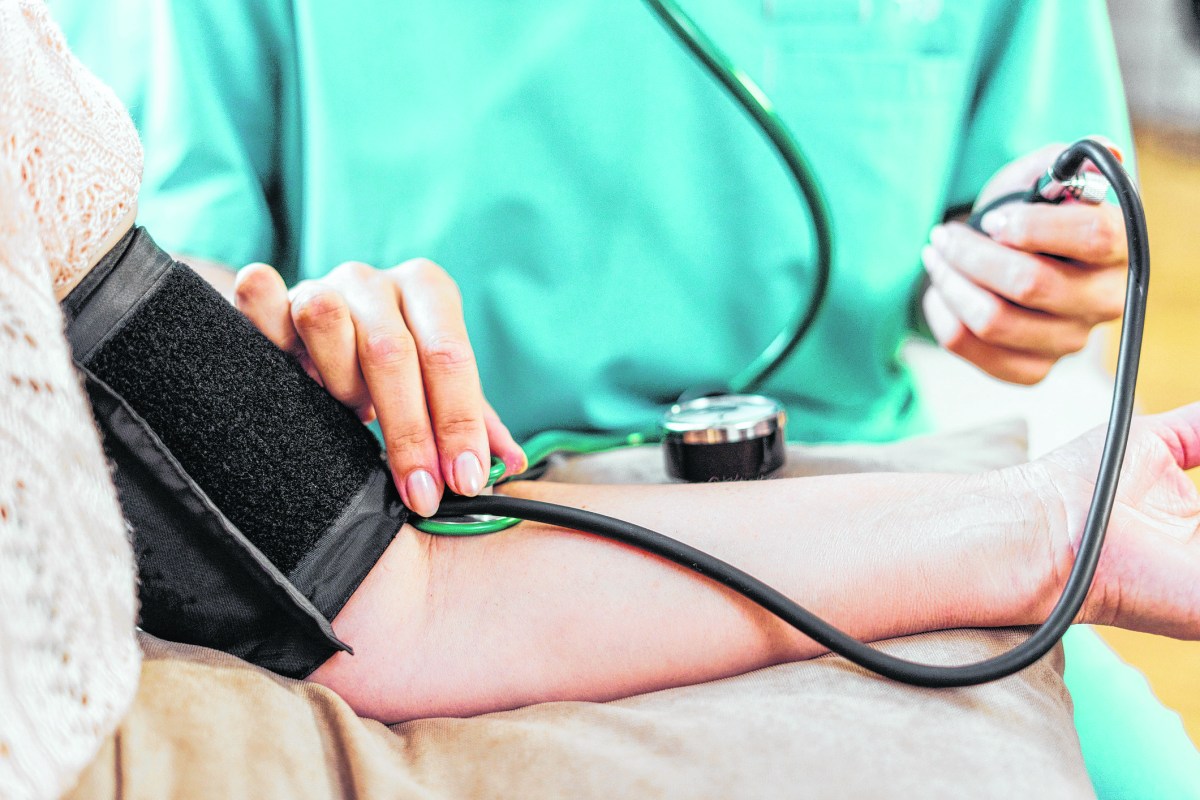
Reilly adds that guidelines place heavy emphasis on proper technique for measuring blood pressure both in the doctor’s office and at home.
“Taking your blood pressure at home is a really valuable tool, since most people go to the doctor once a year, and that one day may not be representative,” he says. “If you have a blood pressure issue, you should take it a few times a week at home. If you have no issue, taking it at least once a month to make sure hypertension is not popping up is valuable.”
Another benefit of taking home readings is that readings in the doctor’s office may be artificially inflated because people tend to be nervous.
“Blood pressure fluctuates. If you’re exercising, watching a scary movie, or stressed about an upcoming meeting, your blood pressure will go up, but it should come back down,” Hirsh says. “When checking pressure at home, I tell my patients that if it’s high, sit down for 10 minutes and relax, and then retake it to see if it has come down.”
Unlike certain other cardiovascular risk factors, such as genetics, blood pressure is highly modifiable.
“We can’t change who our parents are, but we can modify blood pressure, which is why it’s really important,” Reilly says.