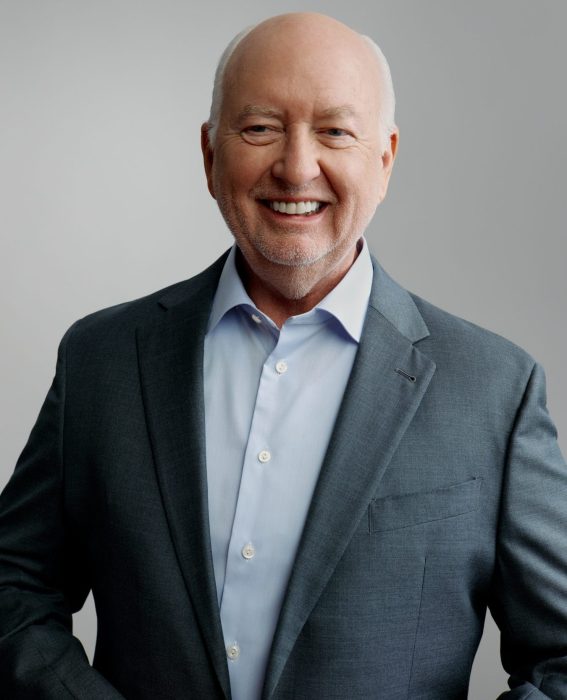





Everybody is proud of their successes, and many like discussing them. But 1-800-Flowers founder Jim McCann is also proud of his mistakes or at least of taking risks, recognizing errors and changing course.
McCann even created a wall of shame at his headquarters filled with his ideas that failed, such as selling gifts with flowers in their design, including a Chinese satin silk jacket with a rose embroidered on the back.
“It was such a good idea that I still have five or six of those boxes that never sold,” McCann said recently. “That told us we have a sense of humor, we can make fun of the boss. And it’s OK to make mistakes. If you’re not making mistakes, you’re not trying hard enough. Take chances. It’ll be OK.”
If McCann made mistakes, the 1-800-Flowers founder has got more than his share of things right, growing from one florist to a massive company and a category leader that repeatedly has seized on technology.
McCann has strung successes together since buying his first flower shop in 1976 at age 25 with credit cards and a $10,000 loan, acquiring the rights to the 1-800-Flowers number in 1986 and becoming the first vendor on America Online in 1994, a year before launching the 1-800-Flowers website.
McCann changed the company name to 1-800-Flowers.com in 1998 and took the company public in 1999, acquiring The Popcorn Factory (2002), Cheryl’s Cookies (2005), Harry & David (2014), PersonalizationMall.com (2020) and many more.
“Getting into business for me was genetic,” McCann said recently at a Schneps Connects breakfast at the Garden City Hotel. “I grew up in South Ozone Park, Queens. My dad was a painting contractor. His motto was ‘old enough to walk, old enough to work.’”
READ MORE 1-800-Flowers.com taps former Home Depot exec as CEO
McCann said his grandmother and father ran the business after his father returned from the Navy where he served in World War II. He still talks about his grandmother as his first business mentor.
“Her kitchen table was basically the boardroom table,” McCann said. “That’s where I learned basically what I know about business today.”
McCann grew up with firefighters and police as role models, thinking he would become a police officer. Then he got a job in St. John’s Home for Boys in Rockaway, a group home for teenage boys in Rockaway Beach, working there for 14 years.

He married and had three kids, noting that “working in the not-for-profit world is not that high paying.” McCann bartended Friday and Saturday nights on Manhattan’s Upper East Side where a customer who owned a flower shop was interested in selling.
“I bought the flower shop almost 50 years ago on April 1 of 1926,” he said. “The path was an interesting one.”
McCann, who is prone to understatement, opened a second shop and then more with a simple plan to grow by addition.
“We wanted to be the McDonald’s of the flower business,” he said. “I realized that doesn’t work in the flower business. There are no economies of scale.”
He began to focus more on marketing, enjoying Sheraton hotels’ singing ads and deciding he wanted an easy-to-remember phone number, although someone already owned 1-800-Flowers.
“I was able to buy the company that had that telephone number,” he said, before moving that number to New York as the center of his roughly 40 flower shops. “My main business was retail flower shops.”
He used the convenience of 24-hour-a-day telephone ordering using credit cards to change how the business works. Then he began selling off shops, and became a franchiser for shops better operated by families.
His brother Christopher, 10 years younger, joined the company which by the early 1990s became a nationally known brand, growing far beyond New York and going from paper-based to digital, finding software can be as important to growth as soil is to typical flowers.
“What’s the next technology that will disrupt us? Next for us was this online world,” he said. “It wasn’t yet called the internet.”
McCann provided the first transaction on AOL, investing in the present to grow the future. “The scary thing about the new technologies is they don’t work right away,” McCann said of going digital. “We didn’t make money for a couple of years, because it’s expensive to make that adjustment. You have to go backwards before you can go forwards.”
They went public in 1999, raising money that would let them grow by acquiring other companies. Then social media or what McCann’s brother Christopher calls “Conversational commerce” arrived. 1-800-Flowers is now selling a wide range of gifts from chocolate to popcorn and fruit.
“We’re in the gifting and expression business,”McCann said. “We have lots of brands and products. We’re in the business of helping our consumers have more and better relationships.”
He said modernization is more painful than doing things the same way, but “If you don’t go through that pain, you don’t get to the other side.”
McCann believes AI is the next big, and possibly the biggest, thing. He met the head of AI at Microsoft’s headquarters in Washington who told him AI would reduce headcount.
“It’s scary, challenging, but it’s exciting,” said McCann, who believes AI’s impact remains to be seen. “It’s changing very quickly.”
In addition to doing well, McCann has always focused on doing good. His brother Kevin is developmentally disabled, and McCann has worked hard to help those in that situation, creating Charity Smile Farms.
“After school ends, there’s precious little for them to do,” he said. “A lot of them are on the couch.”
Smile Farms runs a greenhouse and operations that people with developmental disabilities can take part in, when they might have aged out of other programs.
“We’re teaching people life skills, work skills,” he said. “My brother Kevin now works in a greenhouse in Moriches.”-
1-800-Flowers also launched Fresh University, giving courses to help workers learn to use this new technology revolutionizing retail, accounting, law and even construction.
“Every one of those industries is being dramatically impacted by AI. The pace is quickening,” said McCann. “Whether you’re going to be a ballet dancer or a plumber, you’re going to need these skills.”
As McCann sees it, the biggest mistake is not adapting and embracing change that can lead to benefits. His company has grown far beyond flowers. But McCann believes he has been in the same business all along.
“We’re in a relationship business,” he said. “The whole world is about relationships.”